List of mammals of North America
This is a list of North American mammals. It includes all mammals currently found in the United States, Saint Pierre and Miquelon, Canada, Greenland, Bermuda, Mexico, Central America, and the Caribbean region, whether resident or as migrants. This article does not include species found only in captivity. Mammal species which became extinct in the last 10,000 to 13,000 years are also included in this article. Each species is listed, with its binomial name. Most established introduced species occurring across multiple states and provinces are also noted.
Some species are identified as indicated below:
- (A) = Accidental: occurrence based on one or a few records, and unlikely to occur regularly
- (E) = Extinct: died out between 13,000 years ago and the present
- (Ex) = Extirpated: no longer occurs in area of interest, but other populations exist elsewhere
- (I) = Introduced: population established solely as result of direct or indirect human intervention; synonymous with non-native and non-indigenous
 |
Conservation status - IUCN Red List of Threatened Species:
- EX - extinct, EW - extinct in the wild
- CR - critically endangered, EN - endangered, VU - vulnerable
- NT - near threatened, LC - least concern
- DD - data deficient, NE - not evaluated
- (v. 2013.2, the data is current as of March 5, 2014[1])
- E - endangered, T - threatened
- XN, XE - experimental non essential or essential population
- E(S/A), T(S/A) - endangered or threatened due to similarity of appearance
- (selected only taxa found in the US, the data is current as of March 28, 2014[2])
Didelphimorphia (opossums)
- Common opossum, Didelphis marsupialis LC
- Virginia opossum, Didelphis virginiana[n 1][n 2] LC
- Derby's woolly opossum, Caluromys derbianus LC
- Bare-tailed woolly opossum, Caluromys philander[9] LC
- Water opossum, Chironectes minimus LC
- Adler's woolly mouse opossum, Marmosa adleri[9]
- Alston's mouse opossum, Marmosa alstoni LC and:[n 3]
- Nicaraguan woolly mouse opossum, Marmosa nicaraguae[9]
- Isthmian mouse opossum, Marmosa isthmica
- Mexican mouse opossum, Marmosa mexicana LC and:[n 3]
- Zeledon's mouse opossum, Marmosa zeledoni[9]
- Linnaeus's mouse opossum, Marmosa murina[9] LC
- Robinson's mouse opossum, Marmosa robinsoni LC
- Tschudi's slender opossum, Marmosops caucae[9] LC
- Dusky slender opossum, Marmosops fuscatus DD and:[n 3]
- Carr's slender opossum, Marmosops carri[9]
- Panama slender opossum, Marmosops invictus LC
- Brown four-eyed opossum, Metachirus nudicaudatus LC and:[n 3]
- Common brown four-eyed opossum, Metachirus myosuros[9]
- Sepia short-tailed opossum, Monodelphis adusta LC
- Gray four-eyed opossum, Philander opossum LC and:[n 3]
- Dark four-eyed opossum, Philander melanurus[9]
- Northern four-eyed opossum, Philander vossi[9]
- Balsas gray mouse opossum, Tlacuatzin balsasensis[9]
- Grayish mouse opossum, Tlacuatzin canescens LC and:[n 3]
Cingulata (armadillos)
- Beautiful armadillo, Dasypus bellus (E)
- Nine-banded armadillo, Dasypus novemcinctus[n 4] LC
- Northern naked-tailed armadillo, Cabassous centralis DD
- American glyptodont, Glyptotherium floridanum (E)
- American giant armadillo, Holmesina septentrionalis (E)
Pilosa: Vermilingua (anteaters and tamanduas)
- Common silky anteater, Cyclopes didactylus[9] LC
- Central American silky anteater, Cyclopes dorsalis NE
- Giant anteater, Myrmecophaga tridactyla VU
- Northern tamandua, Tamandua mexicana LC
- Southern tamandua, Tamandua tetradactyla[9] LC

- Jefferson ground sloth, Megalonyx jeffersonii[10] (E)
Bradypodidae (three-toed sloths)
- Pygmy three-toed sloth, Bradypus pygmaeus CR
- Brown-throated sloth, Bradypus variegatus LC
Choloepodidae (two-toed sloths)
- Hoffmann's two-toed sloth, Choloepus hoffmanni LC
- American giant ground sloth, Eremotherium laurillardi (E)
- Harlan's ground sloth, Paramylodon harlani (E)
- Shasta ground sloth, Nothrotheriops shastensis[10] (E)
Rodentia (rodents)
- Oriente cave rat, Boromys offella EX (E)
- Torre's cave rat, Boromys torrei EX (E)
- Hispaniolan edible rat, Brotomys voratus EX (E)
- Antillean cave rat, Heteropsomys antillensis (E)
- Insular cave rat, Heteropsomys insulans (E) EX
- Rufous soft-furred spiny-rat, Diplomys labilis LC
- Armored rat, Hoplomys gymnurus LC
- Red-nosed armored tree-rat, Makalata didelphoides[9] LC
- Tome's spiny-rat, Proechimys semispinosus LC
- Trinidad spiny-rat, Proechimys trinitatis[9] LC
Capromyinae (hutias)
- Garrido's hutia, Capromys garridoi[9]
- Desmarest's hutia, Capromys pilorides[9] LC and:[n 3]
- Gundlach's hutia, Capromys gundlachianus
- Jamaican coney, Geocapromys brownii EN
- Cayman hutia, Geocapromys caymanensis (E)[9]
- Cuban coney, Geocapromys columbianus (E) EX
- Bahamian hutia, Geocapromys ingrahami VU
- Little Swan Island hutia, Geocapromys thoracatus (E)
- Imposter hutia, Hexolobodon phenax (E) EX
- Wide-toothed hutia, Hyperplagiodontia araeum (E)
- Montane hutia, Isolobodon montanus (E) EX
- Puerto Rican hutia, Isolobodon portoricensis (E) EX
- Cabrera's hutia, Mesocapromys angelcabrerai CR
- Eared hutia, Mesocapromys auritus EN
- Black-tailed hutia, Mesocapromys melanurus[9] EN
- Dwarf hutia, Mesocapromys nana[9] CR
- San Felipe hutia, Mesocapromys sanfelipensis CR
- Prehensile-tailed hutia, Mysateles prehensilis[9] NT and:[n 3]
- Isla De La Juventud tree hutia, Mysateles prehensilis meridionalis
- Hispaniolan hutia, Plagiodontia aedium CR or:[n 5]
- Small Haitian hutia, Plagiodontia spelaeum (E)[9]
- Samaná hutia, Plagiodontia ipnaeum (E)
- Lemke's hutia, Rhizoplagiodontia lemkei (E)
- Mountain beaver, Aplodontia rufa[n 4] LC
- (ssp. A. r. nigra: E)
Castoridae (beavers)

- North American beaver, Castor canadensis[n 4] LC
- Giant beaver, Castoroides ohioensis[10] (E)
Zapodidae (jumping mice)
- Eastern woodland jumping mouse, Napaeozapus insignis[n 4] LC and:[n 3]
- Western woodland jumping mouse, Napaeozapus abietorum[9]
- Northern meadow jumping mouse, Zapus hudsonius[n 4] LC
- (Preble's meadow jumping mouse, Z. h. preblei: T) and:[n 3]
- Southern meadow jumping mouse, Zapus luteus[9]
- South-western jumping mouse, Zapus princeps[n 4] LC and:[n 3]
- North Pacific jumping mouse, Zapus trinotatus[n 4] LC and:[n 3]
- Central Pacific jumping mouse, Zapus montanus[9]
Erethizontidae (New World porcupines)
- Mexican hairy dwarf porcupine, Coendou mexicanus LC
- Brazilian porcupine, Coendou prehensilis LC and:[n 3]
- Amazonian long-tailed porcupine, Coendou longicaudatus[9]
- Andean porcupine, Coendou quichua DD
- North American porcupine, Erethizon dorsatum[n 4] LC
Caviidae (cavy family)
- Lesser capybara, Hydrochoerus isthmius DD
- Pinckney's capybara, Neochoerus pinckneyi (E)
- Holmes's capybara, Neochoerus aesopi (E)
Heptaxodontidae (giant hutia)
- Blunt-toothed giant hutia, Amblyrhiza inundata (E)
- Osborn's key mouse, Clidomys osborni (E)
- Plate-toothed giant hutia, Elasmodontomys obliquus (E)
- Twisted-toothed mouse, Quemisia gravis (E)
- Coiban agouti, Dasyprocta coibae VU
- Common red-rumped agouti, Dasyprocta leporina[9] LC
- Mexican agouti, Dasyprocta mexicana CR
- Central American agouti, Dasyprocta punctata LC
- Ruatan Island agouti, Dasyprocta ruatanica EN
- Lowland paca, Cuniculus paca LC
Geomyidae (pocket gophers)
There has been much debate among taxonomists about which races of pocket gopher should be recognized as full species, and the following list cannot be regarded as definitive.

- Yellow-faced pocket gopher, Cratogeomys castanops[n 4] LC
- Oriental Basin pocket gopher, Cratogeomys fulvescens LC
- Smoky pocket gopher, Cratogeomys fumosus LC and:[n 3]
- Volcan de Toluca pocket gopher, Cratogeomys planiceps[9] LC
- Goldman's pocket gopher, Cratogeomys goldmani LC
- Merriam's pocket gopher, Cratogeomys merriami LC
- Perote pocket gopher, Cratogeomys perotensis LC
- Desert pocket gopher, Geomys arenarius[n 1][n 6] NT
- Attwater's pocket gopher, Geomys attwateri[n 1] LC
- Baird's pocket gopher, Geomys breviceps[n 1] LC
- Plains pocket gopher, Geomys bursarius[n 4][n 7] LC and:[n 3]
- Hall's pocket gopher, Geomys jugossicularis[11][9]
- Sand Hills pocket gopher, Geomys lutescens[11][9]
- Knox Jones's pocket gopher, Geomys knoxjonesi[n 1] LC
- Texas pocket gopher, Geomys personatus[n 8] LC and:[n 3]
- Strecker's pocket gopher, Geomys streckeri[11][9]
- Southeastern pocket gopher, Geomys pinetis[n 4] LC
- Llano pocket gopher, Geomys texensis[n 1] LC
- Tropical pocket gopher, Geomys tropicalis CR
- Chiriqui pocket gopher, Heterogeomys cavator[9] LC
- Cherrie's pocket gopher, Heterogeomys cherriei[9] LC
- Darien pocket gopher, Heterogeomys dariensis[9] LC
- Variable pocket gopher, Heterogeomys heterodus[9] NT
- Hispid pocket gopher, Heterogeomys hispidus[9] LC
- Big pocket gopher, Heterogeomys lanius[9] CR
- Underwood's pocket gopher, Heterogeomys underwoodi[9] LC
- Giant pocket gopher, Orthogeomys grandis[9] LC and:[n 3]
- Oaxacan pocket gopher, Orthogeomys cuniculus DD
- Botta's pocket gopher, Thomomys bottae[n 9] LC
- Camas pocket gopher, Thomomys bulbivorus[n 4] LC
- Wyoming pocket gopher, Thomomys clusius[n 1] LC
- Idaho pocket gopher, Thomomys idahoensis[n 1] LC
- Mazama pocket gopher, Thomomys mazama[n 4] LC
- Mountain pocket gopher, Thomomys monticola[n 4] LC
- Nayar pocket gopher, Thomomys nayarensis[9]
- Northern pocket gopher, Thomomys talpoides[n 4] LC
- Townsend's pocket gopher, Thomomys townsendii[n 4] LC
- Southern pocket gopher, Thomomys umbrinus[n 4] LC and:[n 3]
- Alcorn's pocket gopher, Pappogeomys alcorni CR
- Buller's pocket gopher, Pappogeomys bulleri LC
- Michoacan pocket gopher, Zygogeomys trichopus EN

- California kangaroo rat, Dipodomys californicus[n 1] LC
- Gulf Coast kangaroo rat, Dipodomys compactus[n 1] LC
- Desert kangaroo rat, Dipodomys deserti[n 4] LC
- Texas kangaroo rat, Dipodomys elator[n 4] VU
- San Quintin kangaroo rat, Dipodomys gravipes CR
- Heermann's kangaroo rat, Dipodomys heermanni[n 4] LC
- (Morro Bay kangaroo rat, D. h. morroensis: E)
- Giant kangaroo rat, Dipodomys ingens[n 4] EN E
- Merriam's kangaroo rat, Dipodomys merriami[n 4] LC
- (San Bernardino kangaroo rat, D. m. parvus: E)
- Chisel-toothed kangaroo rat, Dipodomys microps[n 4] LC
- Nelson's kangaroo rat, Dipodomys nelsoni LC
- Fresno kangaroo rat, Dipodomys nitratoides[n 4] VU
- (Fresno subspecies D. n. exilis and Tipton kangaroo rat, D. n. nitratoides: E)
- Ord's kangaroo rat, Dipodomys ordii[n 4] LC
- Panamint kangaroo rat, Dipodomys panamintinus[n 4] LC
- Phillips's kangaroo rat, Dipodomys phillipsii LC and:[n 3]
- Plateau kangaroo rat, Dipodomys ornatus[9] LC
- Dulzura kangaroo rat, Dipodomys simulans[n 1] LC
- Banner-tailed kangaroo rat, Dipodomys spectabilis[n 4] NT
- Stephens's kangaroo rat, Dipodomys stephensi[n 4] VU E
- Narrow-faced kangaroo rat, Dipodomys venustus[n 4] LC
- Big-eared kangaroo rat, Dipodomys (venustus) elephantinus[n 10][n 11][n 12]
- Agile kangaroo rat, Dipodomys agilis[n 4][11][9] LC
- Panamanian spiny pocket mouse, Heteromys adspersus NT
- Trinidad spiny pocket mouse, Heteromys anomalus[9] LC
- Southern spiny pocket mouse, Heteromys australis LC
- Desmarest's spiny pocket mouse, Heteromys desmarestianus LC and:[n 3]
- Goldman's spiny pocket mouse, Heteromys goldmani[9]
- Gaumer's spiny pocket mouse, Heteromys gaumeri LC
- Mexican spiny pocket mouse, Heteromys irroratus[n 4] LC and:[n 3]
- Buller's spiny pocket mouse, Heteromys bulleri[9]
- Nelson's spiny pocket mouse, Heteromys nelsoni EN
- Cloud-dwelling spiny pocket mouse, Heteromys nubicolens[9]
- Mountain spiny pocket mouse, Heteromys oresterus[9] LC
- Painted spiny pocket mouse, Heteromys pictus LC
- Salvin's spiny pocket mouse, Heteromys salvini LC
- Jaliscan spiny pocket mouse, Heteromys spectabilis EN
- Dark kangaroo mouse, Microdipodops megacephalus[n 4] LC
- Pale kangaroo mouse, Microdipodops pallidus[n 4] LC
- White-eared pocket mouse, Perognathus alticola[n 4] VU
- Arizona pocket mouse, Perognathus amplus[n 4] LC
- Olive-backed pocket mouse, Perognathus fasciatus[n 4] LC
- Plains pocket mouse, Perognathus flavescens[n 9] LC
- Silky pocket mouse, Perognathus flavus[n 4] LC
- San Joaquin pocket mouse, Perognathus inornatus[n 4] LC
- Little pocket mouse, Perognathus longimembris[n 4] LC
- (Pacific pocket mouse, P. l. pacificus: E)
- Merriam's pocket mouse, Perognathus merriami[n 4] LC
- Columbia Plateau pocket mouse, Perognathus parvus[n 9] LC and:[n 3]
- Great Basin pocket mouse, Perognathus mollipilosus[11][9]
- Little desert pocket mouse, Chaetodipus arenarius LC and:[n 3]
- Cerralvo Island pocket mouse, Chaetodipus siccus[9] LC
- Narrow-skulled pocket mouse, Chaetodipus artus LC
- Bailey's pocket mouse, Chaetodipus baileyi[n 4] LC
- California pocket mouse, Chaetodipus californicus[n 4] LC
- Nelson's pocket mouse, Chaetodipus nelsoni[n 4] LC and:[n 3]
- Dalquest's pocket mouse, Chaetodipus ammophilus[9] NT and:[n 3]
- Dalquest's pocket mouse, Chaetodipus (ammophilus) dalquesti VU
- Durango coarse-haired pocket mouse, Chaetodipus durangae[9]
- Chihuahuan pocket mouse, Chaetodipus eremicus[n 1] LC
- San Diego pocket mouse, Chaetodipus fallax[n 4] LC
- Long-tailed pocket mouse, Chaetodipus formosus[n 4] LC
- Goldman's pocket mouse, Chaetodipus goldmani NT
- Hispid pocket mouse, Chaetodipus hispidus[n 4] LC
- Rock pocket mouse, Chaetodipus intermedius[n 4] LC
- Lined pocket mouse, Chaetodipus lineatus DD
- Desert pocket mouse, Chaetodipus penicillatus[n 4] LC
- Sinaloan pocket mouse, Chaetodipus pernix LC
- Baja pocket mouse, Chaetodipus rudinoris[n 13] LC
- Spiny pocket mouse, Chaetodipus spinatus[n 4] LC
Sciuridae (squirrels)


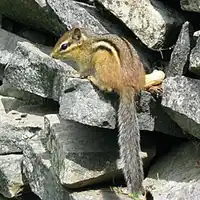
- Harris's antelope squirrel, Ammospermophilus harrisii[n 4] LC
- Espíritu Santo antelope squirrel, Ammospermophilus insularis
- Texas antelope squirrel, Ammospermophilus interpres[n 1][n 6] LC
- White-tailed antelope squirrel, Ammospermophilus leucurus[n 4][n 14] LC
- San Joaquin antelope squirrel, Ammospermophilus nelsoni[n 4] EN
- Golden-mantled ground squirrel, Callospermophilus lateralis[n 4][n 7] LC
- Sierra Madre ground squirrel, Callospermophilus madrensis NT
- Cascade golden-mantled ground squirrel, Callospermophilus saturatus[n 1][n 6] LC
- Gunnison's prairie dog, Cynomys gunnisoni[n 4][n 7] LC
- White-tailed prairie dog, Cynomys leucurus[n 1][n 6] LC
- Black-tailed prairie dog, Cynomys ludovicianus[n 4] LC
- Utah prairie dog, Cynomys parvidens[n 1][n 6] EN T
- Mexican prairie dog, Cynomys mexicanus EN
- Mexican ground squirrel, Ictidomys mexicanus[n 4] LC and:[n 3]
- Rio Grande ground squirrel, Ictidomys parvidens[11]
- Thirteen-lined ground squirrel, Ictidomys tridecemlineatus[n 4] LC
- Alaska marmot, Marmota broweri[n 1] LC
- Hoary marmot, Marmota caligata[n 4] LC
- Yellow-bellied marmot, Marmota flaviventris[n 4] LC
- Woodchuck, Marmota monax[n 4] LC
- Olympic marmot, Marmota olympus[n 4] LC
- Vancouver Island marmot, Marmota vancouverensis[n 4] CR E
- Alpine chipmunk, Neotamias alpinus[n 4] LC
- Yellow pine chipmunk, Neotamias amoenus[n 4] LC and:[n 3]
- Crater chipmunk, Neotamias cratericus[9]
- Buller's chipmunk, Neotamias bulleri VU
- Gray-footed chipmunk, Neotamias canipes[n 1] LC
- Gray-collared chipmunk, Neotamias cinereicollis[n 4] LC
- Cliff chipmunk, Neotamias dorsalis[n 4] LC
- Durango chipmunk, Neotamias durangae LC and:[n 3]
- Sierra del Carmen chipmunk, Neotamias solivagus[9]
- Merriam's chipmunk, Neotamias merriami[n 4] LC
- Least chipmunk, Neotamias minimus[n 4] LC and:[n 3]
- Coulee chipmunk, Neotamias grisescens[9]
- California chipmunk, Neotamias obscurus[n 1] LC
- Yellow-cheeked chipmunk, Neotamias ochrogenys[n 1] LC
- Palmer's chipmunk, Neotamias palmeri[n 4] EN
- Panamint chipmunk, Neotamias panamintinus[n 4] LC
- Long-eared chipmunk, Neotamias quadrimaculatus[n 4] LC
- Colorado chipmunk, Neotamias quadrivittatus[n 4] LC
- Red-tailed chipmunk, Neotamias ruficaudus[n 4] LC
- Hopi chipmunk, Neotamias rufus[n 1] LC
- Allen's chipmunk, Neotamias senex[n 1] LC
- Siskiyou chipmunk, Neotamias siskiyou[n 1] LC
- Sonoma chipmunk, Neotamias sonomae[n 4] LC
- Lodgepole chipmunk, Neotamias speciosus[n 4] LC
- Eastern chipmunk, Tamias striatus[n 4] LC
- Townsend's chipmunk, Neotamias townsendii[n 4] LC
- Uinta chipmunk, Neotamias umbrinus[n 4] LC
- Tropical ground squirrel, Notocitellus adocetus LC
- Ring-tailed ground squirrel, Notocitellus annulatus LC
- Baja California rock squirrel, Otospermophilus atricapillus EN
- California ground squirrel, Otospermophilus beecheyi[n 4] LC and:[n 3]
- Douglas's ground squirrel, Otospermophilus douglasii[9]
- Rock squirrel, Otospermophilus variegatus[n 4] LC
- Franklin's ground squirrel, Poliocitellus franklinii[n 4] LC
- Uinta ground squirrel, Urocitellus armatus[n 4] LC
- Belding's ground squirrel, Urocitellus beldingi[n 4] LC
- Northern Idaho ground squirrel, Urocitellus brunneus[n 4] EN and:[n 3]
- Southern Idaho ground squirrel, Urocitellus endemicus[n 4][n 12] VU
- Columbian ground squirrel, Urocitellus columbianus[n 4] LC
- Wyoming ground squirrel, Urocitellus elegans[n 1] LC
- Arctic ground squirrel, Urocitellus parryii[n 4] LC
- Richardson's ground squirrel, Urocitellus richardsonii[n 4] LC
- Townsend's ground squirrel, Urocitellus townsendii[n 4] VU
- Merriam's ground squirrel, Urocitellus canus[n 1] LC
- Piute ground squirrel, Urocitellus mollis[n 1][13] LC
- Washington ground squirrel, Urocitellus washingtoni[n 4] NT
- Mohave ground squirrel, Xerospermophilus mohavensis[n 4] NT
- Perote ground squirrel, Xerospermophilus perotensis EN
- Spotted ground squirrel, Xerospermophilus spilosoma[n 4] LC
- Round-tailed ground squirrel, Xerospermophilus tereticaudus[n 4] LC
Sciurinae: Pteromyini (flying squirrels)
- Northern flying squirrel, Glaucomys sabrinus[n 4] LC
- (Carolina northern flying squirrel G. s. coloratus and Virginia northern flying squirrel G. s. fuscus: E)
- Humboldt's flying squirrel, Glaucomys oregonensis NE
- Southern flying squirrel, Glaucomys volans[n 4] LC
- Central American dwarf squirrel, Microsciurus alfari LC
- Western dwarf squirrel, Microsciurus mimulus LC
- Abert's squirrel, Sciurus aberti[n 4] LC
- Allen's squirrel, Sciurus alleni LC
- Arizona gray squirrel, Sciurus arizonensis[n 4] DD
- Mexican gray squirrel, Sciurus aureogaster[n 15] LC
- Eastern gray squirrel, Sciurus carolinensis[n 4] LC
- Collie's squirrel, Sciurus colliaei LC
- Deppe's squirrel, Sciurus deppei LC
- Red-tailed squirrel, Sciurus granatensis LC and:[n 3]
- Richmond's squirrel, Sciurus richmondi[9] NT
- Western gray squirrel, Sciurus griseus[n 4] LC
- Mexican fox squirrel, Sciurus nayaritensis[n 16] LC
- Fox squirrel, Sciurus niger[n 4] LC
- (Delmarva fox squirrel, S. n. cinereus: E)
- Peters's squirrel, Sciurus oculatus LC
- Variegated squirrel, Sciurus variegatoides LC
- Yucatan squirrel, Sciurus yucatanensis LC
- Bangs's mountain squirrel, Syntheosciurus brochus NT
- Douglas squirrel, Tamiasciurus douglasii[n 4] LC
- Mearn's squirrel, T. d. mearnsi EN
- Southwestern red squirrel, Tamiasciurus fremonti[11][9] NE
- (Mount Graham red squirrel, T. f. grahamensis: E)
- North American red squirrel, Tamiasciurus hudsonicus[n 4] LC
- (Mount Graham red squirrel, T. h. grahamensis: E)
There has been much debate among taxonomists about which races of mice and voles should be recognized as full species, and the following list cannot be regarded as definitive.


- Root vole, Alexandromys oeconomus[n 4][9] LC
- White-footed vole, Arborimus albipes[n 4] LC
- Red tree vole, Arborimus longicaudus[n 4] NT
- California red tree mouse, Arborimus pomo[n 1] NT
- Western red-backed vole, Clethrionomys californicus[n 4][9] LC
- Southern red-backed vole, Clethrionomys gapperi[n 9][9] LC
- Northern red-backed vole, Clethrionomys rutilus[n 4][9] LC
- Northern collared lemming, Dicrostonyx groenlandicus[n 17] LC
- Ungava collared lemming, Dicrostonyx hudsonius[n 4] LC
- Richardson's collared lemming, Dicrostonyx richardsoni[n 1] LC
- Nelson's collared lemming, Dicrostonyx nelsoni[n 18] LC
- Ogilvie Mountains collared lemming, Dicrostonyx nunatakensis[n 19] LC
- Unalaska collared lemming, Dicrostonyx unalascensis[n 19] DD
- Sagebrush vole, Lemmiscus curtatus[n 4] LC
- Nearctic brown lemming, Lemmus trimucronatus[n 4] LC and:[n 3]
- Beringian brown lemming, Lemmus nigripes[9]
- Insular vole, Microtus abbreviatus LC and:[n 3]
- Singing vole, Microtus miurus[n 12] LC
- California vole, Microtus californicus[n 4] LC
- (ssp. scirpen: E)
- Gray-tailed vole, Microtus canicaudus[n 1] LC
- Rock vole, Microtus chrotorrhinus[n 4] LC
- Western meadow vole, Microtus drummondii NE
- Florida salt marsh vole, Microtus dukecampbelli E
- Guatemalan vole, Microtus guatemalensis NT
- Long-tailed vole, Microtus longicaudus[n 9] LC
- Mexican vole, Microtus mexicanus[n 20] LC
(including M. mogollonensis: LC, ssp. hualpaiensis: E) and:[n 3]- Mogollon vole, Microtus mogollonensis[n 20]
- Montane vole, Microtus montanus[n 4] LC
- Prairie vole, Microtus ochrogaster[n 4] LC
- Creeping vole, Microtus oregoni[n 4] LC
- Eastern meadow vole, Microtus pennsylvanicus[n 4][n 7] LC and:[n 3]
- Beach vole, M. p. breweri[n 21][n 6][n 12] VU
- Western meadow vole, Microtus drummondii[11][9] (M. p. dukecampbelli: E)
- Florida salt marsh vole, Microtus dukecampbelli[11][9]
- Woodland vole, Microtus pinetorum[n 4] LC
- Water vole, Microtus richardsoni[n 4] LC
- Tarabundi vole, Microtus oaxacensis[9] EN
- Townsend's vole, Microtus townsendii[n 4] LC
- Jalapan pine vole, Microtus quasiater NT
- Zempoaltépec vole, Microtus umbrosus EN
- Taiga vole, Microtus xanthognathus[n 4] LC
- Round-tailed muskrat, Neofiber alleni[n 4] LC
- Muskrat, Ondatra zibethicus[n 4] LC
- Western heather vole, Phenacomys intermedius[n 4] LC
- Eastern heather vole, Phenacomys ungava[n 1] LC
- Northern bog lemming, Synaptomys borealis[n 4] LC
- Southern bog lemming, Synaptomys cooperi[n 4] LC
- Mexican pygmy mouse, Baiomys musculus LC and:[n 3]
- Southern pygmy mouse, Baiomys brunneus[9]
- Northern pygmy mouse, Baiomys taylori[n 4] LC
- Chinanteco deer mouse, Habromys chinanteco CR
- Delicate deer mouse, Habromys delicatulus EN
- Ixtlán deer mouse, Habromys ixtlani CR
- Zempoaltepec deer mouse, Habromys lepturus CR
- Crested-tailed deer mouse, Habromys lophurus NT
- Habromys schmidlyi CR
- Jico deer mouse, Habromys simulatus EN
- Oaxacan big-toothed deermouse, Megadontomys cryophilus[9] EN
- Nelson's big-toothed deermouse, Megadontomys nelsoni[9] EN
- Thomas's big-toothed deermouse, Megadontomys thomasi[9] EN
- Goldman's diminutive woodrat, Nelsonia goldmani EN
- Diminutive woodrat, Nelsonia neotomodon NT
- Anthony's woodrat, Neotoma anthonyi (E)
- White-throated woodrat, Neotoma albigula[n 4] LC and:[n 3]
- Black-tailed woodrat, Neotoma melanura[9]
- Tamaulipan woodrat, Neotoma angustapalata[9] NT
- Bryant's woodrat, Neotoma bryanti[17] LC
- Bunker's woodrat, Neotoma bunkeri (E)
- Nicaraguan woodrat, Neotoma chrysomelas[9] LC
- Bushy-tailed woodrat, Neotoma cinerea[n 4] LC
- Arizona woodrat, Neotoma devia[n 1] LC
- Eastern woodrat, Neotoma floridana[n 4] LC
- (Key Largo woodrat, N. f. smalli: E)
- Dusky-footed woodrat, Neotoma fuscipes[n 4] LC
- (ssp. riparia: E)
- Goldman's woodrat, Neotoma goldmani[9] LC
- Desert woodrat, Neotoma lepida[n 4] LC and:[n 3]
- Angel de la Guarda woodrat, Neotoma insularis[9] DD
- White-toothed woodrat, Neotoma leucodon[n 13] LC
- Big-eared woodrat, Neotoma macrotis[n 13] LC
- Allegheny woodrat, Neotoma magister[n 1] NT
- San Martín Island woodrat, Neotoma martinensis (E)
- Mexican woodrat, Neotoma mexicana[n 4] LC and:[n 3]
- Guatemala woodrat, Neotoma ferruginea[9]
- Painted woodrat, Neotoma picta[9]
- Nelson's woodrat, Neotoma nelsoni[9] CR
- Southern Plains woodrat, Neotoma micropus[n 4] LC
- Bolaños woodrat, Neotoma palatina[9] VU
- Sonoran woodrat, Neotoma phenax[9] LC
- Stephen's woodrat, Neotoma stephensi[n 4] LC
- Volcano deermouse, Neotomodon alstoni[9] LC
- Golden mouse, Ochrotomys nuttalli[n 4] LC
- Mearn's grasshopper mouse, Onychomys arenicola[n 1] LC
- Northern grasshopper mouse, Onychomys leucogaster[n 4] LC
- Southern grasshopper mouse, Onychomys torridus[n 4] LC
- Osgood's deermouse, Osgoodomys banderanus[9] LC
- Peromyscus anayapahensis[18] (E)
- Texas mouse, Peromyscus attwateri[n 1] LC
- Aztec mouse, Peromyscus aztecus LC and:[n 3]
- Cordillera deermouse, Peromyscus cordillerae[9]
- Baker's deermouse, Peromyscus bakeri[9]
- Brush mouse, Peromyscus boylii[n 4] LC
- Orizaba deermouse, Peromyscus beatae[9] LC
- Perote deermouse, Peromyscus bullatus[9] CR
- California mouse, Peromyscus californicus[n 4] LC
- Monserrat Island deermouse, Peromyscus caniceps[9] CR
- Carleton's deermouse, Peromyscus carletoni[9]
- Carol Patton's deermouse, Peromyscus carolpattonae[9]
- Canyon mouse, Peromyscus crinitus[n 4] LC
- Dickey's deermouse, Peromyscus dickeyi[9] CR
- Southern rock deermouse, Peromyscus difficilis LC or:[n 5]
- Ensink's deermouse, Peromyscus ensinki[9]
- Cactus mouse, Peromyscus eremicus[n 4] LC
- Southern baja deermouse, Peromyscus eva[9] LC
- Northern Baja deer mouse, Peromyscus fraterculus[n 13] LC
- Blackish deermouse, Peromyscus furvus[9] DD and:[n 3]
- Wide-rostrum deermouse, Peromyscus latirostris[9]
- Gardner's deermouse, Peromyscus gardneri[9]
- Cotton mouse, Peromyscus gossypinus[n 4] LC
- (ssp. allapaticola: E)
- Big deer mouse, Peromyscus grandis NT
- Guatemalan deer mouse, Peromyscus guatemalensis LC
- Osgood's mouse, Peromyscus gratus[n 1] LC
- Greenbaum's deermouse, Peromyscus greenbaumi[9]
- La Guarda deermouse, Peromyscus guardia[9] CR
- Naked-eared deer mouse, Peromyscus gymnotis LC
- Hooper's deermouse, Peromyscus hooperi[9] LC
- Transvolcanic deermouse, Peromyscus hylocetes[9] LC
- Northwestern deer mouse, Peromyscus keeni[n 4] LC
- Kilpatrick's deermouse, Peromyscus kilpatricki[9]
- southern white-ankled mouse, Peromyscus pectoralis[n 4] LC and:[n 3]
- White-footed mouse, Peromyscus leucopus[n 4] LC
- Nimble-footed mouse, Peromyscus levipes LC
- Tres Marias deermouse, Peromyscus madrensis[9] EN
- Eastern deermouse, Peromyscus maniculatus[n 4] LC and:[n 3]
- Yukon deermouse, Peromyscus arcticus[11][9]
- Gambel's deermouse, Peromyscus gambelii[11][9]
- Southern deermouse, Peromyscus labecula[11][9]
- Western deermouse, Peromyscus sonoriensis[11][9]
- Mayan deermouse, Peromyscus mayensis[9] CR
- Broad-faced deermouse, Peromyscus megalops[9] LC
- Puebla deermouse, Peromyscus mekisturus[9] CR
- Black-wristed deermouse, Peromyscus melanocarpus[9] EN
- Black-eared mouse, Peromyscus melanotis[n 19] LC
- Plateau deermouse, Peromyscus melanophrys[9] LC and:[n 3]
- Black-tailed deermouse, Peromyscus melanurus[9] EN
- Mesquite mouse, Peromyscus merriami[n 4] LC
- Mexican deer mouse, Peromyscus mexicanus LC and:[n 3]
- Chimoxan deermouse, Peromyscus tropicalis[9]
- Totontepec deermouse, Peromyscus totontepecus[9]
- Northern rock mouse, Peromyscus nasutus[n 1][n 22] LC
- Giant island deer mouse, Peromyscus nesodytes[18] (E)
- El Carrizo deermouse, Peromyscus ochraventer[9] EN
- Southern white-ankled deermouse, Peromyscus pectoralis CR or:[n 5]
- Tamaulipas white-ankled deermouse, Peromyscus collinus[9]
- Pemberton's deermouse, Peromyscus pembertoni (E)[9] EX
- Tawny deermouse, Peromyscus perfulvus[9] LC and:[n 3]
- Jalisco deermouse, Peromyscus chrysopus[9]
- Oldfield mouse, Peromyscus polionotus[n 4] LC
- (Choctawhatchee beach mouse, P. p. allophrys, Perdido Key beach mouse, P. p. trissyllepsis, St. Andrews beach mouse, P. p. peninsularis, Alabama beach mouse, P. p. ammobates and Anastasia Island beach mouse, P. p. phasma: E, Southeastern beach mouse, P. p. niveiventris: T)
- Chihuahuan deermouse, Peromyscus polius[9] NT
- Purepechus deermouse, Peromyscus purepechus[9]
- La Palma field mouse, Peromyscus sagax DD
- Schmidly's deer mouse, Peromyscus schmidlyi LC
- Santa Cruz mouse, Peromyscus sejugis EN
- Nayarit mouse, Peromyscus simulus VU
- Slevin's mouse, Peromyscus slevini CR
- Gleaning mouse, Peromyscus spicilegus LC
- San Esteban Island mouse, Peromyscus stephani CR
- Stirton's deermouse, Peromyscus stirtoni[9] LC
- Pinyon mouse, Peromyscus truei[n 4] LC
- Winkelmann's mouse, Peromyscus winkelmanni EN
- Yucatan deer mouse, Peromyscus yucatanicus LC
- Chiapan deer mouse, Peromyscus zarhynchus VU
- Florida mouse, Podomys floridanus[n 4] NT
- Short-nosed harvest mouse, Reithrodontomys brevirostris[9] LC
- Sonoran harvest mouse, Reithrodontomys burti[9] DD
- Volcano harvest mouse, Reithrodontomys chrysopsis[9] LC
- Talamancan harvest mouse, Reithrodontomys creper[9] LC
- Darien harvest mouse, Reithrodontomys darienensis[9] LC
- Fulvous harvest mouse, Reithrodontomys fulvescens[n 4] LC
- Slender harvest mouse, Reithrodontomys gracilis[9] LC
- Hairy harvest mouse, Reithrodontomys hirsutus[9] VU
- Eastern harvest mouse, Reithrodontomys humulis[n 4] LC
- Western harvest mouse, Reithrodontomys megalotis[n 4] LC
- Small-toothed harvest mouse, Reithrodontomys microdon[9] LC and:[n 3]
- Oaxacan highlands harvest mouse, Reithrodontomys albilabris[9]
- Mexican harvest mouse, Reithrodontomys mexicanus[9] LC and:[n 3]
- Plains harvest mouse, Reithrodontomys montanus[n 4] LC
- Musser's harvest mouse, Reithrodontomys musseri[9] DD
- Nicaraguan harvest mouse, Reithrodontomys paradoxus[9] DD
- Salt marsh harvest mouse, Reithrodontomys raviventris[n 4] EN E
- Rodriguez's harvest mouse, Reithrodontomys rodriguezi[9] LC
- Cozumel harvest mouse, Reithrodontomys spectabilis[9] CR
- Sumichrast's harvest mouse, Reithrodontomys sumichrasti[9] LC
- Narrow-nosed harvest mouse, Reithrodontomys tenuirostris[9] EN
- Wagner's harvest mouse, Reithrodontomys wagneri[9]
- Zacatecan harvest mouse, Reithrodontomys zacatecae[9] LC
- Alston's brown mouse, Scotinomys teguina LC
- Chiriqui brown mouse, Scotinomys xerampelinus LC
- Magdalena woodrat, Xenomys nelsoni[9] EN
- Lesser Antillean rice rat, Antillomys rayi (E)[9]
- Hummelinck's vesper mouse, Calomys hummelincki[9] LC
- Alfaro's rice rat, Handleyomys alfaroi[9] LC
- Chapman's rice rat, Handleyomys chapmani[9] VU
- Guerrero rice rat, Handleyomys guerrerensis[9]
- Black-eared rice rat, Handleyomys melanotis[9] LC
- Highland rice rat, Handleyomys rhabdops[9] EN
- Long-nosed rice rat, Handleyomys rostratus[9] LC
- Cloud forest rice rat, Handleyomys saturatior[9] LC
- Allen's woodrat, Hodomys alleni[9] LC
- Azara's rice rat, Hylaeamys megacephalus[9] LC
- Tweedy's crab-eating rat, Ichthyomys tweedii LC
- Yellow isthmus rat, Isthmomys flavidus LC
- Mount Pirri isthmus rat, Isthmomys pirrensis NT
- Dusky rice rat, Melanomys caliginosus LC or:[n 5]
- Martinique giant rice rat, Megalomys desmarestii (E) EX
- Barbados giant rice rat, Megalomys georginae (E)[9]
- Saint Lucia giant rice rat, Megalomys luciae (E) EX
- Painted bristly mouse, Neacomys pictus DD
- Northern akodont, Necromys urichi[9] LC
- Trinidad water rat, Nectomys palmipes[9] LC
- Boquete rice rat, Nephelomys devius[9] LC
- White-throated rice rat, Nephelomys albigularis LC or:[n 5]
- Mount Pirre rice rat, Nephelomys pirrensis[9]
- Savanna arboreal rice rat, Oecomys speciosus[9] LC
- Trinidad arboreal rice rat, Oecomys trinitatis LC
- White-bellied arboreal rice rat, Oecomys bicolor[9] LC
- Fulvous pygmy rice rat, Oligoryzomys fulvescens[9] LC and:[n 3]
- Sprightly pygmy rice rat, Oligoryzomys vegetus[9] LC
- St. Vincent pygmy rice rat, Oligoryzomys victus (E) EX
- Jamaican rice rat, Oryzomys antillarum (E) EX
- Coues's rice rat, Oryzomys couesi[n 1] LC and:[n 3]
- White-bellied marsh rice rat, Oryzomys albiventer[9]
- Nicaraguan marsh rice rat, Oryzomys dimidiatus[9] DD
- Nelson's rice rat, Oryzomys nelsoni (E) EX
- Common marsh rice rat, Oryzomys palustris[n 4][n 23] LC (ssp. natator: E) and:[n 3]
- Texas marsh rice rat, Oryzomys texensis[11][9]
- Mexican water mouse, Rheomys mexicanus[9] EN
- Goldman's water mouse, Rheomys raptor[9] LC
- Thomas's water mouse, Rheomys thomasi[9] NT
- Underwood's water mouse, Rheomys underwoodi[9] LC
- Broad-footed climbing rat, Rhipidomys latimanus[9] LC
- Coues's climbing rat, Rhipidomys couesi[9] LC
- Splendid climbing rat, Rhipidomys nitela[9] LC
- Venezuelan climbing mouse, Rhipidomys venezuelae LC
- Allen's cotton rat, Sigmodon alleni[9] VU
- Burmeister's cotton rat, Sigmodon hirsutus[9] LC
- Hispid cotton rat, Sigmodon hispidus[n 4] LC
- White-eared cotton rat, Sigmodon leucotis[9] LC
- Yellow-nosed cotton rat, Sigmodon ochrognathus[n 4] LC
- Arizona cotton rat, Sigmodon arizonae[n 1] LC
- Tawny-bellied cotton rat, Sigmodon fulviventer[n 4] LC
- Jaliscan cotton rat, Sigmodon mascotensis LC
- Miahuatlán cotton rat, Sigmodon planifrons EN
- Toltec cotton rat, Sigmodon toltecus LC
- Montane cotton rat, Sigmodon zanjonensis[9]
- Alfaro's water rat, Sigmodontomys alfari[9] LC
- Bolivar rice rat, Transandinomys bolivaris LC
- Talamancan rice rat, Transandinomys talamancae LC
- Nevis rice rat, Pennatomys nivalis (E) EX
- Harris's rice rat, Tanyuromys aphrastus[9] DD
- Short-tailed cane rat, Zygodontomys brevicauda LC
- Sumichrast's vesper rat, Nyctomys sumichrasti LC
- Yucatán vesper rat, Otonyctomys hatti[9] LC
- La Pera climbing rat, Ototylomys chiapensis[9]
- Big-eared climbing rat, Ototylomys phyllotis[9] LC
- Chiapan climbing rat, Tylomys bullaris CR
- Fulvous-bellied climbing rat, Tylomys fulviventer DD
- Peters's climbing rat, Tylomys nudicaudus LC
- Panamanian climbing rat, Tylomys panamensis DD
- Tumbala climbing rat, Tylomys tumbalensis CR
- Watson's climbing rat, Tylomys watsoni LC
Aotidae (night monkeys)
- Panamanian night monkey, Aotus zonalis NT
- Hispaniola monkey, Antillothrix bernensis (E)
- Haitian monkey, Insulacebus toussaintiana (E)
- Paralouatta marianae (E)
- Paralouatta varonai (E)
- Jamaican monkey, Xenothrix mcgregori (E) EX
- Ursine red howler, Alouatta arctoidea[9] LC
- Coiba Island howler, Alouatta coibensis EN
- Guyanan red howler, Alouatta macconnelli LC
- Mantled howler, Alouatta palliata VU
- Guatemalan black howler, Alouatta pigra EN
- Black-headed spider monkey, Ateles fusciceps EN
- Geoffroy's spider monkey, Ateles geoffroyi EN
- Geoffroy's tamarin, Saguinus geoffroyi NT
- Brown weeper capuchin, Cebus brunneus[9] EN
- Colombian white-faced capuchin, Cebus capucinus VU
- Panamanian white-faced capuchin, Cebus imitator VU
- Central American squirrel monkey, Saimiri oerstedii EN
Hominidae (great apes)
- Human, Homo sapiens LC
Lagomorpha (rabbits and hares)
Leporidae (rabbits and hares)

- Atzlan rabbit, Aztlanolagus agilis (E)
- Pygmy rabbit, Brachylagus idahoensis[n 4] LC E
- Antelope jackrabbit, Lepus alleni[n 4][n 7] LC
- Tamaulipas jackrabbit, Lepus altamirae NE
- Snowshoe hare, Lepus americanus[n 4] LC
- Arctic hare, Lepus arcticus[n 4] LC
- Black-tailed jackrabbit, Lepus californicus[n 4] LC
- White-sided jackrabbit, Lepus callotis[n 1][n 6] VU
- Tehuantepec jackrabbit, Lepus flavigularis EN
- Black jackrabbit, Lepus insularis VU
- Alaskan hare, Lepus othus[n 4] LC
- White-tailed jackrabbit, Lepus townsendii[n 4] LC
- Volcano rabbit, Romerolagus diazi EN
- Swamp rabbit, Sylvilagus aquaticus[n 4] LC
- Desert cottontail, Sylvilagus audubonii[n 4] LC
- Brush rabbit, Sylvilagus bachmani[n 4] LC (ssp. riparius: E)
- Tapeti, Sylvilagus brasiliensis EN
- Mexican cottontail, Sylvilagus cunicularius LC
- Dice's cottontail, Sylvilagus dicei VU
- Eastern cottontail, Sylvilagus floridanus[n 4] LC
- Tres Marias cottontail, Sylvilagus graysoni EN
- Central American tapetí, Sylvilagus gabbi LC
- Robust cottontail, Sylvilagus holzneri[n 24] VU and:[n 3]
- Manzano Mountain cottontail, Sylvilagus cognatus[n 25][n 12] DD (formerly in Sylvilagus floridanus)
- Robust cottontail, Sylvilagus (holzneri) robustus VU
- Northern tapetí, Sylvilagus incitatus NE
- Omilteme cottontail, Sylvilagus insonus DD
- San José brush rabbit, Sylvilagus mansuetus CR
- Marsh rabbit, Sylvilagus palustris[n 4] LC
- (Lower Keys marsh rabbit, S. p. hefneri: E)
- Mountain cottontail, Sylvilagus nuttallii[n 4] LC
- Appalachian cottontail, Sylvilagus obscurus[n 1] NT
- New England cottontail, Sylvilagus transitionalis[n 4] VU
- Collared pika, Ochotona collaris[n 4] LC
- American pika, Ochotona princeps[n 4] LC
- Giant pika, Ochotona whartoni[18] (E)
Eulipotyphla (moles and shrews)
Talpidae (moles)

- Star-nosed mole, Condylura cristata[n 4] LC
- Hairy-tailed mole, Parascalops breweri[n 4] LC
- Eastern mole, Scalopus aquaticus[n 4] LC
- Northern broad-footed mole, Scapanus latimanus[n 4] LC and:[n 3]
- Southern broad-footed mole, Scapanus occultus[9]
- Mexican mole, Scapanus anthonyi[9]
- Coast mole, Scapanus orarius[n 4] LC
- Townsend's mole, Scapanus townsendii[n 4] LC
- American shrew mole, Neurotrichus gibbsii[n 4] LC
Soricidae (shrews)


- Northern short-tailed shrew, Blarina brevicauda[n 4] LC
- Southern short-tailed shrew, Blarina carolinensis[n 1] LC and:[n 3]
- Sherman's short-tailed shrew, Blarina shermani[11]
- Everglades short-tailed shrew, Blarina peninsulae[6]
- Elliot's short-tailed shrew, Blarina hylophaga[n 1] LC
- Central Mexican broad-clawed shrew, Cryptotis alticola DD
- Santa Barbara broad-clawed shrew, Cryptotis cavatorculus[9] DD
- Celaque broad-clawed shrew, Cryptotis celaque[9] DD
- Cucurucho broad-clawed shrew, Cryptotis eckerlini[9]
- Enders's small-eared shrew, Cryptotis endersi EN
- Talamancan small-eared shrew, Cryptotis gracilis VU
- Goldman's broad-clawed shrew, Cryptotis goldmani LC
- Goodwin's broad-clawed shrew, Cryptotis goodwini LC and:[n 3]
- Honduran broad-clawed shrew, Cryptotis magnimanus[9]
- Guatemalan broad-clawed shrew, Cryptotis griseoventris EN
- Honduran small-eared shrew, Cryptotis hondurensis[9] DD
- Lacandona small-eared shrew, Cryptotis lacandonensis[9]
- Muscular broad-clawed shrew, Cryptotis lacertosus[9] DD
- Big mexican small-eared shrew, Cryptotis magnus[9] VU
- Mam broad-clawed shrew, Cryptotis mam[9] DD
- Mataquescuintla broad-clawed shrew, Cryptotis matsoni[9]
- Yucatan small-eared shrew, Cryptotis mayensis LC
- Omoa broad-clawed shrew, Cryptotis mccarthyi[9] DD
- Merriam's small-eared shrew, Cryptotis merriami LC
- Darien small-eared shrew, Cryptotis merus[9] EN
- Small Mexican small-eared shrew, Cryptotis mexicanus[9] LC
- Montecristo broad-clawed shrew, Cryptotis montecristo[9]
- Monteverde small-eared shrew, Cryptotis monteverdensis[9]
- Nelson's small-eared shrew, Cryptotis nelsoni CR
- Blackish small-eared shrew, Cryptotis nigrescens[9] LC
- Grizzled Mexican small-eared shrew, Cryptotis obscura LC
- Central American least shrew, Cryptotis orophilus[9] DD
- Tropical small-eared shrew, Cryptotis tropicalis DD
- North American least shrew, Cryptotis parvus[9][n 4] LC and:[n 3]
- Muscular broad-clawed shrew, Cryptotis lacertosus[9] DD
- Highland broad-clawed shrew, Cryptotis oreoryctes[9] DD
- Oaxacan broad-clawed shrew, Cryptotis peregrinus[9]
- Phillips's small-eared shrew, Cryptotis phillipsii[9] VU
- Mexican shrew, Megasorex gigas[9] LC
- Cockrum's gray shrew, Notiosorex cockrumi[n 13] LC
- Crawford's gray shrew, Notiosorex crawfordi[n 4] LC and:[n 3]
- Ticul's gray shrew, Notiosorex tataticuli[11]
- Large-eared gray shrew, Notiosorex evotis[9] LC
- Villa's gray shrew, Notiosorex villai[9] VU
- Alto shrew, Sorex altoensis[9]
- Arctic shrew, Sorex arcticus[n 4][n 7] LC
- Arizona shrew, Sorex arizonae[n 1] LC
- Marsh shrew, Sorex bendirii[n 4] LC
- Cinereus shrew, Sorex cinereus[n 4] LC and:[n 3]
- Cruz's long-tailed shrew, Sorex cruzi[9]
- Long-tailed shrew, Sorex dispar[n 27] LC and:[n 3]
- Gaspé shrew, Sorex gaspensis[n 28][n 12]
- Zacatecas shrew, Sorex emarginatus[9] LC
- Smoky shrew, Sorex fumeus[n 4] LC
- Prairie shrew, Sorex haydeni[n 1] LC
- American pygmy shrew, Sorex hoyi[n 4] LC and:[n 3]
- Western pygmy shrew, Sorex eximius[11]
- Ixtlan shrew, Sorex ixtlanensis[9] DD
- Saint Lawrence Island shrew, Sorex jacksoni[n 24][n 6] LC
- Southeastern shrew, Sorex longirostris[n 4] LC
- Mount Lyell shrew, Sorex lyelli[n 4] LC
- Mexican large-toothed shrew, Sorex macrodon[9] VU
- Sierra shrew, Sorex madrensis[9]
- Maritime shrew, Sorex maritimensis[n 13] LC
- Mccarthy's shrew, Sorex mccarthyi[9]
- Merriam's shrew, Sorex merriami[n 4] LC
- Eurasian least shrew, Sorex minutissimus[9] LC or:[n 5]
- Alaska tiny shrew, Sorex yukonicus[n 19][n 12] LC
- Carmen Mountain shrew, Sorex milleri[9] VU
- Southern montane shrew, Sorex monticola[n 4][9] LC and:[n 3]
- Northern montane shrew, Sorex obscurus[11]
- New Mexico shrew, Sorex neomexicanus[n 13][n 12] DD
- Mutable shrew, Sorex mutabilis[9]
- Dwarf shrew, Sorex nanus[n 4] LC
- Mexican long-tailed shrew, Sorex oreopolus[9] LC
- Orizaba long-tailed shrew, Sorex orizabae[9] LC
- Ornate shrew, Sorex ornatus[n 9] LC (ssp. relictus: E)
- Pacific shrew, Sorex pacificus[n 4] LC and:[n 3]
- Baird's shrew, Sorex bairdi[n 1][n 12] LC
- American water shrew, Sorex palustris[n 4][n 7] LC and:[n 3]
- Preble's shrew, Sorex preblei[n 4] LC
- Pribilof Island shrew, Sorex pribilofensis[n 9] EN
- Salvin's shrew, Sorex salvini[9]
- Saussure's shrew, Sorex saussurei LC and:[n 3]
- Jalisco shrew, Sorex mediopua[9] LC
- Sclater's shrew, Sorex sclateri CR
- Fog shrew, Sorex sonomae[n 1] LC
- San Cristobal shrew, Sorex stizodon CR
- Inyo shrew, Sorex tenellus[n 4] LC
- Trowbridge's shrew, Sorex trowbridgii[n 4] LC
- Tundra shrew, Sorex tundrensis[n 1] LC
- Barren ground shrew, Sorex ugyunak[n 1] LC
- Vagrant shrew, Sorex vagrans[n 9] LC
- Chestnut-bellied shrew, Sorex ventralis[9] LC
- Veracruz shrew, Sorex veraecrucis LC
- Verapaz shrew, Sorex veraepacis LC and:[n 3]
- Cuban solenodon, Atopogale cubana EN
- Giant solenodon, Solenodon arredondoi (E)
- Marcano's solenodon, Solenodon marcanoi (E) EX
- Hispaniolan solenodon, Solenodon paradoxus LC
- Puerto Rican nesophontes, Nesophontes edithae (E) EX
- Nesophontes hemicingulus (E)
- Atalaye nesophontes, Nesophontes hypomicrus (E) EX
- Slender Cuban nesophontes, Nesophontes longirostris (E)
- Greater Cuban nesophontes, Nesophontes major (E) EX
- Western Cuban nesophontes, Nesophontes micrus (E) EX
- St. Michel nesophontes, Nesophontes paramicrus (E) EX
- Lesser Cuban nesophontes, Nesophontes submicrus (E)
- Cuban nesophontes, Nesophontes superstes (E)
- Haitian nesophontes, Nesophontes zamicrus (E) EX
Chiroptera (bats)
Molossidae (free-tailed bats)
- Freeman's dog-faced bat, Cynomops freemani[9]
- Greenhall's dog-faced bat, Cynomops greenhalli LC
- Mexican dog-faced bat, Cynomops mexicanus LC
- Southern dog-faced bat, Cynomops planirostris LC
- Black bonneted bat, Eumops auripendulus[9] LC
- Wagner's mastiff bat, Eumops glaucinus[n 4] LC and:[n 3]
- Florida bonneted bat, Eumops floridanus[7] VU E
- Fierce bonneted bat, Eumops ferox[9] LC
- Sanborn's bonneted bat, Eumops hansae[9] LC
- Northern dwarf bonneted bat, Eumops nanus[9] LC
- Western mastiff bat, Eumops perotis[n 4] LC
- Underwood's mastiff bat, Eumops underwoodi[n 4] LC
- Alvarez's mastiff bat, Molossus alvarezi[9] DD
- Aztec mastiff bat, Molossus aztecus[9] LC
- Bonda mastiff bat, Molossus bondae[9] LC
- Coiban mastiff bat, Molossus coibensis[9] LC
- Pallas's mastiff bat, Molossus molossus[n 30] LC and:[n 3]
- Common black mastiff bat, Molossus rufus[9] LC and:[n 3]
- Northern black mastiff bat, Molossus nigricans[9]
- Miller's mastiff bat, Molossus pretiosus[9] LC
- Sinaloan mastiff bat, Molossus sinaloae[9] LC
- Least little mastiff bat, Mormopterus minutus[9] VU
- Pocketed free-tailed bat, Nyctinomops femorosaccus[n 4] LC
- Peale's free-tailed bat, Nyctinomops aurispinosus LC
- Broad-eared bat, Nyctinomops laticaudatus LC
- Big free-tailed bat, Nyctinomops macrotis[n 4] LC
- Big crested mastiff bat, Promops centralis LC
- Brown mastiff bat, Promops nasutus[9] LC
- Mexican free-tailed bat, Tadarida brasiliensis[n 4] LC
Emballonuridae (sac-winged bats)
- Thomas's sac-winged bat, Balantiopteryx io VU
- Gray sac-winged bat, Balantiopteryx plicata LC
- Thomas's shaggy bat, Centronycteris centralis LC
- Chestnut sac-winged bat, Cormura brevirostris LC
- Short-eared bat, Cyttarops Alecto LC
- Northern ghost bat, Diclidurus albus LC
- Greater dog-like bat, Peropteryx kappleri LC
- Lesser doglike bat, Peropteryx macrotis LC
- Trinidad dog-like bat, Peropteryx trinitatis[9] DD
- Proboscis bat, Rhynchonycteris naso LC
- Greater sac-winged bat, Saccopteryx bilineata LC
- Lesser sac-winged bat, Saccopteryx leptura LC
Natalidae (funnel-eared bats)
- Caribbean lesser funnel-eared bat, Chilonatalus micropus[9] VU and:[n 3]
- Cuban lesser funnel-eared bat, Chilonatalus macer[9] DD
- Bahamian lesser funnel-eared bat, Chilonatalus tumidifrons[9] NT
- Jamaican greater funnel-eared bat, Natalus jamaicensis[9] CR
- Hispaniolan greater funnel-eared bat, Natalus major[9] NT
- Mexican greater funnel-eared bat, Natalus mexicanus LC and:[n 3]
- Woolly funnel-eared bat, Natalus lanatus[9]
- Cuban greater funnel-eared bat, Natalus primus[9] VU
- Lesser Antillean funnel-eared bat, Natalus stramineus[9] LC
- Trinidadian funnel-eared bat, Natalus tumidirostris[9] LC
- Gervais's funnel-eared bat, Nyctiellus lepidus[9] LC
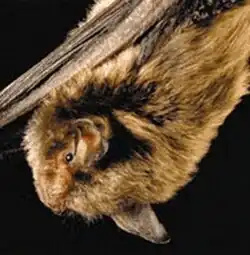

- Hoary bat, Aeorestes cinereus[n 4] LC and:[n 3]
- Hawaiian hoary bat, Aeorestes semotus[9] (L. c. semotus: E)
- Big red bat, Aeorestes egregius[9]
- Pallid bat, Antrozous pallidus[n 4] LC
- Van Gelder's bat, Bauerus dubiaquercus NT
- Brazilian brown bat, Eptesicus brasiliensis LC
- Argentine brown bat, Eptesicus furinalis LC
- Big brown bat, Eptesicus fuscus[n 4] LC
- Spotted bat, Euderma maculatum[n 4] LC
- Mexican big-eared bat, Corynorhinus mexicanus[9] NT
- Rafinesque's big-eared bat, Corynorhinus rafinesquii[n 4] LC
- Townsend's big-eared bat, Corynorhinus townsendii[n 4] LC
- (ssp. C. t. virginianus and C. t. ingens: E)
- Southern yellow bat, Dasypterus ega[n 31] LC
- Cuban yellow bat, Dasypterus insularis[9]
- Northern yellow bat, Dasypterus intermedius[n 4] LC
- Western yellow bat, Dasypterus xanthinus[n 1] LC
- Chiriquinan serotine, Eptesicus chiriquinus[9] LC
- Allen's big-eared bat, Idionycteris phyllotis[n 4] LC
- Eastern red bat, Lasiurus borealis[n 31] LC
- Tacarcunan bat, Lasiurus castaneus[9] DD
- Southern red bat, Lasiurus blossevillii[11][9][n 21] LC and:[n 3]
- Western red bat, Lasiurus frantzii[11]
- Jamaican red bat, Lasiurus degelidus[9] VU
- Minor red bat, Lasiurus minor[9] VU
- Pfeiffer's red bat, Lasiurus pfeifferi[9] NT
- Seminole bat, Lasiurus seminolus[n 4] LC
- Sir David Attenborough's myotis, Myotis attenboroughi[9]
- Armién's myotis, Myotis armiensis[9]
- Silver-tipped myotis, Myotis albescens LC
- Southwestern myotis, Myotis auriculus[n 1][n 32] LC
- Southeastern myotis, Myotis austroriparius[n 4] LC
- California myotis, Myotis californicus[n 4] LC
- Western small-footed myotis, Myotis ciliolabrum[n 1] LC and:[n 3]
- Dark-nosed small-footed myotis, Myotis melanorhinus[n 33][n 12] LC
- Guatemalan myotis, Myotis cobanensis DD
- Dominican myotis, Myotis dominicensis[9] VU
- Long-eared myotis, Myotis evotis[n 4][n 7] LC
- Elegant myotis, Myotis elegans LC
- Findley's myotis, Myotis findleyi[9] EN
- Cinnamon myotis, Myotis fortidens LC
- Gray bat, Myotis grisescens[n 4] VU E
- Keen's myotis, Myotis keenii[n 4] LC
- Eastern small-footed myotis, Myotis leibii[n 4] EN
- Little brown bat, Myotis lucifugus[n 4] EN
- Schwartz's myotis, Myotis martiniquensis[9] NT and:[n 3]
- Barbados myotis, Myotis nyctor[9] VU
- Curaçao myotis, Myotis nesopolus[9] LC
- Common black myotis, Myotis nigricans[9] LC and:[n 3]
- Carter's myotis, Myotis carteri[9]
- Montane myotis, Myotis oxyotus[9] LC
- Northern hairy-legged myotis, Myotis pilosatibialis[9]
- Flat-headed myotis, Myotis planiceps[9] EN
- Riparian myotis, Myotis riparius[9] LC
- Northern long-eared myotis, Myotis septentrionalis[n 1] NT
- Indiana bat, Myotis sodalis[n 4] NT E
- Fringed myotis, Myotis thysanodes[n 4] LC
- Cave myotis, Myotis velifer[n 4] LC
- Fish-eating myotis, Myotis vivesi[9] VU
- Long-legged myotis, Myotis volans[n 4] LC
- Yuma myotis, Myotis yumanensis[n 4] LC
- Silver-haired bat, Lasionycteris noctivagans[n 4] LC
- Arizona myotis, Myotis occultus[n 34] LC
- Cuban evening bat, Nycticeius cubanus[9] NT
- Evening bat, Nycticeius humeralis[n 4] LC
- Canyon bat, Parastrellus hesperus[n 4][9] LC
- Tricolored bat, Perimyotis subflavus[n 4][9] VU
- Mexican big-eared bat, Plecotus mexicanus NT
- Yucatan yellow bat, Rhogeessa aenea[9] LC
- Allen's yellow bat, Rhogeessa alleni[9]
- Bickham's yellow bat, Rhogeessa bickhami[9] LC
- Genoways's yellow bat, Rhogeessa genowaysi EN
- Slender yellow bat, Rhogeessa gracilis LC
- Thomas's yellow bat, Rhogeessa io LC
- Menchu's yellow bat, Rhogeessa menchuae[9] DD
- Least yellow bat, Rhogeessa mira[9] VU
- Little yellow bat, Rhogeessa parvula LC
- Nicaraguan little yellow bat, Rhogeessa permutandis[9]
- Black-winged little yellow bat, Rhogeessa tumida LC
- Antillean ghost-faced bat, Mormoops blainvillei[9] LC
- Ghost-faced bat, Mormoops megalophylla[n 4] LC
- Davy's naked-backed bat, Pteronotus davyi LC and:[n 3]
- Thomas's naked-backed bat, Pteronotus fulvus[9]
- Big naked-backed bat, Pteronotus gymnonotus LC
- Parnell's mustached bat, Pteronotus parnellii LC and:[n 3]
- Pristine mustached bat, Pteronotus pristinus (E)[n 35]
- Macleay's mustached bat, Pteronotus macleayii[9] LC
- Wagner's mustached bat, Pteronotus personatus LC and:[n 3]
- Dobson's lesser mustached bat, Pteronotus psilotis[9]
- Sooty mustached bat, Pteronotus quadridens[9] LC
- Thumbless bat, Furipterus horrens LC
Noctilionidae (bulldog bats)
- Lesser bulldog bat, Noctilio albiventris LC
- Greater bulldog bat, Noctilio leporinus LC
Phyllostomidae (New World leaf-nosed bats)
- Antillean fruit-eating bat, Brachyphylla cavernarum[9] LC
- Cuban fruit-eating bat, Brachyphylla nana[9] LC
- Silky short-tailed bat, Carollia brevicaudum[9] LC
- Chestnut short-tailed bat, Carollia castanea LC
- Seba's short-tailed bat, Carollia perspicillata LC
- Sowell's short-tailed bat, Carollia sowelli LC
- Gray short-tailed bat, Carollia subrufa LC
Desmodontinae (vampire bats)
- Stock's vampire bat, Desmodus stocki (E)
- Common vampire bat, Desmodus rotundus LC
- White-winged vampire bat, Diaemus youngii[9] LC
- Hairy-legged vampire bat, Diphylla ecaudata[n 4] LC
- Handley's tailless bat, Anoura cultrata NT
- Geoffroy's tailless bat, Anoura geoffroyi LC
- Godman's long-tailed bat, Choeroniscus godmani LC
- Mexican long-tongued bat, Choeronycteris mexicana[n 4] NT
- Lesser long-tailed bat, Choeroniscus minor[9] LC
- Commissaris's long-tongued bat, Glossophaga commissarisi LC
- Gray long-tongued bat, Glossophaga leachii LC
- Miller's long-tongued bat, Glossophaga longirostris[9] LC
- Western long-tongued bat, Glossophaga morenoi LC
- Pallas's long-tongued bat, Glossophaga soricina[9] LC and:[n 3]
- Thomas's nectar bat, Hsunycteris thomasi[9] LC
- Underwood's long-tongued bat, Hylonycteris underwoodi LC
- Southern long-nosed bat, Leptonycteris curasoae[9] VU
- Mexican long-nosed bat, Leptonycteris nivalis[n 4][n 14] EN E
- Lesser long-nosed bat, Leptonycteris yerbabuenae[n 36] NT
- Dark long-tongued bat, Lichonycteris obscura LC
- Chestnut long-tongued bat, Lionycteris spurrelli[9] LC
- Goldman's nectar bat, Lonchophylla concava NT
- Godman's nectar bat, Lonchophylla mordax LC
- Orange nectar bat, Lonchophylla robusta LC
- Insular single-leaf bat, Monophyllus plethodon[9] LC
- Leach's single leaf bat, Monophyllus redmani LC
- Banana bat, Musonycteris harrisoni VU
Phyllonycterinae
- Brown flower bat, Erophylla bombifrons[9] LC
- Buffy flower bat, Erophylla sezekorni[9] LC
- Jamaican flower bat, Phyllonycteris aphylla CR
- Puerto Rican flower bat, Phyllonycteris major (E)
- Cuban flower bat, Phyllonycteris poeyi LC
- Big-eared woolly bat, Chrotopterus auritus LC
- Striped hairy-nosed bat, Gardnerycteris crenulatum[9] LC
- Keenan's hairy-nosed bat, Gardnerycteris keenani[9]
- Davies's big-eared bat, Glyphonycteris daviesi LC
- Tricolored big-eared bat, Glyphonycteris sylvestris LC
- Yellow-throated big-eared bat, Lampronycteris brachyotis LC
- Tomes's sword-nosed bat, Lonchorhina aurita LC
- Pygmy round-eared bat, Lophostoma brasiliense[9] LC and:[n 3]
- Mesoamerican round-eared bat, Lophostoma nicaraguae[9]
- Kalko's round-eared bat, Lophostoma kalkoae[9] DD
- Davis's round-eared bat, Lophostoma evotis LC
- White-throated round-eared bat, Lophostoma silvicola[9] LC
- Long-legged bat, Macrophyllum macrophyllum LC
- California leaf-nosed bat, Macrotus californicus[n 4][n 7] LC
- Waterhouse's leaf-nosed bat, Macrotus waterhousii[9] LC
- Saint Vincent big-eared bat, Micronycteris buriri[9] DD
- Hairy big-eared bat, Micronycteris hirsuta[9] LC
- Little big-eared bat, Micronycteris megalotis[9] LC
- Common big-eared bat, Micronycteris microtis LC
- White-bellied big-eared bat, Micronycteris minuta LC
- Schmidts's big-eared bat, Micronycteris schmidtorum LC
- Northern big-eared bat, Micronycteris tresamici[9]
- Cozumelan golden bat, Mimon cozumelae LC
- Pale-faced bat, Phylloderma stenops LC
- Pale spear-nosed bat, Phyllostomus discolor LC
- Greater spear-nosed bat, Phyllostomus hastatus LC
- Stripe-headed round-eared bat, Tonatia saurophila LC and:[n 3]
- Fringe-lipped bat, Trachops cirrhosus LC
- Niceforo's big-eared bat, Trinycteris nicefori LC
- Spectral bat, Vampyrum spectrum[9] NT
- Little white-shouldered bat, Ametrida centurio LC
- Tree bat, Ardops nichollsi LC
- Jamaican fig-eating bat, Ariteus flavescens[9] LC
- Hairy fruit-eating bat, Artibeus hirsutus[9] LC
- Honduran fruit-eating bat, Artibeus inopinatus DD
- Jamaican fruit bat, Artibeus jamaicensis LC and:[n 3]
- Flat-faced fruit-eating bat, Artibeus planirostris[9] LC
- Schwartz's fruit-eating bat, Artibeus schwartzi[9] DD
- Great fruit-eating bat, Artibeus lituratus LC and:[n 3]
- Intermediate fruit-eating bat, Artibeus intermedius[9]
- Wrinkle-faced bat, Centurio senex LC
- Guadeloupean big-eyed bat, Chiroderma improvisum[9] EN
- Salvin's big-eyed bat, Chiroderma salvini LC and:[n 3]
- Mexican big-eyed bat, Chiroderma scopaeum[9]
- Little big-eyed bat, Chiroderma trinitatum[9] LC and:[n 3]
- Handley's big-eyed bat, Chiroderma gorgasi[9]
- Hairy big-eyed bat, Chiroderma villosum LC
- Aztec fruit-eating bat, Dermanura azteca LC
- Bogota fruit-eating bat, Dermanura bogotensis[9] LC
- Pygmy fruit-eating bat, Dermanura phaeotis LC
- Toltec fruit-eating bat, Dermanura tolteca LC
- Thomas's fruit-eating bat, Dermanura watsoni LC
- Honduran white bat, Ectophylla alba NT
- Velvety fruit-eating bat, Enchisthenes hartii[n 25] LC
- MacConnell's bat, Mesophylla macconnelli LC
- Cuban fig-eating bat, Phyllops falcatus[9] LC
- Darien broad-nosed bat, Platyrrhinus aquilus[9] DD
- Choco broad-nosed bat, Platyrrhinus chocoensis VU
- Thomas's broad-nosed bat, Platyrrhinus dorsalis LC
- Brown-bellied broad-nosed bat, Platyrrhinus fusciventris[9] LC
- Heller's broad-nosed bat, Platyrrhinus helleri LC
- Greater broad-nosed bat, Platyrrhinus vittatus LC
- Red fruit bat, Stenoderma rufum[9] NT
- Gianna's yellow-shouldered bat, Sturnira giannae[9]
- Little yellow-shouldered bat, Sturnira lilium LC and:[n 3]
- Dominica yellow-shouldered bat, Sturnira angeli[9] NT
- Northern yellow-shouldered bat, Sturnira parvidens[9] LC
- Paulson's yellow-shouldered bat, Sturnira paulsoni[9] NT
- Burton's yellow-shouldered bat, Sturnira burtonlimi[9] DD
- Highland yellow-shouldered bat, Sturnira ludovici LC and:[n 3]
- Honduran yellow-shouldered bat, Sturnira hondurensis[9] LC
- Louis's yellow-shouldered bat, Sturnira luisi LC
- Talamancan yellow-shouldered bat, Sturnira mordax NT
- Tilda's yellow-shouldered bat, Sturnira tildae[9] LC
- Common tent-making bat, Uroderma bilobatum[9] LC and:[n 3]
- Brown tent-making bat, Uroderma magnirostrum LC
- Kalko's yellow-eared bat, Vampyressa elisabethae[9]
- Northern little yellow-eared bat, Vampyressa thyone[9] LC
- Striped yellow-eared bat, Vampyriscus nymphaea[9] LC
- Caracciolo's stripe-faced bat, Vampyrodes caraccioli[9] LC and:[n 3]
- Great stripe-faced bat, Vampyrodes major[9] LC
- Peters's disk-winged bat, Thyroptera discifera LC
- Spix's disk-winged bat, Thyroptera tricolor LC
Carnivora (carnivorans)
Felidae (cats)

- Jaguarundi, Herpailurus yagouaroundi[n 4] LC
- Homotherium serum (E)
- Ocelot, Leopardus pardalis[n 4] LC E
- Oncilla, Leopardus tigrinus VU
- Margay, Leopardus wiedii[n 37] NT
- Canada lynx, Lynx canadensis[n 4] LC T
- Bobcat, Lynx rufus[n 4] LC
- Panthera atrox (E)
- Jaguar, Panthera onca[n 4] NT E
- (ssp. P. o. augusta (E))
- (ssp. P. c. couguar E)
- Smilodon fatalis (E)
Canidae (dogs)

- Dire wolf, Aenocyon dirus[10] (E)
- Short-eared dog, Atelocynus microtis[24] (A) NT
- Coyote, Canis latrans[n 4] LC
- Gray wolf, Canis lupus[n 4] LC E (and XN)
- Eastern wolf, Canis lycaon NE
- Red wolf, Canis rufus CR E
- Crab-eating fox, Cerdocyon thous[25] LC
- Bush dog, Speothos venaticus NT
- Gray fox, Urocyon cinereoargenteus[n 4][n 7] LC
- Island fox, Urocyon littoralis[n 1][n 6] NT
- (ssp. U.l. littoralis, U. l. catalinae, U. l. santarosae and U. l. santacruzae: E)
Ursidae (bears)
- Short-faced bear, Arctodus simus[10] (E)
- Florida cave bear, Tremarctos floridanus (E)
- Spectacled bear, Tremarctos ornatus[26] (A) VU
- Brown bear, Ursus arctos[n 39] LC (includes grizzly bear, U. a. horribilis: T, XN and
Alaskan brown bear or Kodiak bear, U. a. middendorffi) - American black bear, Ursus americanus[n 4] LC T(S/A)
(Louisiana black bear U. a. luteolus: T) - Polar bear, Ursus maritimus[n 4] VU T
- Northern olingo, Bassaricyon gabbii LC
- Western lowland olingo, Bassaricyon medius LC
- Ringtail, Bassariscus astutus[n 4] LC
- Cacomistle, Bassariscus sumichrasti LC
- White-nosed coati, Nasua narica[n 4] LC
- Kinkajou, Potos flavus LC
- Crab-eating raccoon, Procyon cancrivorus LC
- Raccoon, Procyon lotor[n 4] LC
- Cozumel raccoon, Procyon pygmaeus CR

- (ssp. E. l. nereis and E. l. kenyoni: T, ssp. E. l. nereis also XN)
- Greater grison, Galictis vittata LC
- Wolverine, Gulo gulo[n 4][n 40] LC
- North American river otter, Lontra canadensis[n 4] LC
- Neotropical otter, Lontra longicaudis NT
- American marten, Martes americana[n 4] LC and:[n 3]
- Pacific marten, Martes caurina[11][9] NE
- Beringian ermine, Mustela erminea[n 4] LC and:[n 3]
- Haida ermine, Mustela haidarum[9] NE
- American ermine, Mustela richardsonii[9] NE
- Least weasel, Mustela nivalis[n 4][n 41] LC
- Black-footed ferret, Mustela nigripes[n 4] EN E (and XN)
- Long-tailed weasel, Neogale frenata[n 4] LC
- Sea mink, Neogale macrodon[n 25][18] (E) EX
- American mink, Neogale vison[n 4] LC
- Fisher, Pekania pennanti[n 4] LC
- American badger, Taxidea taxus[n 4] LC
- Short-faced skunk, Brachyprotoma obtusata (E)
- American hog-nosed skunk, Conepatus leuconotus[n 42] LC
- Striped hog-nosed skunk, Conepatus semistriatus LC
- Striped skunk, Mephitis mephitis[n 4] LC
- Hooded skunk, Mephitis macroura[n 4] LC
- Southern spotted skunk, Spilogale angustifrons LC and:[n 3]
- Yucatán spotted skunk, Spilogale yucatanensis[9]
- Western spotted skunk, Spilogale gracilis[n 1] LC and:[n 3]
- Desert spotted skunk, Spilogale leucoparia[9]
- Eastern spotted skunk, Spilogale putorius[n 4][n 23] VU and:[n 3]
- Plains spotted skunk, Spilogale interrupta[9]
- Pygmy spotted skunk, Spilogale pygmaea VU
Otariidae (eared seals)
- Galápagos fur seal, Arctocephalus galapagoensis[27] (A) EN
- Guadalupe fur seal, Arctocephalus townsendi[n 4][n 43] LC T
- Northern fur seal, Callorhinus ursinus[n 4] VU
- Steller sea lion, Eumetopias jubatus[n 4] NT
- (ssp. E. j. monteriensis: LC, ssp. E. j. jubatus: EN) T (except west of 144° W, where E)
- South American sea lion, Otaria flavescens[28] (A) LC
- California sea lion, Zalophus californianus[n 4] LC
- Galápagos sea lion, Zalophus wollebaeki[29] (A) EN
Phocidae (earless seals)

- Hooded seal, Cystophora cristata[n 4] VU
- Bearded seal, Erignathus barbatus[n 4] LC
(E. b. barbatus, nauticus and monteriensis LC, jubatus EN) - Ribbon seal, Histriophoca fasciata[n 4] LC
- Grey seal, Halichoerus grypus[n 4] LC (H. g. grypus LC)
- Northern elephant seal, Mirounga angustirostris[n 4] LC
- Southern elephant seal, Mirounga leonina[30] (A) LC
- Caribbean monk seal, Neomonachus tropicalis[n 44] (E) EX
- Harbor seal, Phoca vitulina[n 4] LC
(P. v. concolor and richardii LC, mellonae EN, stejnegeri DD) - Spotted seal, Phoca largha[n 1] LC T
- Ringed seal, Pusa hispida[n 4] LC (P. h. hispida LC)
- Harp seal, Pagophilus groenlandicus[n 4] LC
Perissodactyla (odd-toed ungulates)
Equidae (horse family)
- Equus alaskae (E)
- Mexican horse, Equus conversidens[10] (E)
- Equus fraternus (E)
- Giant horse, Equus giganteus (E)
- Yukon wild horse, Equus lambei (E)
- Niobrara horse, Equus niobrarensis (E)
- Western horse, Equus occidentalis (E)
- Equus semiplicatus (E)
- Scott's horse, Equus scotti (E)
- Stilt-legged horse, Haringtonhippus francisci (E)
Tapiridae (tapirs)
- Baird's tapir, Tapirus bairdii EN
- California tapir, Tapirus californicus (E)
- Merriam's tapir, Tapirus merriami (E)
- South American tapir, Tapirus terrestris[31] (A) VU
- Florida tapir, Tapirus veroensis (E)
Artiodactyla (even-toed ungulates)
- Camelops hesternus[10] (E)
- Stilt-legged llama, Hemiauchenia macrocephala (E)
- Stout-legged llama, Palaeolama mirifica (E)
- Long-nosed peccary, Mylohyus nasutus[10] (E)
- Collared peccary, Dicotyles tajacu[n 4] LC
- Flat-headed peccary, Platygonus compressus[10] (E)
- White-lipped peccary, Tayassu pecari VU
Bovidae (bovids)

- Ancient bison, Bison antiquus (E)
- American bison, Bison bison[n 4] NT (wood bison, B. b. athabascae: T)
- Bison occidentalis[32] (E)
- Steppe wisent, Bison priscus (E)
- Harlan's muskox, Bootherium bombifrons[10] (E)
- Shrub-ox, Euceratherium collinum[10] (E)
- Muskox, Ovibos moschatus[n 4] LC
- Mountain goat, Oreamnos americanus[n 4] LC
- Harrington's mountain goat, Oreamnos harringtoni[10] (E)
- Bighorn sheep, Ovis canadensis[n 4] LC
- (Desert bighorn sheep, O. c. nelsoni and Sierra Nevada bighorn sheep, O. c. sierrae: E)
- Dall sheep, Ovis dalli[n 4] LC
- Giant muskox, Praeovibos priscus (E)
- Soergel's ox, Soergelia mayfieldi (E)
Cervidae (deer)
- Moose, Alces alces[n 45] LC
- Stag-moose, Cervalces scotti[10] (E)
- Elk (wapiti), Cervus canadensis[n 46] LC
- Eastern elk, C. c. canadensis (E) EX
- Merriam's elk, C. c. merriami (E) EX
- Common red brocket, Mazama americana[9] DD
- Amazonian brown brocket, Mazama nemorivaga LC
- Central American red brocket, Mazama temama DD
- Mule deer, Odocoileus hemionus[n 4] LC
- American mountain deer, Odocoileus lucasi (E)
- Yucatan brown brocket, Odocoileus pandora VU
- White-tailed deer, Odocoileus virginianus[n 4] LC
- (Columbian white-tailed deer, O. v. leucurus and Key deer, O. v. clavium: E)
- (Migratory woodland caribou, R. t. caribou: E)
- Toronto subway deer, Torontoceros hypogeos (E)
- (Baja California pronghorn, A. a. peninsularis: E, Sonoran pronghorn, A. a. sonoriensis: E)
- Pacific pronghorn, Antilocapra pacifica (E)
- Dwarf pronghorn, Capromeryx minor (E)
- Shuler's pronghorn, Tetrameryx shuleri (E)
- Conkling's pronghorn, Stockoceros conklingi (E)
Delphinidae (oceanic dolphins)

near Unimak Island,
eastern Aleutian Islands, Alaska
- White-beaked dolphin, Lagenorhynchus albirostris[n 31] LC
- Atlantic white-sided dolphin, Leucopleurus acutus[n 31] LC
- Rough-toothed dolphin, Steno bredanensis[n 31] LC
- Striped dolphin, Stenella coeruleoalba[n 31] LC
- Atlantic spotted dolphin, Stenella frontalis[n 21] LC
- Spinner dolphin, Stenella longirostris[n 31] LC
- Clymene dolphin, Stenella clymene[n 21] LC
- Pantropical spotted dolphin, Stenella attenuata[n 31] LC
- Short-beaked common dolphin, Delphinus delphis[n 31] LC and:[n 3]
- Long-beaked common dolphin, Delphinus capensis[n 21][n 12] DD
- Common bottlenose dolphin, Tursiops truncatus[n 31] LC
- Fraser's dolphin, Lagenodelphis hosei[n 15] LC
- Northern right whale dolphin, Lissodelphis borealis[n 31] LC
- Pacific white-sided dolphin, Sagmatias obliquidens[n 31] LC
- False killer whale, Pseudorca crassidens[n 31] NT
- Vaquita, Phocoena sinus CR
- Guiana dolphin, Sotalia guianensis NT
- Killer whale, Orcinus orca[n 31] DD E
- Risso's dolphin, Grampus griseus[n 31] LC
- Long-finned pilot whale, Globicephala melas[n 31] LC
- Short-finned pilot whale, Globicephala macrorhynchus[n 4] LC
- Pygmy killer whale, Feresa attenuata[n 31] LC
- Melon-headed whale, Peponocephala electra[n 21] LC
Phocoenidae (porpoises)
- Harbor porpoise, Phocoena phocoena[n 31] LC
- Dall's porpoise, Phocoenoides dalli[n 31] LC
- Pygmy sperm whale, Kogia breviceps[n 31] LC
- Dwarf sperm whale, Kogia sima[n 31] (Hawaiian Islands only) LC
- Sperm whale, Physeter macrocephalus[n 31] VU E
Ziphiidae (beaked whales)

- Giant beaked whale, Berardius bairdii[n 31] LC (collective name for two species - Baird's beaked whale and Arnoux's beaked whale)
- Least beaked whale, Berardius minimus[9] NT
- Gervais' beaked whale, Mesoplodon europaeus[n 31] LC
- Blainville's beaked whale, Mesoplodon densirostris[n 31] LC
- True's beaked whale, Mesoplodon mirus[n 31] LC
- Sowerby's beaked whale, Mesoplodon bidens[n 31] LC
- Stejneger's beaked whale, Mesoplodon stejnegeri[n 31] NT
- Ginkgo-toothed beaked whale, Mesoplodon ginkgodens[n 31] DD
- Hubbs' beaked whale, Mesoplodon carlhubbsi[n 31] DD
- Perrin's beaked whale, Mesoplodon perrini[n 24] EN
- Hector's beaked whale, Mesoplodon hectori[n 48] (A) DD
- Pygmy beaked whale, Mesoplodon peruvianus[n 49] (A) LC
- Tropical bottlenose whale, Indopacetus pacificus[7][34] LC
- Northern bottlenose whale, Hyperoodon ampullatus[n 31] NT
- Cuvier's beaked whale, Ziphius cavirostris[n 31] LC
Eschrichtiidae (gray whales)
- Gray whale, Eschrichtius robustus[n 31] LC E
Balaenopteridae (rorquals)
- Blue whale, Balaenoptera musculus[n 31] EN E
- (ssp. brevicauda - pygmy blue whale: DD, ssp. musculus North Pacific stock: LR/cd, ssp. musculus North Atlantic stock: VU)
- Fin whale, Balaenoptera physalus[n 31] VU E
- Sei whale, Balaenoptera borealis[n 31] EN E
- Common minke whale, Balaenoptera acutorostrata[n 31] LC
- Bryde's whale (Balaenoptera edeni)[n 31] (A) LC or[n 5]:
- Bryde's whale, Balaenoptera brydei[35]
- Rice's whale, Balaenoptera ricei CR[35]
- Humpback whale, Megaptera novaeangliae[n 31] LC E
- Bowhead whale, Balaena mysticetus[n 4] LC E (Bering-Chukchi-Beaufort Sea subpopulation: LR/cd, Svalbard-Barents Sea (Spitsbergen) subpopulation: EN)
- North Atlantic right whale, Eubalaena glacialis[n 31] CR E
- North Pacific right whale, Eubalaena japonica[n 33] (A) (Alaska) EN E (Northeast Pacific subpopulation: CR)
Sirenia (sea cows)

Crystal River, Florida
- West Indian manatee, Trichechus manatus[n 4] VU E
- (ssp. T. m. manatus - Antillean or Caribbean manatee: EN, ssp. T. m. latirostris - Florida manatee: EN)
- Steller's sea cow, Hydrodamalis gigas[7][18] (E) EX

- Columbian mammoth, Mammuthus columbi[10] (E)
- Pygmy mammoth, Mammuthus exilis[10] (E)
- Woolly mammoth, Mammuthus primigenius[18][36] (E)
- American mastodon, Mammut americanum[10] (E)
- Pacific mastodon, Mammut pacificus (E)
- Cuvieronius hyodon (E)
- Stegomastodon sp. (E)
Introduced mammals
- House mouse, Mus musculus[n 44][n 51] (I) LC
- Norway rat, Rattus norvegicus[n 52] (I) LC
- Black rat, Rattus rattus[n 52] (I) LC
Leporidae (rabbits and hares)
- European hare, Lepus europaeus[n 53] (I) LC
- Cape hare, Lepus capensis[4] (I) LC
- European rabbit, Oryctolagus cuniculus[n 54] EN (I)
Cercopithecidae (Old World monkeys)
- Mona monkey, Cercopithecus mona[38] (I) NT
- Vervet monkey, Chlorocebus pygerythrus[39][40][41][42][43] (I) LC
- Green monkey, Chlorocebus sabaeus[44] (I) LC
- Japanese macaque, Macaca fuscata[45] (I) LC
- Rhesus macaque, Macaca mulatta[n 19][46][47][48][49][50][51] (I) LC
Herpestidae (mongoose)
- Small Indian mongoose, Urva auropunctata[n 25] (I) (Caribbean) LC
- Beech marten, Martes foina[7] (I) LC
Suidae (pigs)
Bovidae (bovids)
Cervidae (deer)
See also
- List of birds of North America
- List of mammals of Mexico
- Mammals of the Caribbean
- List of mammals of Greenland
- List of mammals of Central America
- List of mammals of South America
- Great American Interchange
- List of mammal genera
- Lists of mammals by region
- List of reptiles of North America
- List of amphibians of North America
- List of U.S. state mammals
- List of U.S. state birds
- List of U.S. state reptiles
- List of U.S. state amphibians
Notes
- 1 2 3 4 5 6 7 8 9 10 11 12 13 14 15 16 17 18 19 20 21 22 23 24 25 26 27 28 29 30 31 32 33 34 35 36 37 38 39 40 41 42 43 44 45 46 47 48 49 50 51 52 53 54 55
Baker et al. 2003,[3] Kays & Wilson 2002,[4] North American Mammals NMNH SI,[5] Mammal Species of the World (MSW3),[6] IUCN Red List.[7] - ↑ Virginia opossum, Didelphis virginiana: Burt & Grossenheider 1976 (Peterson Field Guide)[8] - as Opossum, D. marsupialis (merged Mexican, D. marsupialis and D. virginiana).
- 1 2 3 4 5 6 7 8 9 10 11 12 13 14 15 16 17 18 19 20 21 22 23 24 25 26 27 28 29 30 31 32 33 34 35 36 37 38 39 40 41 42 43 44 45 46 47 48 49 50 51 52 53 54 55 56 57 58 59 60 61 62 63 64 65 66 67 68 69 70 71 72 73 74 75 76 77 78 79 80 81 82 83 84 85 86 87 88 89 90 91 92 93 94 95 96 97 Species split from this species or considered as distinct species alternatively. All these taxa occur in the area of interest, including the one on the left.
- 1 2 3 4 5 6 7 8 9 10 11 12 13 14 15 16 17 18 19 20 21 22 23 24 25 26 27 28 29 30 31 32 33 34 35 36 37 38 39 40 41 42 43 44 45 46 47 48 49 50 51 52 53 54 55 56 57 58 59 60 61 62 63 64 65 66 67 68 69 70 71 72 73 74 75 76 77 78 79 80 81 82 83 84 85 86 87 88 89 90 91 92 93 94 95 96 97 98 99 100 101 102 103 104 105 106 107 108 109 110 111 112 113 114 115 116 117 118 119 120 121 122 123 124 125 126 127 128 129 130 131 132 133 134 135 136 137 138 139 140 141 142 143 144 145 146 147 148 149 150 151 152 153 154 155 156 157 158 159 160 161 162 163 164 165 166 167 168 169 170 171 172 173 174 175 176 177 178 179 180 181 182 183 184 185 186 187 188 189 190 191 192 193 194 195 196 197 198 199 200 201 202 203 204 205 206 207 208 209 210 211 212 213 214 215 216 217 218 219 220 221 222 223 224 225 226 227 228 229 230 231 232 233 234 235 236 237 238 239 240 241 242 243 244 245 246 247 248 249 250 251 252 253 254 255 256 257 258 259 260 261 262 263 264 265 266 267 268 269 270 271 272 273 274 275 276 277 278 279 280 281 282 283 284 285 286 287 288 289 290 291 292 293 294
Baker et al. 2003,[3] Burt & Grossenheider 1976 (Peterson Field Guide),[8] Kays & Wilson 2002,[4] North American Mammals NMNH SI,[5] Mammal Species of the World (MSW3),[6] IUCN Red List.[7] - 1 2 3 4 5 6 7 [Species split from this species or considered as distinct species alternatively.When treating these taxa separately, the one on the left does not occur in the area of interest.
- 1 2 3 4 5 6 7 8 9 10 Burt & Grossenheider 1976 (Peterson Field Guide)[8] - mentioned only in the description of another species as possible split.
- 1 2 3 4 5 6 7 8 9 10 Burt & Grossenheider 1976 (Peterson Field Guide)[8] - described separately as the nominative species but merged with another species.
- ↑ Texas pocket gopher, Geomys personatus: Burt & Grossenheider 1976 (Peterson Field Guide),[8] Kays & Wilson 2002,[4] North American Mammals NMNH SI,[5] Mammal Species of the World (MSW3),[6] IUCN Red List.[7]
Baker et al. 2003,[3] - as 2 distinct species: Texas Pocket Gopher G. personatus and Strecker's Pocket Gopher G. streckeri. - 1 2 3 4 5 6 7 8 Baker et al. 2003,[3] Kays & Wilson 2002,[4] North American Mammals NMNH SI,[5] Mammal Species of the World (MSW3),[6] IUCN Red List.[7]
Burt & Grossenheider 1976 (Peterson Field Guide)[8] - described as the nominative species and 1 or 2 additional distinct species. - ↑ Burt & Grossenheider 1976 (Peterson Field Guide),[8] Kays & Wilson 2002.[4]
- ↑ Mammal Species of the World (MSW3)[6] and IUCN Red List,[7] also probably North American Mammals NMNH SI[5] and Baker et al. 2003[3] - Dipodomys elephantinus merged with D. venustus as D. venustus elephantinus.
- 1 2 3 4 5 6 7 8 9 10 11 12 13 Not recognized as a separate species in the Mammal Diversity Database v. 1.10.[9]
- 1 2 3 4 5 6 7 Baker et al. 2003,[3] North American Mammals NMNH SI,[5] Mammal Species of the World (MSW3),[6] IUCN Red List.[7]
- 1 2 Burt & Grossenheider 1976 (Peterson Field Guide)[8] - range not clear because described separately as the nominative species but merged with another species.
- 1 2 3 Baker et al. 2003,[3] Kays & Wilson 2002,[4] IUCN Red List.[7]
- ↑ Mexican fox squirrel, Sciurus nayaritensis: Baker et al. 2003,[3] Kays & Wilson 2002,[4] North American Mammals NMNH SI,[5] Mammal Species of the World (MSW3),[6] IUCN Red List.[7]
Burt & Grossenheider 1976 (Peterson Field Guide)[8] - only as Apache fox squirrel S. apache. - ↑ Northern collared lemming, Dicrostonyx groenlandicus: Kays & Wilson 2002,[4] North American Mammals NMNH SI,[5] Mammal Species of the World (MSW3),[6] IUCN Red List.[7]
Baker et al. 2003[3] - as 3 distinct species: Peary Land collared lemming D. groenlandicus, Bering collared lemming D. rubricatus and Victoria collared lemming D. kilangmiutak
Burt & Grossenheider 1976 (Peterson Field Guide),[8] - described separately as the nominative species but merged with D. exsul. - ↑ Nelson's collared lemming, Dicrostonyx nelsoni: Mammal Species of the World (MSW3),[6] IUCN Red List.[7]
Baker et al. 2003[3] - as 2 distinct species: Nelson's collared lemming D. nelsoni and St. Lawrence Island collared lemming D. exsul.
Burt & Grossenheider 1976 (Peterson Field Guide),[8] - mentioned only in the description of D. groenlandicus as possible split (D. exsul). - 1 2 3 4 5 Baker et al. 2003,[3] Mammal Species of the World (MSW3),[6] IUCN Red List.[7]
- 1 2 Mexican vole, Microtus mexicanus:
Burt & Grossenheider 1976 (Peterson Field Guide),[8] Mammal Species of the World (MSW3),[6] IUCN Red List[7] - M. mexicanus.
Baker et al. 2003,[3] Kays & Wilson 2002[4] - only M. mogollonensis.
North American Mammals NMNH SI[5] - M. mexicanus listed, but only M. mexicanus mogollensis (Arizona and New Mexico) described in "Mexican Vole (Microtus mexicanus)" chapter.
IUCN Red List[7] - M. mexicanus sometimes split in two species: M. mexicanus and M. mogollonensis.[14][15]
12 subspecies are recognized, 4 occur in the USA (1991[16]), Hualapai Mexican vole M. m. hualpaiensis is listed as endangered (E) under the Endangered Species Act.[2][16] - 1 2 3 4 5 6 Baker et al. 2003,[3] Kays & Wilson 2002,[4] North American Mammals NMNH SI,[5] IUCN Red List.[7]
- ↑ Northern rock mouse, Peromyscus nasutus: Burt & Grossenheider 1976 (Peterson Field Guide)[8] - mentioned only in the description of rock mouse, Peromyscus difficilis that P. difficilis was formerly known as P. nasuts, so range is not clear because these species are merged here.
- 1 2 Burt & Grossenheider 1976 (Peterson Field Guide)[8] - described separately as the nominative species but probably merged with another species.
- 1 2 3 Baker et al. 2003,[3] North American Mammals NMNH SI,[5] IUCN Red List.[7]
- 1 2 3 4 Mammal Species of the World (MSW3),[6] IUCN Red List.[7]
- ↑ North American Mammals NMNH SI,[5] IUCN Red List.[7]
- ↑ Long-tailed shrew, Sorex dispar: IUCN Red List.[7]
Baker et al. 2003,[3] Burt & Grossenheider 1976 (Peterson Field Guide),[8] Kays & Wilson 2002,[4] Mammal Species of the World (MSW3),[6] North American Mammals NMNH SI[5]
- as 2 distinct species: longtail/long-tailed shrew S. dispar and Gaspé shrew S. gaspensis. - ↑ Gaspé shrew, Sorex gaspensis: Baker et al. 2003,[3] Burt & Grossenheider 1976 (Peterson Field Guide),[8] Kays & Wilson 2002,[4] Mammal Species of the World (MSW3),[6] North American Mammals NMNH SI[5]
- ↑ Baker et al. 2003,[3] IUCN Red List.[7]
- ↑ Velvety free-tailed bat: Baker et al. 2003,[3] North American Mammals NMNH SI,[5] Mammal Species of the World (MSW3),[6] IUCN Red List.[7]
Kays & Wilson 2002[4] - it is believed that colonies found in buildings in the Florida Keys were members of Molossidae. - 1 2 3 4 5 6 7 8 9 10 11 12 13 14 15 16 17 18 19 20 21 22 23 24 25 26 27 28 29 30 31 32 33 34 35 36 37 38 39 40 41 Baker et al. 2003,[3] Burt & Grossenheider 1976 (Peterson Field Guide),[8] Kays & Wilson 2002,[4] North American Mammals NMNH SI,[5] IUCN Red List.[7]
- ↑ Southwestern myotis, Myotis auriculus: Burt & Grossenheider 1976 (Peterson Field Guide)[8] - mentioned only in the description of long-eared myotis, M. evotis as possible split, occurring in southern N. Mexico.
- 1 2 North American Mammals NMNH SI,[5] Mammal Species of the World (MSW3),[6] IUCN Red List.[7]
- ↑ Baker et al. 2003,[3] Burt & Grossenheider 1976 (Peterson Field Guide),[8] North American Mammals NMNH SI,[5] Mammal Species of the World (MSW3),[6] IUCN Red List.[7]
- ↑ Prinstine mustached bat: Mammal Species of the World (MSW3)[6] - possibly Florida.
Extinct at the end of Pleistocene - in the USA found in Rancholabrean cave deposits in southern Florida (Monkey Jungle Hammock).[21] - ↑ Lesser long-nosed bat, Leptonycteris yerbabuenae: Kays & Wilson 2002,[4] North American Mammals NMNH SI,[5] Mammal Species of the World (MSW3),[6] IUCN Red List.[7]
Baker et al. 2003[3] - as southern long-nosed bat L. curasoae (L. yerbabuenae was included[22] in L. curasoae as a subspecies[23]).
Burt & Grossenheider 1976 (Peterson Field Guide)[8] - mentioned only in the description of L. nivalis under the junior synonym[22] L. sanborni as possible split, so range is not clear here. - ↑ Margay: Baker et al. 2003,[3] Burt & Grossenheider 1976 (Peterson Field Guide),[8] Mammal Species of the World (MSW3).[6]
Kays & Wilson 2002:[4] last record in Texas from 1852.[4] - ↑ Red fox, Vulpes vulpes: Burt & Grossenheider 1976 (Peterson Field Guide)[8] - as North American V. fulva distinct from the Old World species V. vulpes.
- ↑ Brown bear, Ursus arctos: Baker et al. 2003,[3] Kays & Wilson 2002,[4] North American Mammals NMNH SI,[5] Mammal Species of the World (MSW3),[6] IUCN Red List.[7]
Burt & Grossenheider 1976 (Peterson Field Guide)[8] - as 2 distinct species: grizzly bear, U. horribilis and Kodiak bear, U. middendorffi, also distinct from the "worldwide" species U. arctos. - ↑ Wolverine, Gulo gulo: Burt & Grossenheider 1976 (Peterson Field Guide)[8] - as North American G. luscus distinct from the Old World species G. gulo.
- ↑ Least weasel, Mustela nivalis: Burt & Grossenheider 1976 (Peterson Field Guide)[8] - as North American M. rixosa distinct from the Old World species M. nivalis.
- ↑ American hog-nosed skunk, Conepatus leuconotus: Baker et al. 2003,[3] Burt & Grossenheider 1976 (Peterson Field Guide),[8] North American Mammals NMNH SI,[5] Mammal Species of the World (MSW3),[6] IUCN Red List.[7]
Kays & Wilson 2002[4] - as 2 distinct species: eastern hog-nosed skunk C. leuconotus and western hog-nosed skunk C. mesoleucus. - ↑ Guadalupe fur seal, Arctocephalus townsendi: Burt & Grossenheider 1976 (Peterson Field Guide)[8] - as Guadalupe fur seal A. philippi, formerly A. townsendi.
- 1 2 Baker et al. 2003,[3] Burt & Grossenheider 1976 (Peterson Field Guide),[8] Kays & Wilson 2002,[4] Mammal Species of the World (MSW3),[6] IUCN Red List.[7]
- ↑ Moose, Alces americanus: North American Mammals NMNH SI,[5] Mammal Species of the World (MSW3),[6] - as North American A. americanus (distinct from Eurasian elk A. alces).
Alces alces: IUCN Red List,[7] Burt & Grossenheider 1976 (Peterson Field Guide),[8] Kays & Wilson 2002.[4] - ↑ Elk, Cervus canadensis: Baker et al. 2003,[3] Burt & Grossenheider 1976 (Peterson Field Guide),[8] North American Mammals NMNH SI[5] (species list from the database).
Kays & Wilson 2002,[4] North American Mammals NMNH SI[5] (Field Guide), Mammal Species of the World (MSW3),[6] IUCN Red List[7] - as "worldwide" C. elaphus (not North American C. canadensis.) - ↑ Caribou, Rangifer tarandus: Baker et al. 2003,[3] Kays & Wilson 2002,[4] North American Mammals NMNH SI,[5] Mammal Species of the World (MSW3),[6] IUCN Red List.[7]
Burt & Grossenheider 1976 (Peterson Field Guide)[8] - as 3 distinct species: woodland caribou, R. caribou, barren-ground caribou, R. arcticus and Greenland caribou R. tarandus. - ↑ Kays & Wilson 2002,[4] IUCN Red List.[7]
- ↑ Pygmy beaked whale: Kays & Wilson 2002:[4] one record in North America, Division of Mammals Collections NMNH SI:[33] two strandings in California (2001 and 2012).
- ↑ Baker et al. 2003,[3] Burt & Grossenheider 1976 (Peterson Field Guide),[8] Kays & Wilson 2002,[4] IUCN Red List.[7]
- ↑ House mouse: Baker et al. 2003,[3] Burt & Grossenheider 1976 (Peterson Field Guide),[8] Kays & Wilson 2002,[4] IUCN Red List.[7]
Mammal Species of the World (MSW3)[6] - only general range description. - 1 2 Baker et al. 2003,[3] Burt & Grossenheider 1976 (Peterson Field Guide),[8] Kays & Wilson 2002.[4]
- ↑ Baker et al. 2003,[3] Burt & Grossenheider 1976 (Peterson Field Guide),[8] Mammal Species of the World (MSW3),[6] IUCN Red List.[7]
- ↑ European rabbit: Baker et al. 2003.[3]
Kays & Wilson 2002[4] - range not clear (islands on Pacific Coast).
Introduced to Hawaii.[37] - ↑ Sus scrofa: Baker et al. 2003[3] - feral pig or wild boar, Burt & Grossenheider 1976 (Peterson Field Guide)[8] - wild boar (Swine), Kays & Wilson 2002[4] - wild boar, Mammal Species of the World (MSW3)[6] - wild boar - feral populations, IUCN Red List[7] - wild boar - introduced.
- 1 2 3 4 5 6 Baker et al. 2003,[3] Kays & Wilson 2002,[4] Mammal Species of the World (MSW3),[6] IUCN Red List.[7]
- ↑ Barbary sheep - free ranging.[52][53]
- ↑ Blackbuck - free ranging.[52][53][54][55]
- ↑ Nilgai - semi-free-ranging[52]/free-ranging.[53]
- ↑ Bezoar ibex - free-ranging: Florida Mountains near Deming New Mexico.[54]
- ↑ Gemsbok - free ranging.[57][54]
- ↑ Chital - free-ranging.[52]
- ↑ Red deer, elaphus division (not canadensis division) - introduced[6]
- ↑ Sambar - free ranging.[53]
- Species listed in Baker et al. 2003, but omitted in this article: European ferret, Mustela putorius, Himalayan tahr, Hemitragus jemlahicus.
References
- ↑ "The IUCN Red List of Threatened Species". International Union for Conservation of Nature and Natural Resources. Retrieved 5 March 2014.
- 1 2 "Title 50: Wildlife and Fisheries, § 17.11 Endangered and threatened wildlife". US Government Printing Office. Retrieved March 28, 2014.
- 1 2 3 4 5 6 7 8 9 10 11 12 13 14 15 16 17 18 19 20 21 22 23 24 25 26 27 28 29 30 31 32 33 34 35 36 37 Robert J. Baker; Lisa C. Bradley; Robert D. Bradley; Jerry W. Dragoo; Mark D. Engstrom; Robert S. Hoffmann; Cheri A. Jones; Fiona Reid; Dale W. Rice & Clyde Jones (1 December 2003). "Revised checklist of North American mammals north of Mexico, 2003" (PDF). Occasional Papers (229). Museum of Texas Tech University. ISSN 0149-175X. Retrieved 9 March 2014.
- 1 2 3 4 5 6 7 8 9 10 11 12 13 14 15 16 17 18 19 20 21 22 23 24 25 26 27 28 29 30 31 32 Kays, Roland W.; Wilson, Don E. (2002). Mammals of North America. Illustrated by Sandra Doyle, Nancy Halliday, Ron Klingner, Elizabeth McClelland, Consie Powell, Wendy Smith, Todd Zalewski, Diane Gibbons, Susan C. Morse, Jesse Guertin. Princeton and Oxford: Princeton University Press. ISBN 0-691-07012-1.
- 1 2 3 4 5 6 7 8 9 10 11 12 13 14 15 16 17 18 19 20 21 22 23 24 25 "North American Mammals". Smithsonian Institution. National Museum of Natural History. Retrieved 1 April 2014.
This site is based on The Smithsonian Book of North American Mammals, by Don E. Wilson and Sue Ruff (Smithsonian Institution Press, 1999) and Mammals of North America, by Roland W. Kays and Don E. Wilson (Princeton University Press, 2002).
Downloaded on 25 March 2014 - 1 2 3 4 5 6 7 8 9 10 11 12 13 14 15 16 17 18 19 20 21 22 23 24 25 26 27 28 29 30 31 32
- Wilson, D. E.; Reeder, D. M., eds. (2005). Mammal Species of the World (3rd ed.). Johns Hopkins University Press. ISBN 0-8018-8221-4.
- 1 2 3 4 5 6 7 8 9 10 11 12 13 14 15 16 17 18 19 20 21 22 23 24 25 26 27 28 29 30 31 32 33 34 35 36 37 38 39 40 41 "Search Results: Mammalia North America 2014-03-29". IUCN Red List of Threatened Species. Version 2013.2. IUCN. 2013. Retrieved 1 April 2014.
Search terms Search by taxonomy: Mammalia, Search by location: North America, (Native, Introduced, Vagrant, Uncertain), Refinements : [X] Show regional assessments:, Taxa to show: Species, Subspecies and varieties, Stocks and subpopulation. Downloaded on 29 March 2014
- 1 2 3 4 5 6 7 8 9 10 11 12 13 14 15 16 17 18 19 20 21 22 23 24 25 26 27 28 29 30 31 32 33 34 35 36 Burt, William Henry (Text and Maps); Grossenheider, Richard Philip (Illustrations) (1976). A Field Guide to the Mammals. North America north of Mexico. Peterson Field Guides (Third ed.). Boston, New York: Houghton Mifflin Company. ISBN 0-395-91098-6.
- 1 2 3 4 5 6 7 8 9 10 11 12 13 14 15 16 17 18 19 20 21 22 23 24 25 26 27 28 29 30 31 32 33 34 35 36 37 38 39 40 41 42 43 44 45 46 47 48 49 50 51 52 53 54 55 56 57 58 59 60 61 62 63 64 65 66 67 68 69 70 71 72 73 74 75 76 77 78 79 80 81 82 83 84 85 86 87 88 89 90 91 92 93 94 95 96 97 98 99 100 101 102 103 104 105 106 107 108 109 110 111 112 113 114 115 116 117 118 119 120 121 122 123 124 125 126 127 128 129 130 131 132 133 134 135 136 137 138 139 140 141 142 143 144 145 146 147 148 149 150 151 152 153 154 155 156 157 158 159 160 161 162 163 164 165 166 167 168 169 170 171 172 173 174 175 176 177 178 179 180 181 182 183 184 185 186 187 188 189 190 191 192 193 194 195 196 197 198 199 200 201 202 203 204 205 206 207 208 209 210 211 212 213 214 215 216 217 218 219 220 221 222 223 224 225 226 227 228 229 230 231 232 233 234 235 236 237 238 239 240 241 242 243 244 245 246 247 248 249 250 251 252 253 254 255 256 257 258 259 260 261 262 263 264 265 266 267 268 269 270 271 272 273 274 275 276 277 278 279 280 281 282 283 284 285 286 287 288 289 290 291 292 293 294 295 296 297 298 299 300 301 302 303 304 305 306 307 308 309 310 311 312 313 314 315 316 317 318 319 320 321 322 323 324 325 326 327 328 329 330 331 332 333 334 335 336 337 338 339 340 341 342 343 344 345 346 347 348 349 350 351 352 353 354 355 356 357 358 359 360 361 362 363 364 365 366 367 368 369 370 371 372 373 374 375 376 377 378 379 380 381 382 383 384 385 386 387 388 389 390
- Mammal Diversity Database (2022). "Mammal Diversity Database. (2022). Mammal Diversity Database (Version 1.10) [Data set]. Zenodo". doi:10.5281/zenodo.7394529. Retrieved 16 January 2023.
- 1 2 3 4 5 6 7 8 9 10 11 12 13 14 15 16 Haynes, Gary, ed. (23 December 2008). American Megafaunal Extinctions at the End of the Pleistocene (Vertebrate Paleobiology and Paleoanthropology). Springer Science + Business Media B. V. ISBN 978-1-4020-8792-9. Retrieved 2014-04-11.
- 1 2 3 4 5 6 7 8 9 10 11 12 13 14 15 16 17 18 19 20 21 22 23 24 25 26
- Mammal Diversity Database (2020). "Mammal Diversity Database. (2020). Mammal Diversity Database (Version 1.2) [Data set]. Zenodo". doi:10.5281/zenodo.4139818. Retrieved 2 December 2020.
- ↑ Yensen, E. 2019. Urocitellus nancyae. The IUCN Red List of Threatened Species 2019: e.T116989724A116989738. Downloaded on 12 December 2019.
- ↑ Yensen, E. (2019). "Urocitellus mollis". IUCN Red List of Threatened Species. 2019 e.T116989381A116989399. doi:10.2305/IUCN.UK.2019-3.RLTS.T116989381A116989399.en. Retrieved 20 November 2021.
- ↑ Álvarez-Castañeda, S.T. & Reid, F. (2008). "Microtus mexicanus". IUCN Red List of Threatened Species. 2008. Retrieved 2 April 2014.
- ↑ Musser, G. G.; Carleton, M. D. (2005). "Microtus (see comments) mexicanus". In Wilson, D. E.; Reeder, D. M. (eds.). Mammal Species of the World: A Taxonomic and Geographic Reference (3rd ed.). Johns Hopkins University Press. pp. 894–1531. ISBN 978-0-8018-8221-0. OCLC 62265494.
- 1 2 Hualpai Mexican Vole Recovery Plan (PDF). Albuquerque, New Mexico: U.S. Fish and Wildlife Service. 1991. pp. 28 pp. Retrieved 2014-04-02.
- ↑ Álvarez-Castañeda, S.T.; Lacher, T.; Vázquez, E. (2017). "Neotoma bryanti". IUCN Red List of Threatened Species. 2017 e.T117189944A22371413. doi:10.2305/IUCN.UK.2017-3.RLTS.T117189944A22371413.en. Retrieved 16 January 2018.
- 1 2 3 4 5 6 Turvey, Samuel T. (May 28, 2009). Holocene Extinctions. Oxford New York: Oxford University Press. ISBN 978-0-19-953509-5. Retrieved 2014-04-11.
- ↑ Whitaker, John O.; Hamilton, William John (1998-06-28). Mammals of the Eastern United States (3rd ed.). Cornell University Press. ISBN 978-0-8014-3475-4. Retrieved 2 April 2014.
- ↑ Hutterer, R. (2005). "Sorex (Otisorex) cinereus". In Wilson, D.E.; Reeder, D.M (eds.). Mammal Species of the World: A Taxonomic and Geographic Reference (3rd ed.). Johns Hopkins University Press. pp. 220–311. ISBN 978-0-8018-8221-0. OCLC 62265494.
- ↑ Morgan, Gary S.; Emslie, Steven D. (2010). "Tropical and western influences in vertebrate faunas from the Pliocene and Pleistocene of Florida" (PDF). Quaternary International. 217 (1–2): 143–158. Bibcode:2010QuInt.217..143M. doi:10.1016/j.quaint.2009.11.030. Retrieved 11 April 2014.
- 1 2 Simmons, N.B. (2005). "Leptonycteris yerbabuenae". In Wilson, D.E.; Reeder, D.M (eds.). Mammal Species of the World: A Taxonomic and Geographic Reference (3rd ed.). Johns Hopkins University Press. pp. 312–529. ISBN 978-0-8018-8221-0. OCLC 62265494.
- ↑ Medellín, R. (2016). "Leptonycteris yerbabuenae". IUCN Red List of Threatened Species. 2016 e.T136659A21988965. doi:10.2305/IUCN.UK.2016-1.RLTS.T136659A21988965.en. Retrieved 20 November 2021.
- ↑ Rosa, Carlos L. de la; Nocke, Claudia C. (2010-06-28). A Guide to the Carnivores of Central America: Natural History, Ecology, and Conservation. University of Texas Press. ISBN 978-0-292-78951-7.
- ↑ Lucherini, M. (2015). "Cerdocyon thous". IUCN Red List of Threatened Species. 2015 e.T4248A81266293. doi:10.2305/IUCN.UK.2015-4.RLTS.T4248A81266293.en. Retrieved 20 November 2021.
- ↑ Nowak, Ronald E. (January 7, 2005). Walker's Carnivores of the World. JHU Press. p. 116. ISBN 0-8018-8033-5.
- ↑ Trillmich, F. & IUCN SSC Pinniped Specialist Group (2008). "Arctocephalus galapagoensis". IUCN Red List of Threatened Species. 2008. Retrieved 30 January 2009.
- ↑ Ibarra Portillo, R. E.; Herrera Serrano, N. O.; Paniagua Palacios, W. C.; Pérez Chávez, J. E. (2017). "Presencia de leones marinos (Carnivora, Pinnipedia, Otariidae) en El Salvador". Revista Comunicaciones Científicas y Técnológicas (in Spanish). 2 (1): 82–90.
- ↑ Trillmich, F. (2015). "Zalophus wollebaeki". IUCN Red List of Threatened Species. 2015 e.T41668A45230540. doi:10.2305/IUCN.UK.2015-2.RLTS.T41668A45230540.en. Retrieved 20 November 2021.
- ↑ Tenorio, A. R.; Verplancken, F. R. E.; Reynoso, J. P. G.; Márquez, L. A. Á.; Acuña, I. D. B. (2 October 2023). "Records of Southern elephant seals (Mirounga leonina) in the southern Mexican Pacific". Latin American Journal of Aquatic Mammals. 18 (2): 207–211. doi:10.5597/lajam00311. ISSN 2236-1057.
- ↑ Kenny, J. S. (2008). The Biological Diversity of Trinidad and Tobago: A Naturalist's Notes. Prospect Press/MEP. p. 61. ISBN 9-7897-6950-8231.
- ↑ Hall, Stephen Austin (Aug 1972). "Holocene Bison occidentalis from Iowa". Journal of Mammalogy. 53 (3): 604–606. doi:10.2307/1379052. JSTOR 1379052.
- ↑ "Search the Division of Mammals Collections".
Keywords: Mesoplodon peruvianus: STR 13453 Stranding, Skull, Salinas State Beach, Monterey Bay, California, 2001, STR 18334: Stranding, Photograph, Arcata, Humboldt County, California, 2012
- ↑ Taylor, B.L.; Baird, R.; Barlow, J.; Dawson, S.M.; Ford, J.; Mead, J.G.; Notarbartolo di Sciara, G.; Wade, P. & Pitman, R.L. (2008). "Indopacetus pacificus". IUCN Red List of Threatened Species. 2008 e.T40635A10345818. doi:10.2305/IUCN.UK.2008.RLTS.T40635A10345818.en. Retrieved 16 January 2018.
- 1 2
- Mammal Diversity Database (2022). "Mammal Diversity Database. (2022). Mammal Diversity Database (Version 1.8) [Data set]. Zenodo". doi:10.5281/zenodo.4139818. Retrieved 9 February 2022.
- ↑ Crossen, K. S. (2005). "5,700-Year-Old Mammoth Remains from the Pribilof Islands, Alaska: Last Outpost of North America Megafauna". Geological Society of America. 37: 463. Archived from the original on 5 September 2018. Retrieved 3 April 2014.
- ↑ Bloggs, Fred (2011). "The history of mammal eradications in Hawai`i and the United States associated islands of the Central Pacific". In Veitch, C. R; Clout, M. N; Towns, D. R (eds.). Island invasives: eradication and management. Gland, Switzerland: IUCN. pp. 67–73.
- ↑ Matsuda Goodwin, R.; Segniagbeto, G.; Nobimè, G.; Imong, I. (2020). "Cercopithecus mona". IUCN Red List of Threatened Species. 2020 e.T4222A17946672. Retrieved 10 July 2020.
- ↑ The Illustrated Encyclopedia of North American Mammals: A Comprehensive Guide to Mammals of North America. Mobi Reference. Boston: MobileReference. 2008. ISBN 978-1-60501-279-7. Retrieved 2 April 2014.
- ↑ "State: Development evolves; they adapt". Archived from the original on 2013-11-06. Retrieved 2011-10-09.
- ↑ "Alcoholic Vervet Monkeys! - Weird Nature - BBC animals - YouTube". YouTube. 26 January 2009.
- ↑ "Archived copy". Archived from the original on 2011-10-06. Retrieved 2011-10-09.
{{cite web}}: CS1 maint: archived copy as title (link) - ↑ "Vervet monkey: Chlorocebus aethiops - Everglades Invasive Species". Archived from the original on 2011-07-26. Retrieved 2010-01-14.
- ↑ Kingdon, J. & Gippoliti, S. (2008). "Chlorocebus sabaeus". IUCN Red List of Threatened Species. 2008 e.T136265A4267012.
- ↑ The Illustrated Encyclopedia Of North American Mammals: A Comprehensive Guide To Mammals Of North America. Mobi Reference. MobileReference. January 7, 2010. ISBN 978-1-60501-279-7. Retrieved April 2, 2014.
- ↑ The State | Homepage Archived 2004-08-26 at the Wayback Machine
- ↑ Development of the Morgan Island rhesus monkey col... [P R Health Sci J. 1989] - PubMed Result
- ↑ "WIS News 10 - Columbia, South Carolina | 'Monkey Island' found off SC's coast". Archived from the original on 2008-09-21. Retrieved 2010-01-14.
- ↑ Wolfe, Linda, Cambridge University Press (2002). Primates Face to Face. Cambridge University Press. p. 320. ISBN 0-521-79109-X.
{{cite book}}: CS1 maint: multiple names: authors list (link) - ↑ "SC's Monkey Island - YouTube". YouTube. 28 July 2008.
- ↑ "Archived copy". Archived from the original on 2012-04-06. Retrieved 2011-10-09.
{{cite web}}: CS1 maint: archived copy as title (link) - 1 2 3 4 Exotics in Texas by: Max Traweek and Roy Welch. April 1992. Texas Parks and Wildlife Department. Reproduced from PWD-BK-W7000-206 5/92
- 1 2 3 4 5 6 Bowers, Nora; Bowers, Rick; Kaufmann, Kenn (2004). Mammals of North America. Kaufman focus guides. New York: Houghton Mifflin Harcourt. p. 168. ISBN 0-618-15313-6. Retrieved 2014-04-04.
- 1 2 3 Deal, Kevin (2010). Wildlife and Natural Resource Management (3rd ed.). Cengage Learning. ISBN 978-1-4354-5401-9. Retrieved 2014-04-05.
- ↑ "Blackbuck - North America Introduced". Big Game Hunting Records - Safari Club International Online Record Book. Safari Club International. 2007–2014. Retrieved 2014-04-05.
- ↑ Fedosenko, A. K.; Blank, D. A. (26 December 2001). "Capra sibirica". Mammalian Species (675): 1–13. doi:10.2307/0.675.1.
- ↑ Whitford, Walter G. (April 2002). Ecology of Desert Systems (1st ed.). Elsevier Science. ISBN 978-0-12-747261-4. Retrieved 2014-04-02.
- ↑ Timmins, R.; Duckworth, J.W.; Samba Kumar, N.; Anwarul Islam, M.; Sagar Baral, H.; Long, B.; Maxwell, A. (2015). "Axis porcinus". IUCN Red List of Threatened Species. 2015 e.T41784A22157664. doi:10.2305/IUCN.UK.2015-4.RLTS.T41784A22157664.en. Retrieved 20 November 2021.
- Nowak, Ronald M. (29 July 1999). Walker's Mammals of the World (6th ed.). Johns Hopkins University Press. ISBN 0-8018-5789-9.
Further reading
- Kays, Roland W.; Wilson, Don E. (2002). Mammals of North America. Illustrated by Sandra Doyle, Nancy Halliday, Ron Klingner, Elizabeth McClelland, Consie Powell, Wendy Smith, Todd Zalewski, Diane Gibbons, Susan C. Morse, Jesse Guertin. Princeton and Oxford: Princeton University Press. ISBN 0-691-07012-1.
- Burt, William Henry (Text and Maps); Grossenheider, Richard Philip (Illustrations) (1976). A Field Guide to the Mammals. North America north of Mexico. Peterson Field Guides (Third ed.). Boston, New York: Houghton Mifflin Company. ISBN 0-395-91098-6.
- Robert J. Baker; Lisa C. Bradley; Robert D. Bradley; Jerry W. Dragoo; Mark D. Engstrom; Robert S. Hoffmann; Cheri A. Jones; Fiona Reid; Dale W. Rice & Clyde Jones (1 December 2003). "Revised checklist of North American mammals north of Mexico, 2003" (PDF). Occasional Papers (229). Museum of Texas Tech University. ISSN 0149-175X. Retrieved 9 March 2014.
External links
- American Society of Mammalogists
- Databases: Division of Mammals: Department of Vertebrate Zoology: NMNH - i.e. printable Field Guide to mammals of North America
- Search the Division of Mammals Collections - National Museum of Natural History, Smithsonian Institution
- Mammal Species of the World, 3rd edition (MSW3) - database of mammalian taxonomy
- IUCN Red List of Threatened Species (Search results: mammalia, North America, 2014-03-29)
- Endangered Species Program - US Fish & Wildlife Service
- Species Search - US Fish & Wildlife Service
- Endangered Species Act - National Marine Fisheries Service - NOAA
- List of Endangered and threatened wildlife - US Government Printing Office