Langlands–Tunnell theorem
In number theory, the Langlands–Tunnell theorem is a theorem due to Robert Langlands and Jerrold Tunnell that played a fundamental role in Wiles's proof of Fermat's last theorem. The theorem allows certain symmetries of algebraic number fields to be detected by the Fourier coefficients of modular forms. More specifically, it gives the modularity of certain two-dimensional Galois representations. In one common form, it states that every continuous, irreducible, odd complex representation whose projective image is solvable is associated with a modular form of weight one.[1][2]

Motivation
Dihedral example
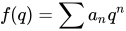
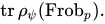
In this context, modularity means that a Galois representation and a modular form give the same arithmetic data at almost all primes. A two-dimensional representation assigns to almost every prime a Frobenius trace . A normalized Hecke eigenform assigns to the same prime its Fourier coefficient . The representation is called modular if there is such an eigenform for which for all but finitely many primes , together with the corresponding determinant character. For the Langlands–Tunnell theorem the modular forms are weight-one forms, and the associated Galois representations have finite image. The dihedral case is the easiest case of the theorem because the Galois representation is induced from a character of a quadratic field, and the modular form is an explicit theta series.




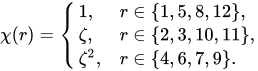
Let The rational prime splits in as Let . Reducing modulo identifies with Now define a cubic character by taking as a generator of and setting Equivalently, This character is trivial on the images of the four units , since these reduce to modulo . Therefore it defines a character of ideals prime to by The condition that be trivial on units is what makes this formula independent of the choice of generator of the ideal .












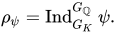
The associated two-dimensional Galois representation is It is irreducible because is not fixed by complex conjugation; conjugation changes the prime to . Its projective image is dihedral.


The corresponding modular form is the character-weighted theta series where the sum is over integral ideals of prime to . Since has class number one, this can be written explicitly as a sum over integers: where one extends by setting . The factor accounts for the four units of .




Thus the coefficients are explicit weighted counts of representations of integers as sums of two squares:

For primes , this gives the expected dihedral trace formula. If then is inert in , and If and , then This is exactly So in this example the modularity statement is visible directly in the coefficients of a theta series.




Overview
The Langlands–Tunnell theorem is a bridge between two ways of attaching arithmetic data to prime numbers. On one side, a two-dimensional Galois representation assigns to almost every prime a matrix , where is a Frobenius element at . The trace is then a number attached to the prime .


On the other side, a normalized modular eigenform has Fourier coefficients indexed by primes. To say that is modular means, roughly, that these two prime-indexed sequences agree: for all but finitely many primes .[3]
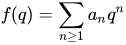
The Langlands–Tunnell theorem proves this modularity statement for odd irreducible two-dimensional complex Galois representations whose projective image is solvable. In less technical terms, it says that a large class of two-dimensional symmetries of algebraic number fields can be read off from the Fourier coefficients of weight-one modular forms.
One source of two-dimensional Galois representations comes from elliptic curves. If is an elliptic curve, then the action of on the -torsion points gives a representation For primes of good reduction with , its trace is congruent modulo to Since is solvable, the mod consequence of the Langlands–Tunnell theorem implies, under the usual irreducibility and oddness hypotheses, that is modular. This residual modularity was one of the starting inputs in Wiles's proof of the modularity of semistable elliptic curves, and hence of Fermat's Last Theorem.[4]





In the dihedral case, the relevant modular forms are theta series attached to characters of quadratic fields. Thus modularity can be checked directly from the coefficients of these theta series. The Langlands--Tunnell theorem goes beyond this elementary theta-series case by proving modularity for the tetrahedral and octahedral solvable cases as well, corresponding to projective images and . The icosahedral case, corresponding to projective image , is not covered by Langlands--Tunnell because is not solvable. Over the rational field, this case was settled by Serre's modularity conjecture, proved Khare and Wintenberger together with work of Kisin. With this case covered, the strong Artin conjecture is known for all odd irreducible two-dimensional complex representations of , including the icosahedral case.


Statement
Let be the absolute Galois group of the rational numbers. A two-dimensional complex representation is called odd if, for a complex conjugation element ,
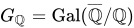


One form of the theorem states that if is continuous, irreducible, and odd, and if the image of the associated projective representation is solvable, then is modular. That is, there is a normalized cuspidal Hecke eigenform of weight one such that, for all but finitely many primes , where is the -th Fourier coefficient of and is a Frobenius element at .[3][1][2]


Equivalently, the Artin -function agrees with the -function of a weight-one modular form. In particular, the theorem proves Artin's conjecture for such representations.


See also
References
- 1 2 Langlands, Robert P. (1980). Base Change for GL(2). Annals of Mathematics Studies. Vol. 96. Princeton, New Jersey: Princeton University Press.
- 1 2 Tunnell, Jerrold (1981). "Artin's conjecture for representations of octahedral type". Bulletin of the American Mathematical Society. New Series. 5 (2): 173–175. doi:10.1090/S0273-0979-1981-14936-3.
- 1 2 Deligne, Pierre; Serre, Jean-Pierre (1974). "Formes modulaires de poids 1". Annales scientifiques de l'École Normale Supérieure. 4. 7 (4): 507–530. doi:10.24033/asens.1277.
- ↑ Wiles, Andrew (1995). "Modular elliptic curves and Fermat's Last Theorem". Annals of Mathematics. Second Series. 141 (3): 443–551. doi:10.2307/2118559. JSTOR 2118559.