Jawbone (novel)
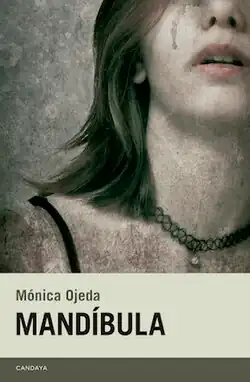 First edition cover | |
| Author | Mónica Ojeda |
|---|---|
| Language | Spanish |
| Genre | fiction |
| Publisher | Candaya |
| Publication date | January 2018 |
| Publication place | Ecuador |
| Pages | 288 |
| ISBN | 978-8-415-93449-3 |

Jawbone (Spanish: Mandíbula) is a novel by Ecuadorian writer Mónica Ojeda, published in 2018.[1] The novel became a bestseller and Ojeda's most popular book to date.[2] It received critical acclaim and was one of the ten finalists of the Mario Vargas Llosa Biennial Novel Prize in 2018.[3] Its English translation was also well received and was a finalist of the Lambda Literary Award for Lesbian Fiction in 2023.[4]
The novel narrates the story of Fernanda, a school student obsessed with horror stories, who is kidnapped by her language teacher.[5] One of the other major characters, Annelise Van Isschot, had already appeared before in Ojeda's previous novel.[6]
The themes explored in the book include relationships between mothers and daughters and among adolescent women, and various facets of feminism.[7][8][9]
Synopsis
Fernanda Montero Oliva is a teenager in Guayaquil who studies in an elite high school. One day she wakes up in a cabin in the middle of the woods, and soon discovers that she has been kidnapped by Clara, her teacher of language and literature.[1]
The story rewinds to the past, when Fernanda and her group of friends discover an abandoned building next to a mangrove which houses a crocodile. Annelise Van Isschot, Fernanda's best friend, who is into creepypastas, pushes the group into visiting the building more often and they start indulging in peculiar practices. These acts, which were innocent at first, increasingly became wicked and terrorizing as Annelise introduces them to the group as the cult of "El Dios Blanco" ("The White God").[10]
Clara joins the school where Fernanda and her friends study. She is affected by the thoughts of her lost mother and the trauma caused by an attack that she suffered months ago at the hands of two teenage girls. When she notices the cruel practices of Fernanda and Annelise, events unravel fast, which leads to Fernanda's abduction and what happens later forms the remaining of the plot.[11]
Critical reception
The novel received positive reviews after its publication. Spanish newspaper, El País, called it "one of the novels of the season",[12] and placed it in the 12th place in its list of the 50 best books of 2018.[13] The German network, Deutsche Welle, included it in its list of the ten most prominent Latin American books of the year.[14] The cultural magazine, Arcadia, included it in its list of the 100 best books in Spanish written by women of the last 100 years.[15]
Author Carlos Pardo, in a review published in the magazine Babelia, called it a "master novel", and praised its narrative, poetic language, and the richness of prose.[16] Writer María Fernanda Ampuero applauded the novel and its author, stating it as a "song of perverse love to the mother-daughter relationship, friend-friend, teacher-student, woman-woman".[17]
Juan Ángel Juristo, writing for the ABC newspaper, praised the work and called it one of the best thrillers he had read. He called the author, Mónica Ojeda, as "one of the greatest promises of the new generation of Latin American writers".[18] Nadal Suau, from the weekly El Cultural, referred to the book as an "impeccable thriller".[19] In magazine Eñe, David Pérez Vega praised the novel and said that it was a more mature and finished novel than Ojeda's previous novel, and that it positioned Ojeda as one of the voices of the new Latin American narrative.[10]
See also
References
- 1 2 Cevallos, Jaime (20 March 2018). "Ecuatoriana Mónica Ojeda 'muerde fuerte' en España con su novela 'Mandíbula'" [Ecuadorian Mónica Ojeda 'bites hard' in Spain with her novel 'Jawbone']. El Universo (in Spanish). Archived from the original on 20 July 2018. Retrieved 17 October 2018.
- ↑ Hora, Diario La (27 March 2019). "El horror y el debate que despierta Mandíbula" [The horror and debate sparked by Mandíbula]. La Hora (in Spanish). Archived from the original on 7 June 2019. Retrieved 9 December 2019.
- ↑ "Ecuatoriana Mónica Ojeda, finalista en bienal mexicana" [Ecuadorian Mónica Ojeda, finalist in Mexican biennial]. El Universo (in Spanish). 16 February 2019. Archived from the original on 1 April 2019. Retrieved 9 December 2019.
- ↑ Schaub, Michael (March 15, 2023). "Lambda Literary Award Finalists Are Revealed". Kirkus Reviews. Archived from the original on March 16, 2023. Retrieved March 16, 2023.
- ↑ "Análisis de la Obra Mandíbula de Mónica Ojeda" [Analysis of the Work Mandíbula by Mónica Ojeda]. Universidad de las Artes (Ecuador) (in Spanish). May 2019. Archived from the original on 9 December 2019. Retrieved 9 December 2019.
- ↑ Bayas, Jorge Andrés (20 April 2020). "Encontrar belleza en lo grotesco, un acercamiento a la poesía de Mónica Ojeda" [Finding beauty in the grotesque, an approach to the poetry of Mónica Ojeda]. Radio Cocoa (in Spanish). Archived from the original on 22 April 2020. Retrieved 22 February 2022.
- ↑ "'Mandíbula' es una novela que explora lo femenino-monstruoso" ['Jawbone' is a novel that explores the feminine-monstrous]. El Comercio (in Spanish). 7 March 2018. Archived from the original on 7 March 2018. Retrieved 17 October 2018.
- ↑ "Ojeda y Ampuero narran desde y sobre el horror" [Ojeda and Ampuero narrate from and about horror]. El Telégrafo (in Spanish). 30 March 2018. Archived from the original on 19 October 2018. Retrieved 19 October 2018.
- ↑ Borra, Arturo (23 May 2018). "La indefensión: el mundo perturbador de "Mandíbula", de Mónica Ojeda" [Helplessness: the disturbing world of "Mandíbula" by Mónica Ojeda]. Tendencias21 (in Spanish). Archived from the original on 9 December 2019. Retrieved 9 December 2019.
- 1 2 Pérez Vega, David (30 May 2018). "Mandíbula de Mónica Ojeda, por David Pérez Vega" [Jawbone by Mónica Ojeda, by David Pérez Vega]. Eñe (in Spanish). Archived from the original on 18 October 2018. Retrieved 18 October 2018.
- ↑ Toranzos, Mariella (17 June 2018). "Mandíbula, obra que explora el terror" [Jawbone, a Work that Explores Horror]. Expreso (in Spanish). Archived from the original on 17 June 2018. Retrieved 18 October 2018.
- ↑ Rodríguez Marcos, Javier (30 May 2018). "¿Quién demonios es Mónica Ojeda?" [Who the Hell Is Mónica Ojeda?]. El País (in Spanish). Archived from the original on 30 May 2018. Retrieved 18 October 2018.
- ↑ "Libro de la guayaquileña Mónica Ojeda entre lo mejor de 2018, según crítica internacional" [Book by Guayaquil Native Mónica Ojeda Among the Best of 2018, According to International Critics]. La República (in Spanish). 15 December 2018. Archived from the original on 16 December 2018. Retrieved 16 December 2018.
- ↑ Anarte, Enrique (17 December 2018). "Diez libros latinoamericanos que resumen el 2018" [Ten Latin American Books That Sum Up 2018]. Deutsche Welle (in Spanish). Archived from the original on 17 December 2018. Retrieved 13 August 2019.
- ↑ "Dos escritoras ecuatorianas están en la lista de los mejores libros de los últimos cien años" [Two Ecuadorian Women Writers Are on the List of the Best Books of the Last Hundred Years]. El Universo (in Spanish). 8 December 2019. Archived from the original on 9 December 2019. Retrieved 9 December 2019.
- ↑ Pardo, Carlos (11 June 2018). "Carne de mi carne" [Flesh of My Flesh]. El País (in Spanish). Archived from the original on 12 June 2018. Retrieved 18 October 2018.
- ↑ Ampuero, María Fernanda (7 April 2018). "Mandíbula: ¿Tú acaso sabes cuánta ternura puede caber en un golpe?" [Jawbone: Do You Have Any Idea How Much Tenderness Can Fit in a Blow?]. El Telégrafo (in Spanish). Archived from the original on 18 October 2018. Retrieved 18 October 2018.
- ↑ Juristo, Juan Ángel (7 March 2018). "Mandíbula, fragilidad y violencia" [Mandíbula, Fragility and Violence]. ABC (in Spanish). Archived from the original on 1 June 2018. Retrieved 18 October 2018.
- ↑ Suau, Nadal (29 March 2018). "Mandíbula" [Jawbone]. El Cultural (in Spanish). Archived from the original on 29 March 2018. Retrieved 19 October 2018.