History of Srivijaya
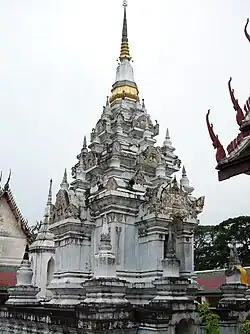
Srivijaya was a thalassocratic empire located on the island of Sumatra (nowadays part of Indonesia), which influenced much of Southeast Asia. Records of the Srivijaya kingdom, including archaeological traces, come mostly from Chinese chronicles. The Chinese chronicles refer to the kingdom as "Shih-li-fo-shih" or "Sanfoqi".[1] Srivijaya later became known as a forgotten kingdom because its historic existence was long obscured. When French historian George Cœdès published his article on the "Kingdom of Srivijaya" in 1918, he managed to bring the forgotten kingdom to global attention. Yijing's accounts are important for describing Srivijaya, which he visited in 671 for about seven months.[2]
Srivijaya was one of the most important centers of Buddhist expansion throughout Southeast Asia from the 7th to the 11th century. Srivijaya was the first polity to dominate much of the western maritimes in Southeast Asia. Due to its strategic location, Srivijaya developed complex technologies for the necessary utilization of maritime resources.[3]
The Srivijaya Kingdom was established by Maharaja Dapunta Hyang Sri Jayanasa, its founder and first king. He would then eventually start the Srivijaya and the commence, which began around in the 7th century. When the Cholas broke off cordial relations with Srivijaya, an intervening war and a series of raids brought about the collapse of the polity. At times, Srivijaya was drawn into conflicts with major rivals like the Cholas as well as minor neighboring polities. Srivijaya would remain a forgotten kingdom following its disappearance.
History
Beginning of Srivijaya era

Historical sources place the Srivijaya era from the 7th century until its decline in the 12th and 13th centuries. The oldest known surviving inscription is the Kedukan Bukit inscription.[4] The Kedukan Bukit inscription was discovered by C.J. Batenburg during the Dutch colonial rule of Indonesia.[5] That inscription dates back to around the 7th century. Srivijaya, known as a thalassocratic empire, was established by Maharaja Dapunta Hyang Sri Jayanasa. His name is mentioned in the early Siddhayatra inscriptions, which detail a sacred journey to obtain blessings alongside his military expansion into neighboring areas. Batenburg discovered the stone inscription near Palembang, Sumatra. Regardless, the stone of the Kedukan Bukit inscription contains most of the existing evidence about Srivijaya's interpretations.
Between the 7th century to the early 11th century, Srivijaya rose and later became a hegemon in Southeast Asia. Srivijaya controlled the Malay world until the Chola invasion led by Rajendra I around 1000 CE. Prior to Chola incursions, the emperor or leader of Chola, Emperor Raja Raja I of Chola, had initially established relations with Srivijaya at that time, which were quite cordial.[6]
Conquest of Kedah, Jambi and other Malay kingdoms
Major incursions like the Srivijayan conquest of Kedah, and during the war however, the king of Kedah had decided to surrender, and many of his forces had faced heavy casualties.[7] The events of conquest by Srivijaya was crucial for the significant period for interaction and cultural exchange, and after successfully reach to Malay world – Srivijaya became a power of trades, later mastering their trade routes throughout international seas, which are Malacca Straits and the Sunda Straits.[8][9] Through invasions of southern Myanmar, the Malay Peninsula, and the Kra Isthmus, Srivijaya extended its regional influence.[8]
Local records unearthed in Kedah indicate that ancient Kedah's socio-political structure was uncentralized.[10] Srivijayan socio-politics were highly structured: the ruler established a palace ''kraton'' in Sumatra, surrounded by chiefs known as ''datus'' who assisted in administering the kingdom and executing diplomatic functions.[11] Archaeological findings and Indian records show that ancient Kedah was regularly visited by traders and its port functioned as an entrepôt. Through this system, Srivijaya organized ancient Kedah, transforming it into a Srivijayan ''mandala''.[12] The defeat of these Malay kingdoms led to their dissolution over centuries, starting between the 7th and 9th centuries and concluding by the 11th or 13th century. Between the 7th and late 8th centuries, Srivijaya annexed Langkasuka,[13][14] an ancient Old Malay Hindu-Buddhist kingdom. The Srivijayans subsequently conquered Pan Pan and Tambralinga on the Malay Peninsula during the same century.[14]
From that time, Srivijayan expansion originated from Palembang in Sumatra and progressed northward into the Malay Peninsula. Undoubtedly, the Srivijaya influences control two major naval choke points (or the key trade routes[15]), such as Malacca and Sunda straits as well, later turning to be significant trading empire with formidable naval forces.[16][17][18]
Rival kingdoms between Srivijaya and Mataram Kingdom

One of proposed causes of the move were strategically politics and power struggle. Srivijaya of Shaleindra against to the Mataram Kingdom, a Javanese Hindu-Buddhist kingdom that flourished between the 8th and 11th centuries. They were partially rivals between the two kingdoms, as of the Mataram were an inland kingdom in Java at that time in Southeast Asia. George Cœdès in his books that the move to East Java was probably response to the Buddhist Shailendra dynasty.[19]: 79, 90 The war between them known as Pralaya[a] (lit. 'Destruction') in one of Javanese inscriptions in Pucangan, dated around firstly in during the reign of king Airlangga of the Kahuripan kingdom as well. To the point of the two rivals kingdom, in 990,[19]: 130 king of Isyana Kingdom Dharmawangsa launched their naval invasion against to Srivijaya, as of the attempt to capture Palembang on that period. News of the Javanese invasion of Srivijaya also were from the Chinese accounts to imperial Chinese dyansty Song. In 988, an envoy from Javanese were sent to the Chinese court at Guangzhou. Around that time, after sojourned about two years in China, the envoy were learned as of his kingdom was attack by Mataram Kingdom, thus being completely unable to turn back home.
As of the Javanese envoys, the hostility between the two rival kingdoms of Mataram and Srivijaya was confirmed by the Javanese envoys as well. From 992, the envoys from Mataram were sent to the Chinese court also, to explain in the Chinese court that the war that Mataram was involved in was between the two kingdoms: Srivijaya and Mataram. The Srivijaya and Mataram wars was a continuous war with Srivijaya.[20]: 200 From that same year, Mataram forces were successful in capturing Palembang for a while, until Srivijaya detained the attacks and captured it back from the Mataram forces.[21]
Wuruwari rebellion

From 1016, Srivijaya had launched their retaliation attacks and demolishing Wwatan Palace in Java, primarily by assisting the lesser king of Mataram and the vassal polity, Wwurari of Lwaram, a somewhat figure in the Javanese history, began to revolt and attacked the palace of Mataram, then later being destroyed eventually. For such reasons why in the first place that Wwurari start to rebelled the Mataram palace is that him Wwurari wanted to marry the daughter of Dharmawangsa. Him also wants to replace the king Dharmawangsa and him being as the leader or a ruler to Mataram Kingdom. However, it was later rejected of his proposal, and that Dharmawangsa chose the Airlangga, son of Udayana Warmadewa of Bali and Mahendradatta[19]: 129 as his son-in-law. Wwurari was vengeful, and later allied with Srivijaya to aid and attack the Mataram palace.[22] The sudden and unexpected attack took place during the wedding ceremony of Dharmawangsa daughter, which left the court unprepared and shocked, eventually the allies between two Wwurari and the Srivijayans attack and killed Dharmawangsa and most of his royal family also.[19]: 130
Song–Srivijaya relationship and the decline
From that time, Srivijaya Kingdom ruling had existed about 600 years. When the first empire Srivijaya had sent a tributary to Song Dynasty, a Chinese dynasty existed from around 960 to 1279, around the year of 670 M to 1380-an M, when it began deteriorating around 1380, Song Dynasty had later changed their policy trades for to focus one of the entities, just to continue the trades with the other countries.[23] The Song Dynasty had slightly involved in the collapse of Melayu kingdoms from the earlier times around the Srivijayan expansions, trough Sumatra and then to Malay Peninsula.
Collapse
While the results of the disestablishment of Jambi and others of the Malay kingdoms, which got ceded and annexed by Srivijaya – the prolonged war of Chinese dynasties between the Yuan Dynasty (supported by the Mongol Empire) and Song Dynasty were one crucial events that has happened in the Chinese history, because Genghis Khan's grandson, Kublai Khan, defeated the Chinese Southern Song in 1279, and for the first time all of China was under foreign rule,[24] putting Song Dynasty in disestablishment and the establishment of Yuan Dynasty, from the year around in 1279, during the Mongol invasion of Song. The consideration of the Mongol invasion throughout East Asia, it was one of the last great achievements accomplished by the Mongol Empire,[25] and upon its completion, the Mongols rule all over continental of East Asia, under the Han-style Yuan dynasty, which that had been found as of the division of the Mongol Empire. It also marks the end of the relationship between the Srivijaya Kingdom within the Song Dynasty in 1279.[note 1]
Over centuries, the Chinese fleets, which are only directing for the route up, until when the Colonial Era arrives – the last Chinese dynasties, known as Qing Dynasty, had been collapsed[26] by the Eight-Nation Alliance, after the outcome of the Boxer Rebellion on 7 September 1901. From that same year, the Boxer Protocol was later created after the results of the Boxer Rebellion, between the great powers and Qing dynasty parties and is signatories as well.
Post-Srivijaya period
Prior and Preliminary of Chola invasion to Srivijaya
Prior to Chola invasion
In 1006 CE, a Srivijayan Maharaja from Sailendra dynasty – King Maravijayattungavarman – built the Chudamani Vihara in the port town of Nagapattinam,[27] located in the modern-day Indian state of Tamil Nadu. However, the Chola Emperor under the reign of Rajendra I – the relations deteriorated as of the Chola start the attacks on Srivijayan cities.[28]
Chola conquest

Chola had made a plan to begin their invasion throughout Southeast Asia. When the Chola invasion begins, aimlessly at Southeast Asia – when the war ended with Chola victory, significantly weakening the Srivijaya Kingdom, breaking the Srivijaya maritime monopoly on that region.[29][30][31][32] Upon that time, several places in the present-day Indonesia were invaded by the Cholas.[33][34] When places were being raided by the king of Chola, it led to the fall of Sailendra Kingdom of Srivijaya – but also at the same time during Chola invasion, when the return voyage of the great Buddhist scholar Atiśa took place from Sumatra to India and Tibet in 1025 CE.[35]
The internal struggles and the collapse of Srivijaya
As of it, the Chola invasion primarily disrupted or disintegrated the kingdom in 1025 CE, which following of the major several raids that were launched by those Cholas upon at their ports.[36]: 110 Chinese sources continually refer to the polities that name as Sanfoqi that were taught by the Srivijaya for a few centuries, but imperceptible that some historian argued that whether the Srivijaya would no longer be the appropriate name for the overlord centre after the year of 1025, when Sanfoqi were referring to Jambi.[2] After the Srivijaya fall, the kingdom was largely forgotten. A French historian named George Cœdès in 1918, far from East of the French school, had formally postulated the kingdom existence.[37]In 1068 CE due to the rise of Kedahan noble power the Srivijayan called Chola assistance for bring it into the vassal, and at that time Chola ruler became actor viceroy on Kedah before back to the India.[38]
Emergence of the new powers
With the death of Chandrabhanu (or Chandrabhanu Sridhamaraja), a figure who was held as both the king to Tambralinga and Jaffna, known as Javaka who reigned between 1230 to 1262. With his death, according to the Siam Society historical sources, the Srivijaya Kingdom came to its end. The histories between the two lands of Malay Peninsula and Sumatra subsequently took separated courses. Subsequently, the city-states had sent embassies to the Chinese court, which the Chinese recorded as coming from Sanfotsi; but, a complete control of the straits of Maura Takus (Malayu) and the central of Sumatra and Kedah on the west coast of the Peninsula, until it was left no more for the two of them.[39]
Events of the Mongol expedition to Java and the founding of Majapahit Empire

Majapahit were rising after the fall of the Srivijaya Kingdom. The empire rose began struggling as of the Mongol invasion led attack on Southeast Asian or Malay world on Java particularly. The kingdom Majapahit was founded by the Javanese emperor and the founder of Majapahit Raden Wijaya, which him in earlier times during war had participated in it, and later, he became victorious after the war following the fail invasion of the Mongol upon Java. The Mongol invasion of Java was planned by the dynasty of China Yuan and a Mongol-led Imperial dynasty also, under the reign of the Yuan emperor Kublai Khan had attempted to invade Java, with an army about 20,000[40] to 30,000 soldiers.[41]
Was intended as a punitive expedition that were launched against the king of Singhasari Kertanegara, who him had refused to pay the tributes to Yuan to primarily maimed one of the emissaries. In the intervening years between Kertanagara refusal and the expedition arrival on Java, Kertanagara was killed and Singhasari had been usurped by Kediri.
A fierce campaign between the Mongols and their Mongol-led imperial Yuan against the others include Majapahit, Kediri however during the war surrendered. Yuan forces were betrayed by the erstwhile allies Majapahit, under Raden Wijaya. The repercussion of Mongol invasion to Java, the invasion ended with a Yuan failure and strategic victory to Majapahit.
Notes
- ↑ also, the Srivijaya had already got invaded by some naval incursions led by the king of Chola Rajendra I, eventually putting an end to Srivijaya.[17][18]
References
- ↑ "A Comprehensive Examination of the Srivijaya Empire". Retrieved 18 July 2025.
- 1 2 Miksic, John N.; Goh, Geok Yian (2017). Ancient Southeast Asia. London: Routledge.
- ↑ Laet, Sigfried J.de; Herrmann, Joachim (1994). History of Humanity. Routledge.
- ↑ Sadzali, Asyhadi (2019-04-30). "Hulu ke Hilir: Jaringan dan Sistem Perniagaan Sungai Kerajaan Srivijaya". Paradigma: Jurnal Kajian Budaya. 9 (1): 61. doi:10.17510/paradigma.v9i1.276. ISSN 2503-0868.
- ↑ Bloembergen, Marieke; Eickhoff, Martijn (2020-01-16). The Politics of Heritage in Indonesia: A Cultural History. Cambridge University Press. ISBN 978-1-108-49902-6.
- ↑ Sastri, K. A. Nilakanta (1935). The CōĻas. University of Madras. pp. 219–220.
- ↑ Nabil, Adlani (2022-10-11). "6 Daerah Kekuasaaan Sriwijaya". adjar.grid.id (in Indonesian). Retrieved 2025-01-20.
- 1 2 "Kerajaan Srivijaya" (PDF). Dewan Bahasa dan Pustaka. Retrieved 5 June 2025.
- ↑ "The Srivijaya Empire: trade and culture in the Indian Ocean" (PDF). PBworks. Retrieved 3 June 2025.
- ↑ Mohd Nasir & Ramli 2022, p. 4.
- ↑ Zain, Sabri (July 1983). "THE "INTERNATIONAL RELATIONS" OF THE MALAY PENINSULA FROM THE SEVENTH TO THE FOURTEENTH CENTURY" (PDF). Retrieved 4 June 2025.
- ↑ Mohd Nasir & Ramli 2022, pp. 4–5.
- ↑ Munoz. Early Kingdoms. p. 130.
- 1 2 Dokras, Uday (2023). "Srivijaya: Vanished Great Mandala". AcademiaEdu. Retrieved 3 June 2025.
- ↑ "Srivijaya maritime empire". Fiveable. Retrieved 3 June 2025.
- 1 2 "Srivijaya empire". Britannica. Encyclopedic Britannica. Retrieved 3 June 2025.
- 1 2 "History of Indonesia (Srivijaya Kingdom)". Britannica. Encyclopedic Britannica. Retrieved 3 June 2025.
- 1 2 3 4 5 Coedès, George (1968). The Indianized states of Southeast Asia. p. 434. Retrieved 11 June 2025.
- ↑ Marwati Djoened Poesponegoro; Nugroho Notosusanto (2008). Sejarah Nasional Indonesia: Zaman Kuno (in Indonesian). Balai Pustaka. ISBN 978-9794074084. OCLC 318053182.
- ↑ Munoz, Paul Michel (2006). Early Kingdoms of the Indonesian Archipelago and the Malay Peninsula. Singapura:Editions Didier Millet. ISBN 9814155675.
{{cite book}}: CS1 maint: publisher location (link) - ↑ Lubis, Ibrahim (2024-01-06). "Sejarah Kerajaan Lwaram dan Sosok Aji Wurawari". dewantaranews.com (in Indonesian). Retrieved 2025-01-23.
- ↑ Jamal, Nornizam (21 May 2020). "Perbahasan Asal Usul Empayar Melayu Terhebat Sejarah – Srivijaya". ThePatriotsAsia. Retrieved 3 June 2025.
- ↑ Johnson, Jean (25 July 2017). "The Mongol Dynasty". AsiaSociety. Retrieved 3 June 2025.
- ↑ C. P. Atwood Encyclopedia of Mongolia and the Mongol Empire, p. 509.
- ↑ Guan, Kwa Chong (2016). "The Maritime Silk Road: History of an Idea" (PDF). NSC Working Paper (23): 1–30. Archived (PDF) from the original on 2022-10-09.
- ↑ Multiple sources:
- "buddhist teachings hindu meditation tibetan at buddhistnews.tv". Archived from the original on 9 October 2014. Retrieved 21 June 2006.
- Keay, John, India: A History, pp 222-223
- "Archived copy" (PDF). Archived from the original (PDF) on 2007-02-08. Retrieved 2006-10-16.
{{cite web}}: CS1 maint: archived copy as title (link)
- ↑ Power and Plenty: Trade, War, and the World Economy in the Second Millennium by Ronald Findlay, Kevin H. O'Rourke p.67
- ↑ Kenneth R. Hall (October 1975), "Khmer Commercial Development and Foreign Contacts under Sūryavarman I", Journal of the Economic and Social History of the Orient 18 (3), pp. 318-336, Brill Publishers
- ↑ R. C. Majumdar (1961), "The Overseas Expeditions of King Rājendra Cola", Artibus Asiae 24 (3/4), pp. 338-342, Artibus Asiae Publishers
- ↑ Southeast Asia: Past and Present by D.R. Sardesai p.43
- ↑ Early Kingdoms of the Indonesian Archipelago and the Malay Peninsula by Paul Michel Munoz p.161
- ↑ Nagapattinam to Suvarnadwipa: Reflections on the Chola Naval Expeditions to Southeast Asia by Hermann Kulke,K Kesavapany,Vijay Sakhuja p.170
- ↑ Trade and Trade Routes in Ancient India by Moti Chandra p.214
- ↑ Chattopadhyaya 1999, p. 91.
- ↑ Miksic, John M. (2013). Singapore and the Silk Road of the Sea, 1300–1800. NUS Press. ISBN 9789971695583.
- ↑ Munoz. Early Kingdoms. p. 117.
- ↑ Watson Andaya, Barbara; Andaya, Leonard (2001). A History of Malaysia Second Edition (PDF). Macmilan. p. 30.
- ↑ Chiraya Rajani, p. 1.
- ↑ Weatherford, Jack (2004), Genghis khan and the making of the modern world, New York: Random House, p. 239, ISBN 0-609-80964-4
- ↑ Bade 2013, p. 45.
Bibliography
- Mohd Nasir, Muhammad Nu'man; Ramli, Zuliskandar (September 2022). "ANCIENT KEDAH: A SRIVIJAYAN MANDALA IN THE MALAY PENINSULA" (PDF). Journal Archeology Malaysia. 35 (2). Malaysian Association of Archaeologists: 77–87. Archived from the original (PDF) on 6 September 2024. Retrieved 4 June 2025.
- Chattopadhyaya, Alaka (1 May 1999). Atisa and Tibet: Life and Works of Dipamkara Srijnana in Relation to the History and Religion of Tibet with Tibetan Sources. Motilal Banarsidass, India. p. 624. ISBN 9788120809284. Retrieved 4 June 2025.
- Chiraya Rajani, M.C. Chand. "Background to the Sri Vijaya Story Part V (Conclusion)" (PDF). The Siam Society. Chiangmai University. Retrieved 15 June 2025.
- Bade, David W. (2013), Of Palm Wine, Women and War: The Mongolian Naval Expedition to Java in the 13th Century, Singapore: Institute of Southeast Asian Studies