Fetor hepaticus
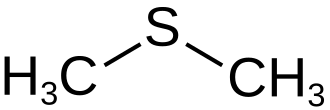
Fetor hepaticus or foetor hepaticus (Latin, "liver stench" ("fetid liver")[1] (see spelling differences), also known as breath of the dead or hepatic foetor, is a condition seen in portal hypertension where portosystemic shunting allows thiols to pass directly into the lungs.[2] It is a late sign in liver failure and is one of the clinical features of hepatic encephalopathy.[3] Other possible causes are the presence of ammonia and ketones in the breath.[4][5] The breath has a sweet, fecal, or musty smell to it.[2][4]
The compound volatile dimethyl sulfide has been associated with it,[6] raising the possibility of an objective noninvasive measure of liver failure.[7][8] A secondary form of trimethylaminuria is also associated with liver failure, and it has been suggested that trimethylamine is also a contributor to the odor of fetor hepaticus.[9]
See also
References
- ↑ "Fetor Hepaticus: Smell, Symptoms, Causes & Prognosis". my.clevelandclinic.org. Retrieved 2026-06-27.
- 1 2 McGee, Steven (2012-01-01), "Chapter 7 - Jaundice", Evidence-Based Physical Diagnosis (Third Edition), Philadelphia: W.B. Saunders, pp. 63–69, doi:10.1016/B978-1-4377-2207-9.00007-0, ISBN 978-1-4377-2207-9, retrieved 2026-07-27
- ↑ Yachnis, Anthony T.; Rivera-Zengotita, Marie L., eds. (2014-01-01), "A - Toxic Injury", Neuropathology, High-Yield Pathology, Philadelphia: W.B. Saunders, pp. 292–298, doi:10.1016/B978-1-4160-6220-2.00051-8, ISBN 978-1-4160-6220-2, retrieved 2026-07-27
- 1 2 Van den Velde, S; Nevens, F; Van Hee, P; Van Steenberghe, D; Quirynen, M (November 2008). "GC-MS analysis of breath odor components in liver patients". Journal of Chromatography B. 875 (2): 344–8. doi:10.1016/j.jchromb.2008.08.031. PMID 18938115.
- ↑ "Fetor Hepaticus: When Bad Breath Is More Than Bad Breath". Cleveland Clinic. Archived from the original on 2026-06-13. Retrieved 2026-07-27.
- ↑ Van den Velde S, Nevens F, Van Hee P, van Steenberghe D, Quirynen M (November 2008). "GC-MS analysis of breath odor compounds in liver patients". J. Chromatogr. B. 875 (2): 344–8. doi:10.1016/j.jchromb.2008.08.031. PMID 18938115.
- ↑ Kaji, H; Hisamura, M; Saito, N; Murao, M (May 1, 1978). "Gas chromatographic determination of volatile sulfur compounds in the expired alveolar air in hepatopathic subjects". Journal of Chromatography. 145 (3): 464–8. doi:10.1016/s0378-4347(00)81377-8. PMID 659533.
- ↑ Tangerman, A; Meuwese-Arends, MT; Jansen, JB (Feb 19, 1994). "Cause and composition of foetor hepaticus". Lancet. 343 (8895): 483. doi:10.1016/s0140-6736(94)92729-4. PMID 7905979. S2CID 10538949.
- ↑ Mitchell, S; Ayesh, R; Barrett, T; Smith, R (May 1999). "Trimethylamine and foetor hepaticus". Scandinavian Journal of Gastroenterology. 34 (5): 524–8. doi:10.1080/003655299750026281. PMID 10423071.