Church, Paxson & Co.
Church, Paxson & Company (aka Church-Paxson Co.) was a New York City-based music publishing company founded in 1909 by Clarence Clinton Church and Clement Esmond Paxson.[1][2] In 1919, the company reorganized as C.C. Church & Co. and moved its headquarters to Hartford, where, in 1922, it incorporated.[3] C.C. Church & Co. maintained its New York office at 1367 Broadway.[4]
Company history
In 1910, the incorporators were (i) Clarence Clement Church of Nutley, New Jersey, (ii) William Thomas Pierson of New York City, and (iii) Robert Forsyth Little (1874–1923) of New York City.[1] Although Clement Esmond Paxson was a namesake of Church, Paxson & Co. and was listed as a member of its board in 1910, New York City directories (1909–1919) do not list him among the company's officers. The 1910 directory identifies Clarence C. Church as president from 1910 through 1917, William C. Polla (William Conrad Polla) as secretary, and William T. Pierson as treasurer in 1910.
Clement Esmond Paxson
Paxson's principal career was in electrical engineering. He graduated from the University of Pennsylvania in 1902 with a Bachelor of Science in electrical engineering. On March 23, 1905, he married a painter, Ethel Gould Easton, in Meriden, Connecticut, at St. Paul's Universalist Church. At the time of his marriage, he was Chief Engineer for the Chesapeake & Potomac Telephone Company (C&P Telephone) of Washington, D.C. William Thomas Pierson, who graduated from George Washington University in 1903 with a Bachelor of Science in electrical engineering was Assistant Engineer at C&P Telephone of Washington, D.C. Pierson was best man in Paxson and Easton's wedding. From about 1910 to about 1916, Ethel Paxson composed and wrote lyrics to music published by Church, Paxson and Company, under the pseudonym, Lettie Gould.[5] In 1916, Paxson was in Rio de Janeiro on his assignment as Chief Engineer with Stone & Webster to install lines there. Ethel accompanied Clement Paxson in Rio; and, while there, painted the countryside and seashore and has been chronicled as one of the first American impressionist artists to paint there.
Dissolution
The 1918 Polk Co-Partnership Directory for New York City listed Church, Paxson & Co. as dissolved.
Selected publications
| Title | Year | Composer | Lyricist | Cover illustration |
|---|---|---|---|---|
| "Salute the Flag," march and two-step | 1902[a] | William Thomas Pierson, Jr. (1879–1936) | (solo piano) | Edward Henry Pfeiffer[6] |
| "Rippling Waters," caprice | 1904[b] | William Thomas Pierson | (solo piano) | Edward Henry Pfeiffer |
| "The University March," two-step" | 1904[c] | William Thomas Pierson | (solo piano) | |
| "Love's Offering," valse intermezzo | 1905[d] | C. Paul | (solo piano) | |
| "Dream Waltz" | 1907[e] | W.C. Powell (William Conrad Polla) | (solo piano) | John Frew |
| "Love Me Lots and Love Me All the Time" | 1909[f] | William Thomas Pierson | Will A. Boyd | |
| "Someone" | 1909[g] | Al Piantadosi | Jeffrey T. Branen (1872–1927) | William Austin Starmer, featuring roses and ornamental framing, photo center inset of Florence Bindley in theatrical costume |
| "China Clock and a Dresden Cat (Tic-Toc)" | 1910 | W.C. Powell (William Conrad Polla) | Clarence Patrick McDonald | Jenkins |
| "Roses" | 1910 | James A. MacElwee | James A. MacElwee | Edward Henry Pfeiffer |
| "Little Soldier March" | 1910[h] | W.C. Powell (William Conrad Polla) | (solo piano) | Charles Arthur Etherington (1880–1960) |
| "Beautiful Thoughts of Love," novelette ("The piece that contains the world's greatest melody") | 1910 | Jerome Heller | (solo piano) | |
| "Mother Is the Best Sweetheart of All" | 1910 | Jerome Heller | Lettie Gould (pseudonym of Ethel Paxson; 1885–1982)[5] | |
| "Twilight Shadows," a reverie | 1910 | Jerome Heller | (solo piano) | William Austin Starmer |
| "Twinkling Shadows," reverie | 1910 | Jerome Heller | ||
| "My Father Was a Soldier" | 1910 | Julian Jordan | Julian Jordan | |
| "Rose Petals," reverie (tone poem) | 1910 | William Thomas Pierson | (solo piano) | |
| "I'll Return to You My Sweetheart (And the Dear Old Georgia Pines)" | 1910 | William Thomas Pierson | Robert G[arland] Irby (1884–1930), of New Orleans | |
| "The Irresistible Rag" | 1910 | W.C. Powell (William Conrad Polla) | (solo piano) | Edward Henry Pfeiffer |
| "Cry Baby" | 1910 | Harold J. Norman | J. Irving Young (Joe Young) | Edward Henry Pfeiffer |
| "Smiling Eyes" | 1910 | Minerva W. Fields | Joe Young (J. Irving Young) | Edward Henry Pfeiffer |
| "Emogene" | 1911 | William Thomas Pierson | William Thomas Pierson | |
| "Cairo", oriental intermezzo patrol | 1911 | W.C. Powell (William Conrad Polla) | (solo piano) | Edward Henry Pfeiffer |
| "Evening Prayer," reverie | 1911 | Lettie Gould | (solo piano) | Cover art by Bouthillier |
| "Loves Whispering Waltzes" | 1911 | Lettie Gould | (solo piano) | B&W portrait photo of a woman on cover |
| "Give My Love to Mother" | 1911 | Anna Mullen | Lettie Gould | Edward Henry Pfeiffer |
| "Love Waltz" | 1911 | Jerome Heller | (solo piano) | John Frew |
| "The Rosary," poem, in A♭ | 1911 | Jerome Heller | Robert Cameron Rogers | |
| "My Little Girlie Girl" | 1911 | W.C. Powell (William Conrad Polla) | Lettie Gould | |
| "A La Bien Aimee (Love Waltz)," Op. 59 no. 2 | 1911 | Édouard Schütt | (solo piano; arr. by J[acob] Frank Leve; 1864–1959)[7] | |
| "Sparkling Stars," caprice | 1911 | Benjamin Richmond | (solo piano) | |
| "Chaminade (Cécile Louise Stéphanie)," Autalia Serenade | 1911 | Cécile Louise Stéphanie Chaminade (1857–1944) | (solo piano) | |
| "The Little Brook" | 1911[i] | Friedrich Werner | (solo piano) | |
| "It Isn't Hard to Love a Girl Like You" | 1911 | W.C. Powell (William Conrad Polla) | Martin [Edward] Swauger (1887–1965) | |
| "You Musical Ragtime Sal"[j] | 1911 | W.C. Powell (William Conrad Polla) | Martin [Edward] Swauger (1887–1965) | Edward Henry Pfeiffer |
| "Barcarolle," from The Tales of Hoffmann | 1912 | Jacques Offenbach | William Conrad (William Conrad Polla), arr. | |
| "Somewhere in Dixie Lives the Girl I Love" | 1912 | W.C. Powell (William Conrad Polla) | Martin [Edward] Swauger (1887–1965) | Edward Henry Pfeiffer |
| "Berceuse," words by Alexander Hamilton, Jr. | 1912 | Anonymous | ||
| "Happy Hearts," morceau élégant (elegant composition) | 1912 | Ernest Lent (1856–1922) | (solo piano, "To Miss Dolores Burns") | |
| "Passing Birds (Oiseaux Passants)" | 1912 | Ernest Lent | (solo piano) | |
| "Scherzino" | 1912 | Ernest Lent | (solo piano) | |
| "The Robin's Departure" | 1912 | Leander Fisher | Revised and arranged by W. Conrad (William Conrad Polla) | |
| "True Blue Sue" | 1912 | Thurland Chattaway | Thurland Chattaway | John Frew |
| "The Greyhound (Lusitania March)"[k] | 1912 | John Parker | (solo piano) | Edward Henry Pfeiffer |
The Three Graces, Op. 1
|
1912 | William Conrad Polla | ||
Salon Pieces, Op. 2
|
1912 | William Conrad Polla | ||
| "Twittering Birds," reverie | 1912 | John J. Fitzpatrick | (solo piano) | Walter Menige Dunk (1855–1929) |
| "Only a Bunch of Violets" | 1912 | Jerome Heller | Lettie Gould | |
| "Bouquet of Roses" | 1912 | Jerome Heller | (solo piano) | Edward Henry Pfeiffer |
| "Summer Dreams Waltz" | 1912 | William Thomas Pierson | (solo piano) | |
| "My Rose in a World of Tears"[l] | 1912 | Jerome Heller | Harry D. Kerr | |
| "Mazurka de Concert" | 1912 | Arthur Lange | ||
Op. 15: Songs From the Greek (2 of 6 published with Church, Paxson)
|
1912 | Eleanor Everest Freer[8] | ||
| Op. 17, "She's Somewhere in the Sunlight Strong," no. 1 | 1912 | Eleanor Everest Freer[8] | Richard Le Gallienne (1866–1947) | |
Op. 18, "Fate's Decree," no. 3
|
1912 | Eleanor Everest Freer[8] | ||
| Op. 24, "Old Love Song," no. 1 | 1912 | Eleanor Everest Freer[8] | William Gerard Chapman (1877–1945) | |
| Op. 25, "A Devout Lover," no. 3 | 1912 | Eleanor Everest Freer[8] | Thomas Randolph (1605–1635) | |
| "The Fawn" | 1912[m] | William Schiller | (solo piano) | Edward Henry Pfeiffer |
Kerr–Polla Songs (Poems), Op. 4
|
1912 | William Conrad Polla (1876–1939) | Harry D. Kerr | |
Holiday Series:
|
1912 | William Conrad (William Conrad Polla) | ||
| "Love's Sweet Dream." Op. 111 | 1912 | Louis Albert Drumheller (1854–1936) | (solo piano) | Edward Henry Pfeiffer |
| "Offenbach (Jacques)," from Tales of Hoffman | 1912 | William Conrad (William Conrad Polla) | ||
| "Iris," redowa three-step | 1912 | Mabel R. Kaufman | Mabel R. Kaufman | |
| "Gavotte Petite" | 1912 | William Conrad (William Conrad Polla) | (solo piano) | |
Mammy Songs
|
1913 | Josephine Merwin Cook | Josephine Merwin Cook | |
| "Laughing Eyes" | 1913 | W.C. Powell (William Conrad Polla) | W.C. Powell (William Conrad Polla) | Edward Henry Pfeiffer |
| "Kiss Me Pretty" | 1913 | W.C. Powell (William Conrad Polla) | ||
| "Reflections," meditation | 1913 | Jerome Heller | ||
| "Twinkling Stars" | 1913 | Jerome Heller | (solo piano) | |
| "Normandy Chimes" | 1913 | W.C. Powell (William Conrad Polla) | (solo piano) | Edward Henry Pfeiffer |
| "Rose Waltz" | 1913 | W.C. Williams (William Conrad Polla) | (solo piano) | Walter Menige Dunk |
| "I Love Thee" | 1913 | Horace Kirkus Dugdale[n] | Donald M. McLeran | |
| "Go To Sleep, My Baby," song,," song, from the 7th piece (of 8) of Dvořák's Humoresque, Op. 101[o] | 1914 | Jerome Heller | Lettie Gould | |
| "Would You Take a Chance With Me" | 1914 | W.C. Powell (William Conrad Polla) | William Denight Cobb (1876–1930) | Edward Henry Pfeiffer |
| "Florentine Waltzes", Il ballo mascherato [The Masked Ball] | 1914 | Martha Unger (1889–1951)[p] | Edward Henry Pfeiffer | |
Moving Picture Operetta, Op. 12
|
1914 | J[ohn] Lawrence Erb (1877–1950) | Pauline Frances Camp (née Pauline Frances Bishop; 1863–1939) | |
Overture Potpourri, A Moving Picture Operetta Dedicated to the Pianists of the Movies and the Public That Plays the Piano Which This Music Will Interest
|
1914 | W.C. Powell (William Conrad Polla) | (solo piano) | |
| "Dengozo," maxixe tango by Ernesto Nazareth | 1914 | William Conrad (William Conrad Polla), arr. | Edward Henry Pfeiffer | |
| "Hesitation Con Amore" [Hesitation With Love], hesitation waltz | 1914 | W.C. Powell (William Conrad Polla) | (solo piano) | Myron "Grim" Natwick (1890–1990) |
| "Romance," reverie | 1914 | Sol ("Sally") Ohnhaus (1875–1950) | (solo piano) | |
| "Valse Decembré (Valse Boston)" | 1914 | Walter Rolfe (1880–1944) | (solo piano) | Edward Henry Pfeiffer |
| "Country Club", fox trot | 1914 | William Thomas Pierson | (solo piano) | Edward Henry Pfeiffer |
| "You Made My Dreams Come True" | 1914 | W.C. Powell (William Conrad Polla) | Grace Newell | |
| "Chimes of Westminster," reverie for piano, with imitation church chimes | 1915[r] | Harold [Brown] Freeman (1892–1924) | (solo piano) | Edward Henry Pfeiffer |
| "My Rose Marie"[s] | 1915[t] | James A. MacElwee | James A. MacElwee | Cover image: © by The Knapp Co. Inc., New York[11] |
| "The Songs of Ages (Down the Lane of Life)" | 1915 | Jerome Heller | Jerome Heller | |
| "Love Knots" | 1915 | W.C. Powell (William Conrad Polla) | Lettie Gould | |
| "Vision," waltz | 1915 | Jules Holfman | (solo piano) | Edward Henry Pfeiffer |
| "When a Lovable Girl Loves You" | 1915 | W.C. Powell (William Conrad Polla) | Martin [Edward] Swauger (1887–1965) | |
| "Joy of Youth," tarantelle | 1915 | Hans Engelmann | (solo piano; fingered and annotated by J. Frank Leve) | |
| "Melody of Spring," reverie | 1915 | Hans Engelmann | (solo piano; fingered and annotated by J. Frank Leve) | |
| "In Crocus Time (Blumenlied)" Op. 43 | 1915 | Ruth Vincent[u] | (solo piano; fingered and annotated by J. Frank Leve) | |
| "Moonbeams," romance. Op. 45 | 1915 | Ruth Vincent | (solo piano) | (solo piano; fingered and annotated by J. Frank Leve) |
| "My Garden of Memories" | 1915 | Philip Schwartz (1889–1964) | W.L. "Billy" Beardsley | |
| "Hymns My Dear Old Mother Sang to Me" | 1915 | Philip Schwartz | W.L. "Billy" Beardsley | |
| "Irresistible Rag" | 1915 | Horace Kirkus Dugdale | Donald M. McLeran | |
| "Love's Victory Waltz" | 1915 | R.C. Harwood | (solo piano) | |
| "At Evening," Nocturne, Op. 312 | 1915 | Alberto Himan | (solo piano) | |
| "I'll Mend the Heart I Have Broken (Because I Love You Dear)" | 1915 | Milton Sherman | Milton Sherman | |
| "You Are the Rose of My Heart" | 1915 | W.C. Powell (William Conrad Polla) | Ralph Livingston | |
| "By the Sea," reverie | 1915 | Leander Fisher (1850–1918)[12] | (solo piano) | William Austin Starmer |
| "No Town Is Like Your Home Town" | 1915 | Philip Leo Ponce (1886–1945) | Philip Leo Ponce (1886–1945) | |
| "Dear Little Girl" | 1915 | Mabel R. Kaufman | ||
| "Valse Estelle" | 1915 | E. Goldston (Roy E. Nolte; 1896–1979) | ||
| "Down Deep in a Submarine," song for baritone voice | 1915 | Harry D. Kerr | Harry D. Kerr | |
| "Sweet Irish Rose (From Dear Old Killarney)" | 1915 | Thurland Chattaway | Thurland Chattaway | André De Takacs |
| "Battle in the Sky," sectional, marche militaire | 1915 | J. Luxton | (solo piano) | Edward Henry Pfeiffer |
| "Goose Step," novelty one-step | 1915 | Eugene Platzmann (1876–1949) | William Austin Starmer | |
| "Love's Pleading" | 1916 | William Thomas Pierson | (solo piano) | |
| "Goose Step," novelty one-step | 1916 | Eugene Platzmann | Arr. for orchestra and piano by George Frederick Briegel | |
| "You'll Be the Queen in My Kingdom of Love" | 1916 | Eugene Platzmann | Harry Delf | |
| "Cuori che si amano (Sweetheart's Melody)" | 1916 | P[ietro] (Peter) Ballatore (1888–1969) | (solo piano) | |
| "Danza (Dance)" | 1916 | P[ietro] (Peter) Ballatore (1888–1969) | (solo piano) | |
| "Minita," three-step" | 1916 | Eugene Platzmann | (solo piano) | Edward Henry Pfeiffer |
| "Down by the Babbling Brook" | 1916 | Milton Sherman | Milton Sherman | Edward Henry Pfeiffer |
| "Valse Coquette" | 1916 | W.C. Powell (William Conrad Polla) | (solo piano) | |
| "Open Thy Gates to Me" | 1916 | Henry Banachowski de Packh (1878–1955) | Robert G[arland] Irby (1884–1930), of New Orleans | |
| "International Fox Trot" | 1916[v] | Eugene Platzmann | (solo piano) | |
| "Wiosna (Springtime)," polka[13] | 1916 | Cyrus S[tevens] Mallard (1888–1972) | (solo piano) | |
| "Go Ask the Rose" | 1916 | Frederick [John] Seymour (1886–1971)[14] | Frederick [John] Seymour | |
| "Sweetheart Song" | 1916 | Jerome Heller | Lettie Gould | |
| "I Can't Forget" | 1916 | Thurland Chattaway | Thurland Chattaway | |
| "The Battle of the Marne," descriptive march fantasia, Op. 2 | 1916 | J. Luxton | (solo piano) | Albert Wilfred Barbelle (1887–1957) |
| "A Dutch Lullaby" | 1917 | E.S. Phelps | (solo piano; edited and fingered by J. Frank Leve) | |
| "Spring Blossoms," Op. 46 | 1917 | Ruth Vincent | (solo piano; edited and fingered by J. Frank Leve) | |
| "An Old Garden," tone poem | 1917 | Anice Terhune (1873–1964) | (solo piano; edited, fingered, and annotated by J. Frank Leve) | Cover image: © by The Knapp Co. Inc., New York Cover illustration by Walter Lorenzo Greene |
| "Neptune Ponders," Op. 48 | 1917 | Ruth Vincent | (solo piano; edited and fingered by J. Frank Leve) | |
| "Gypsy Rose" | 1917 | Elmer Olson | Elmer Olson | |
| "Ysmita, Japanese Serenade" | 1917[w] | Hans Engelmann | (solo piano) | |
| "Valse Jeanette"[x] | 1917 | Lillian Jacobson | (solo piano) | |
| "Columbian Patrol" | 1917 | Edmond S. Phelps | (solo piano) | |
| "There's a Sweet Little Girl (And She's Waiting for Me)" | 1917 | Raymond Alexander Browne (1871–1922) | Paul Wilson | Walter Menige Dunk |
| "Do You Really Care?" | 1917 | Orlando Powell | Orlando Powell | |
| "Mood Pensive" | 1917 | Walter Rolfe | (solo piano) | Cover image: © by The Knapp Co. Inc., New York |
| "For Freedom and Humanity" | 1917 | Henry Haaf | Peter McAvoy | |
| "Somewhere" | 1918 | Henry L. Willard | Henry L. Willard | Walter Menige Dunk (1855–1929) |
| "Uncle Sam We'll All Be There" | 1918 | Edward M. Ingraham | Edward A[ndrus] Terhune, Jr. (1895–1976) | R.C. Daly |
| "Don't Forget to Write, My Dear" | 1918[y] | Elgin Mason | Elgin Mason | Edward Henry Pfeiffer |

Selected audio
- Will Pierson (December 21, 2021). "Salute the Flag," march arr. 4-hands; Pianostyle 46101. Steinway Model K 65/88 Note Pianola Player Piano Pianolist: Adam Ramet. The Edwardian Pianist. Retrieved August 22, 2026 – via YouTube (piano roll).
- Word Roll: "Columbian Patrol" (QRS roll #33276). Edmond S. Phelps, composer. QRS Music Technologies – Church-Paxson Co. 1918.
{{cite book}}: CS1 maint: others (link) (Special Collection M1646.P44 C65 1917 PAM)
Bibliography
Annotations
- ↑ "Salute the Flag": © 1902 by The Pierson and Bogley Publishing Co. Transferred 1908 to The Columbia Music Pub. Co., Inc., Washington, D.C. (see Sophocles Papas). Transferred 1910 to Church, Paxson & Co.
- ↑ "Rippling Waters": © Will T. Pierson, Jr. & Co., Washington, D.C. Transferred 1908 to Columbia Music Pub. Co., Washington, D.C.
- ↑ "University March and Two Step": © Will T. Pierson & Co. © transferred 1908 to Columbia Music Pub. Co., Washington, D.C. © transferred in 1910 to Church, Paxson & Co.
- ↑ "Love's Offering": © 1905 by Paul Cohn. Transferred 1912 to Church, Paxson & Co.
- ↑ "Dream Waltz": © 1907 by P.J. Howley, Inc. Leased in 1910 to Church, Paxson & Co.
- ↑ "Love Me Lots and Love Me All the Time": © 1909 by The Columbia Music Co., Inc.
- ↑ "Someone": © 1905 by Will Rossiter. © Transferred to Church, Paxson & Co. around 1915.
- ↑ "Little Soldier March": © 1910 by Church, Paxson & Co. © transferred 1918 to C.C. Church & Co., Hartford. © assigned 1930 to Belwin, Inc.
- ↑ "The Little Brook": © 1911 by Church, Paxson & Co. © Transferred in 1918 to C. C. Church & Co.
- ↑ "You Musical Ragtime Sal": "Sal (Sally) McAnna played a grand piano in a nickel show every night".
- ↑ The Lusitania was popularly known as the "Greyhound of the Seas."
- ↑ "My Rose in a World of Tears": "Respectfully dedicated to Mme Buckhout" (aka Jennie Buckhout; married to Edward Weeks Buckhout; née Jennie Hall; 1866–1925). Mme Buckhout was a vocalist.
- ↑ "The Fawn": © transferred in 1918 to C.C. Church & Co.
- ↑ Horace Kirkus Dugdale (1890–1980) was a Washington, D.C., music publisher who operated one of the leading early twentieth-century "song-poem" publishing businesses. His company solicited songs and poems from aspiring writers, offering to arrange, publish, and promote their work for a fee. Dugdale and other prominent song-poem publishers were prosecuted for mail fraud in 1913, and the H. Kirkus Dugdale Company filed for bankruptcy in 1915.[9]
- ↑ "Go To Sleep My Baby": Heller's adaptation – with a vocal range of D4–F5 – is in E♭ major, a minor third below the G♭ major of Dvořák's original. Vocal range:
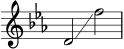
- ↑ Martha Unger married Samuel Bronstein November 2, 1924, in Manhattan.
- ↑ "Ol' Mammy Coon" was a poem by Camp, originally published March 14, 1903 by the Boston Evening Transcript. The poem's central joke is a running racial double entendre. It uses "coon" for (i) raccoon and (ii) a racial slur. On the surface, it depicts a mother raccoon looking for her stray cub. Beneath the literal narrative, the mother racoon might mistake the Black child addressed by the narrator for her cub: "How she tell de diff'ence 'tween yo'". The stereotyped African-American dialect and mammy caricature make the racial meaning an overt trope rather than merely incidental.[10]
See Mammy stereotype and Stereotypes of African Americans - ↑ "Chimes of Westminster": © 1915 by Harold Freeman Company, Providence, Rhode Island; © 1916 by Church, Paxson & Co. © transferred 1918 to Church, Paxson & Co. © Assigned 1930 to Belwin, Inc..
- ↑ "My Rose Marie": Discography of American Historical Recordings, s.v. "MacElwee, James A.". Retrieved August 12, 2026.
- ↑ "My Rose Marie": © 1908 by the Columbia Music Pub. Co., Inc., Washington, D.C. © Transferred 1910 to Church, Paxson & Co., N.Y., U.S.A. © Transferred in 1918 to C.C. Church & Co., Hartford.
- ↑ Ruth Vincent was the pseudonym of Claudia Jenkins (née Claudia Henderson Pritchard; 1860–1937), widow of Col. Aaron Dallas Jenkins (1847–1910), and mother of Burke Prichard Jenkins (1879–1948), a magazine fiction writer and story writer of about 10 silent films from 1920 to 1927. Under Claudia's pseudonym, she also published music (between 1912 and 1918) with Evans Music Company and B.F. Wood Music Co., both of Boston.
- ↑ "International Fox Trot": "Used by arrangement with Oliver Ditson Company, owners of the copyright
- ↑ "Ysmita": © 1917 by Church, Paxson & Co. © Assigned 1930 to Belwin, Inc..
- ↑ "Valse Jeanette": Solo piano piece is featured on mechanical music and Wurlitzer rolls – WMPO (Wurlitzer Mandolin PianOrchestra) – 863.
- ↑ "Don't Forget to Write My Dear": © transferred in 1918 to Elgin Mason, New York
Notes
- 1 2 Publishers' Weekly, Jan. 29, 1910, p. 181.
- ↑ General Alumni ..., 1917, p. 202.
- ↑ Music Trade Review, Apr. 15, 1922, p. 52.
- ↑ Music Trades, Aug. 3, 1919, p. 35.
- 1 2 Riley, ed. (Vols. 25–28), 1971, p. 562.
- ↑ Edwards.
- ↑ New York Times, May. 28, 1959, p. 31.
- 1 2 3 4 5 Library of Congress, "Freer".
- ↑ Brooks, Winter 2016, pp. 507–534.
- ↑ Boston Evening Transcript (Camp), Mar. 14, 1903, p. 20.
- ↑ Artvee ("Knapp & Co.").
- ↑ San Diego Sun, Jan. 19, 1918, p. 6.
- ↑ "Wiosna" is Polish for "springtime".
- ↑ Van Tassel, ed. (Vol. 3), 1929, pp. 454–458.
References
- Artvee. "Knapp & Co" (Artvee LLC seemingly is an aggregator/redistributor of public domain images and resources. Artvee does to purport to be peer-reviewed. Its principals are Matthew Victor Reza and Erin Rosalie Ocker-Reza). Retrieved August 17, 2026.

- "Boston Evening Transcript". LCCN sn84-23792; ISSN 2640-5776; OCLC 11022371 (all editions).
- Camp, Pauline Frances (née Pauline Frances Bishop; 1863–1939) [at Wikidata] (March 14, 1903). "Literature" – "Ol' Mammy Coon" (Written for The Transcript). Vol. 74 (Last ed.). p. 20 (column 2).
{{cite book}}: CS1 maint: multiple names: authors list (link) CS1 maint: numeric names: authors list (link)
- Brooks, William (Winter 2016). "The Rehearsal". American Music. Music and the Great War. 34 (4). University of Illinois Press: 507–534. ISSN 1945-2349 (online), ISSN 0734-4392 (print); doi:10.5406/americanmusic.34.4.0507; JSTOR 10.5406/americanmusic.34.4.0507.
- Catalogue of Copyright Entries. "Third Series" "Renewal Registrations – Music". Vol. 5, Part 5C, No. 1. January–June 1951.
- "A Little Dance". © 13 March 1923, E558960; Renewed 12 March 1951, R75931, by [Claudia] Jenkins (author). p. 40.
- "The Little Lead Soldiers". © 13 March 1923, E558961; Renewed 12 March 1951, R75932, by [Claudia] Jenkins (author). p. 40.
- Edwards, Bill (né William G. Motley; born 1959). "Edward H. Pfeiffer". Website administrator: Bill Edwards.
{{cite book}}: CS1 maint: multiple names: authors list (link) CS1 maint: numeric names: authors list (link) CS1 maint: publisher location (link) CS1 maint: ref duplicates default (link) - General Alumni Catalogue of the University of Pennsylvania. University of Pennsylvania. General Alumni Society. 1917. p. 202.
- Library of Congress. "Digitized Music": "Eleanor Everest Freer: A Guide to Resources". Collection: The Library of Congress Celebrates the Songs of America.
- Music Trades (August 3, 1919). "Church, Paxson & Co. Reorganize". Vol. 56, no. 5. p. 35.
- Music Trade Review (April 15, 1922). "Church & Co. Incorporates". Vol. 74, no. 15. p. 52.
- New York Times (The). LCCN sn78-4456, LCCN sn00-61556; ISSN 0362-4331, ISSN 1553-8095 (online); OCLC 1645522 (all editions).
- "J. Frank Leve". Vol. 108, whole no. 37014. May 28, 1959. p. 19 (column 5, middle). Retrieved August 26, 2026.
- NYTimes Archives →
Blog.
- TimesMachine
 →
Pdf (PDF);
Permalink.
- Publishers' Weekly (The).
- "Business Notes" (re: Church, Paxson & Co). Vol. 77, no. 5 (whole no. 1983). January 29, 1910. p. 181.
- Riley, Carolyn (ed.). Contemporary Authors – A Bio-Bibliographical Guide to Current Authors and Their Work. Gale Research Company. ISBN 978-0-8103-0010-1, 0-8103-0010-9; OCLC 462766635, 867423101, 462766635, 320439807, 635040583.
- Volumes 25–28: "Paxson, Ethel 1885". 1971. p. 562.
- Via Internet Archive (Lourds High School → De La Salle School → acquired via Elementary and Secondary Education Act, Title II, Chicago Board of Education).
- San Diego Sun (The) (January 19, 1918). "Musical Composer Called By Death" (re: Leander Fisher). Vol. 37, whole no. 11327. p. 6 (column 7, top).
- Van Tassel, Charles Sumner (1858–1942), ed. (1929). Story of the Maumee Valley, Toledo, and the Sandusky Region (4 Vols). Also Special Articles by Able Writers, and Individual Histories of Northwestern Ohio Counties by Well Known Authorities. Chicago: The S.J. Clarke Publishing Company. Re-print → Salem, Massachusetts: Higginson Book Company.
{{cite book}}: CS1 maint: numeric names: editors list (link) LCCN 30-13810; OCLC 343849 (all editions).
- Vol. 3: "Frederick Seymour". pp. 454–458.