Canvey Island Carcass
The Canvey Island Carcass is a carcass of an alleged "sea monster," or globster, that washed ashore on the Canvey Island, Essex, in southeastern England in 1954. It was later identified as a carcass of a fish from the Lophiiformes order of ray-finned fish.
Description
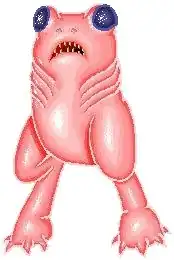
When the carcass was washed ashore on a beach at Canvey Island in 1954, an eyewitness described it as having bulging eyes, a wide mouth, and a flat body, with two legs on its belly that had five toes on each foot.[1][2] A similarly described creature was reportedly discovered at the same place the previous year.[1][3] As for its size, it was described as being two feet long, while its weight was measured to be twelve kilograms.[4] The creature was reportedly also described as not being dangerous to humans.[5]
Theories and identification
When the carcass was first discovered in 1954, it was not identified and was dubbed the Canvey Island Monster, leading to some foreign interest in Canvey Island.[6] Ufologist and radio presenter Frank Edwards, writing in the late 1950s, presented the carcass as being that of a cryptid which he claimed was responsible for the 1855 "Devil's Footprints" incident, adding in a description that the five toes could be compressed to form a U-shape, similar to the hooves of traditional depictions of Satan.[7] However in 1999, journalist Nicholas Warren of Fate magazine, while researching on the 1954 incident, received a letter from former ichthyologist and museum curator Alwyne Cooper Wheeler who confirmed that the so-called "Canvey Island Monster" was a fish from the Lophiiformes order.[8] Further research from Wheeler proved that the "creature" was nothing more than the carcass of either a dead monkfish or anglerfish, one that had been bloated and left for dead on the shore.[9]
See also
References
- 1 2 "Fish with feet found on beach". Liverpool Daily Post (Welsh ed.). 11 August 1954. p. 6. Retrieved 17 May 2026.
- ↑ Fuller, Curtis (1954). "I See by The Papers". Fate. 7 (57). Illinois: Clark Publishing Company: 6–16.
- ↑ Willis, Anna (28 December 2022). "The 'scary sea monsters' that washed up on the shore in Canvey Island". Essex Live. Retrieved 17 May 2026.
- ↑ Elvery, Martin (7 December 2021). "The River Thames island where a terrifying 'sea monster' washed up on the shore". MyLondon. Retrieved 17 May 2026.
- ↑ King, Steven (7 November 2010). "Ten More Terrifying and Mysterious Creatures". The Listicles. Archived from the original on 25 December 2022.
- ↑ Vickers, Miranda (1 May 2012). Eyots and Aits: Islands of the River Thames (1st ed.). The History Press Ltd. ISBN 9780752462134.
- ↑ Edwards, Frank (1992). Stranger Than Science (Paperback ed.). New York: Carol Publishing Group (published 1959). pp. 16–17.
- ↑ Warren, Nicholas (1991). "Just the Facts: Checks and Balances". Fortean Times (119). Metropolis International Group Ltd: 47–48.
- ↑ Wheeler, Alwyne (1979). The River Thames. London, England: Routledge & Keegan Paul Ltd. pp. 175–176. ISBN 9780710002006.