Province of Burgos
Province of Burgos
Provincia de Burgos | |
|---|---|
 Flag  Coat of arms | |
 Location of the Province of Burgos in Spain | |
| Coordinates: 42°23′N 3°40′W / 42.383°N 3.667°W | |
| Country | Spain |
| Autonomous community | Castile and León |
| Capital | Burgos |
| Municipalities | 371 (list) |
| Government | |
| • Type | Diputación |
| • Body | Provincial Deputation of Burgos |
| • President | Borja Suárez Pedrosa (PP) |
| Area | |
• Total | 14,288.63 km2 (5,516.87 sq mi) |
| • Rank | 11th in Spain |
| 2.8% of Spain | |
| Highest elevation | 2,131 m (6,991 ft) |
| Lowest elevation (Ayega River) | 150 m (490 ft) |
| Population (2025)[2] | |
• Total | 362,663 |
| • Rank | 36th in Spain |
| • Density | 25.3812/km2 (65.7371/sq mi) |
| 0.7% of Spain | |
| Demonym(s) | Burgalese, burgalés/a |
| ISO 3166 code | ES-BU |
| Website | www |
The Province of Burgos (Spanish: Provincia de Burgos [ˈbuɾɣos] ⓘ) is a province of northern Spain, in the northeastern part of the autonomous community of Castile and León. It has a population of 362,663 in an area of 14,288.63 square kilometres (5,516.87 sq mi) across its 371 municipalities—the highest number of municipalities of any Spanish province.[2][1]
The capital and largest city is Burgos, while other important urban centres include Miranda de Ebro and Aranda de Duero. It is bordered by the autonomous communities of Cantabria, the Basque Country (provinces of Biscay and Álava), and La Rioja, as well as by the provinces of Soria, Segovia, Valladolid, and Palencia, all within Castile and León. Together with Zaragoza, it is the Spanish province that borders the highest number of other provinces, with a total of eight.
The province has a diverse landscape and is crossed by two of the main river basins of the Iberian Peninsula: the Ebro in the north and the Douro in the south. Its territory includes mountainous and wooded areas such as the Iberian System in the southeast, including Pico San Millán, the highest peak in the province, and the Cantabrian Mountains in the north, as well as extensive plains and agricultural lands, with cereal farming in areas such as La Bureba and Odra-Pisuerga, alongside vineyards in the Ribera del Duero and Arlanza wine regions.
The province has significant historical importance, as it was a key territory in the formation of the Kingdom of Castile, and the city of Burgos served as an early capital.[3] It is home to three UNESCO World Heritage Sites: the Archaeological Site of Atapuerca, which contains some of the oldest human remains in Europe; the Burgos Cathedral, a Gothic masterpiece; and the Camino de Santiago, one of the most important pilgrimage routes in Europe. Burgos is also rich in cultural and architectural heritage, with numerous monasteries, castles, and historic towns distributed throughout the province. In addition, the Cartularies of Valpuesta, from the burgalese monastery of Santa María de Valpuesta, are considered to be among the oldest known documents containing words written in the Spanish language.[4]
Etymology
The name of the province derives from that of its capital, the city of Burgos, and therefore shares the same etymological origin. There are several possible origins for the toponymy. When the city was founded, the inhabitants of the surrounding country moved into the fortified village, whose Visigothic name of Burgos signified consolidated walled villages (Gothic baurgs).[5] The cities Burgas in Bulgaria and numerous cities containing the Germanic burg "city" such as Hamburg have a similar literal composition. The city began to be called Caput Castellae ("Cabeza de Castilla" or "Head of Castile").[6]
Overview
Since 1964, archaeologists have been working at numerous areas of the Archaeological Site of Atapuerca, where they have found ancient hominid and human remains, the former dating to more than one million years ago, with artefacts from the Palaeolithic and Bronze Ages of man. The site has been designated a UNESCO World Heritage Site.
The most important rivers in the province are the Ebro and the Duero. The river Duero is in the south of the province and leads to the Atlantic Ocean at Porto, Portugal. Planted near it is a notable vineyard, Ribera de Duero. The north and south-east of the province are mountainous. The Ebro flows to the Mediterranean Sea.
In Valpuesta the oldest texts in the Spanish language has been found, dating from the tenth century.[7]
Transportation is developed through a wide net of highways and roads. Besides, the province is served by the Burgos Airport, and The High-speed rail AVE.
Standing at 2,131 metres above sea level, the highest mountain in the province is the Pico San Millán, also known as Torruco and El Torruco.[8]
History

In the Atapuerca area, archaeologists have found evidence of occupation by hominids and humans for more than one million years. Discoveries have included the earliest hominid skull in Europe.
The Celtiberian region that became Burgos was inhabited by the Morgobos, Turmodigi, Berones and perhaps also the Pellendones, the last inhabitants of the northern part of the Celtiberian region. According to the Greek historian Ptolemy, the principal cities included: Brabum, Sisara, Deobrigula (nowadays Tardajos), Ambisna Segiasamon (Sasamón) and Verovesca (Briviesca). Under Roman colonization, it was part of Hispania Citerior ("Hither Spain") and then Hispania Tarraconensis.
In the fifth century, the Visigoths drove back the Suevi. In the eighth century, the Arabs occupied all of Castiles. Alfonso III the Great, king of León reconquered the area around the middle of the ninth century, and built many castles for the defence of Christendom. Gradually the area was reconquered. The region came to be known as Castile (Latin castella), i.e. "land of castles". In the eleventh century, Burgos became the capital of the Kingdom of Castile.
Government and politics
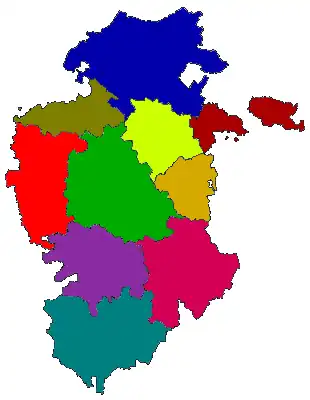

The Province of Burgos was established by the Royal Decree of 29 October 1833, driven by the minister Javier de Burgos, like the rest of the provinces of the country (see: 1833 territorial division of Spain). This division considered the common historic, cultural, and economic characteristics of each territory.
The Diputación Provincial de Burgos (Provincial Deputation of Burgos) is responsible for the government and administration of the province of Burgos, in accordance with the Statute of Autonomy of Castile and León. Its headquarters are located in the Provincial Palace of Burgos.
Its current president since 2023 is Borja Suárez Pedrosa, from the People's Party (PP).
Political divisions
Today, the province does not have official political divisions, but historically it has been divided into several comarcas. The province of Burgos is divided in 10 comarcas (a Spanish term for shires).
Municipalities

The province of Burgos is divided into 371 municipalities, being the Spanish province with the highest number, although many of them have fewer than 100 inhabitants.
- Abajas
- Adrada de Haza
- Aguas Cándidas
- Aguilar de Bureba
- Albillos
- Alcocero de Mola
- Alfoz de Bricia
- Alfoz de Quintanadueñas
- Alfoz de Santa Gadea
- Altable
- Los Altos
- Ameyugo
- Anguix
- Aranda de Duero
- Arandilla
- Arauzo de Miel
- Arauzo de Salce
- Arauzo de Torre
- Arcos
- Arenillas de Riopisuerga
- Arija
- Arlanzón
- Arraya de Oca
- Atapuerca
- Los Ausines
- Avellanosa de Muñó
- Bahabón de Esgueva
- Los Balbases
- Baños de Valdearados
- Bañuelos de Bureba
- Barbadillo de Herreros
- Barbadillo del Mercado
- Barbadillo del Pez
- Barrio de Muñó
- Los Barrios de Bureba
- Barrios de Colina
- Basconcillos del Tozo
- Bascuñana
- Belbimbre
- Belorado
- Berberana
- Berlangas de Roa
- Berzosa de Bureba
- Bozoó
- Brazacorta
- Briviesca
- Bugedo
- Buniel
- Burgos
- Busto de Bureba
- Cabañes de Esgueva
- Cabezón de la Sierra
- Caleruega
- Campillo de Aranda
- Campolara
- Canicosa de la Sierra
- Cantabrana
- Carazo
- Carcedo de Bureba
- Carcedo de Burgos
- Cardeñadijo
- Cardeñajimeno
- Cardeñuela Riopico
- Carrias
- Cascajares de Bureba
- Cascajares de la Sierra
- Castellanos de Castro
- Castildelgado
- Castil de Peones
- Castrillo de la Reina
- Castrillo de la Vega
- Castrillo del Val
- Castrillo de Riopisuerga
- Castrillo Mota de Judíos
- Castrojeriz
- Cavia
- Cayuela
- Cebrecos
- Celada del Camino
- Cerezo de Río Tirón
- Cerratón de Juarros
- Ciadoncha
- Cillaperlata
- Cilleruelo de Abajo
- Cilleruelo de Arriba
- Ciruelos de Cervera
- Cogollos
- Condado de Treviño
- Contreras
- Coruña del Conde
- Covarrubias
- Cubillo del Campo
- Cubo de Bureba
- La Cueva de Roa
- Cuevas de San Clemente
- Encío
- Espinosa de Cervera
- Espinosa del Camino
- Espinosa de los Monteros
- Estépar
- Fontioso
- Frandovínez
- Fresneda de la Sierra Tirón
- Fresneña
- Fresnillo de las Dueñas
- Fresno de Río Tirón
- Fresno de Rodilla
- Frías
- Fuentebureba
- Fuentecén
- Fuentelcésped
- Fuentelisendo
- Fuentemolinos
- Fuentenebro
- Fuentespina
- Galbarros
- La Gallega
- Grijalba
- Grisaleña
- Gumiel de Izán
- Gumiel de Mercado
- Hacinas
- Haza
- Hontanas
- Hontangas
- Hontoria de la Cantera
- Hontoria del Pinar
- Hontoria de Valdearados
- Las Hormazas
- Hornillos del Camino
- La Horra
- Hortigüela
- Hoyales de Roa
- Huérmeces
- Huerta de Arriba
- Huerta de Rey
- Humada
- Hurones
- Ibeas de Juarros
- Ibrillos
- Iglesiarrubia
- Iglesias
- Isar
- Itero del Castillo
- Jaramillo de la Fuente
- Jaramillo Quemado
- Junta de Traslaloma
- Junta de Villalba de Losa
- Jurisdicción de Lara
- Jurisdicción de San Zadornil
- Lerma
- Llano de Bureba
- Madrigal del Monte
- Madrigalejo del Monte
- Mahamud
- Mambrilla de Castrejón
- Mambrillas de Lara
- Mamolar
- Manciles
- Mazuela
- Mecerreyes
- Medina de Pomar
- Melgar de Fernamental
- Merindad de Cuesta-Urria
- Merindad de Montija
- Merindad de Río Ubierna
- Merindad de Sotoscueva
- Merindad de Valdeporres
- Merindad de Valdivielso
- Milagros
- Miranda de Ebro
- Miraveche
- Modúbar de la Emparedada
- Monasterio de la Sierra
- Monasterio de Rodilla
- Moncalvillo
- Monterrubio de la Demanda
- Montorio
- Moradillo de Roa
- Nava de Roa
- Navas de Bureba
- Nebreda
- Neila
- Olmedillo de Roa
- Olmillos de Muñó
- Oña
- Oquillas
- Orbaneja Riopico
- Padilla de Abajo
- Padilla de Arriba
- Padrones de Bureba
- Palacios de la Sierra
- Palacios de Riopisuerga
- Palazuelos de la Sierra
- Palazuelos de Muñó
- Pampliega
- Pancorbo
- Pardilla
- Partido de la Sierra en Tobalina
- Pedrosa de Duero
- Pedrosa del Páramo
- Pedrosa del Príncipe
- Pedrosa de Río Úrbel
- Peñaranda de Duero
- Peral de Arlanza
- Piérnigas
- Pineda de la Sierra
- Pineda Trasmonte
- Pinilla de los Barruecos
- Pinilla de los Moros
- Pinilla Trasmonte
- Poza de la Sal
- Prádanos de Bureba
- Pradoluengo
- Presencio
- La Puebla de Arganzón
- Puentedura
- Quemada
- Quintanabureba
- Quintana del Pidio
- Quintanaélez
- Quintanaortuño
- Quintanapalla
- Quintanar de la Sierra
- Quintanavides
- Quintanilla de la Mata
- Quintanilla del Agua y Tordueles
- Quintanilla del Coco
- Las Quintanillas
- Quintanilla San García
- Quintanilla Vivar
- Rabanera del Pinar
- Rábanos
- Rabé de las Calzadas
- Rebolledo de la Torre
- Redecilla del Camino
- Redecilla del Campo
- Regumiel de la Sierra
- Reinoso
- Retuerta
- La Revilla y Ahedo
- Revilla del Campo
- Revillarruz
- Revilla Vallejera
- Rezmondo
- Riocavado de la Sierra
- Roa
- Rojas
- Royuela de Río Franco
- Rubena
- Rublacedo de Abajo
- Rucandio
- Salas de Bureba
- Salas de los Infantes
- Saldaña de Burgos
- Salinillas de Bureba
- San Adrián de Juarros
- San Juan del Monte
- San Mamés de Burgos
- San Martín de Rubiales
- San Millán de Lara
- Santa Cecilia
- Santa Cruz de la Salceda
- Santa Cruz del Valle Urbión
- Santa Gadea del Cid
- Santa Inés
- Santa María del Campo
- Santa María del Invierno
- Santa María del Mercadillo
- Santa María Ribarredonda
- Santa Olalla de Bureba
- Santibáñez de Esgueva
- Santibáñez del Val
- Santo Domingo de Silos
- San Vicente del Valle
- Sargentes de la Lora
- Sarracín
- Sasamón
- La Sequera de Haza
- Solarana
- Sordillos
- Sotillo de la Ribera
- Sotragero
- Sotresgudo
- Susinos del Páramo
- Tamarón
- Tardajos
- Tejada
- Terradillos de Esgueva
- Tinieblas de la Sierra
- Tobar
- Tordómar
- Torrecilla del Monte
- Torregalindo
- Torrelara
- Torrepadre
- Torresandino
- Tórtoles de Esgueva
- Tosantos
- Trespaderne
- Tubilla del Agua
- Tubilla del Lago
- Úrbel del Castillo
- Vadocondes
- Valdeande
- Valdezate
- Valdorros
- Valmala
- Vallarta de Bureba
- Valle de Losa
- Valle de Manzanedo
- Valle de Mena
- Valle de Oca
- Valle de Santibáñez
- Valle de Sedano
- Valle de Tobalina
- Valle de Valdebezana
- Valle de Valdelaguna
- Valle de Valdelucio
- Valle de Zamanzas
- Valle de las Navas
- Vallejera
- Valles de Palenzuela
- Valluércanes
- La Vid de Bureba
- La Vid y Barrios
- Vileña
- Villarcayo de Merindad de Castilla la Vieja
- Viloria de Rioja
- Vilviestre del Pinar
- Villadiego
- Villaescusa de Roa
- Villaescusa la Sombría
- Villaespasa
- Villafranca Montes de Oca
- Villafruela
- Villagalijo
- Villagonzalo Pedernales
- Villahoz
- Villalba de Duero
- Villalbilla de Burgos
- Villalbilla de Gumiel
- Villaldemiro
- Villalmanzo
- Villamayor de los Montes
- Villamayor de Treviño
- Villambistia
- Villamedianilla
- Villamiel de la Sierra
- Villangómez
- Villanueva de Argaño
- Villanueva de Carazo
- Villanueva de Gumiel
- Villanueva de Teba
- Villaquirán de la Puebla
- Villaquirán de los Infantes
- Villariezo
- Villasandino
- Villasur de Herreros
- Villatuelda
- Villaverde del Monte
- Villaverde-Mogina
- Villayerno Morquillas
- Villazopeque
- Villegas
- Villoruebo
- Vizcaínos
- Zael
- Zarzosa de Río Pisuerga
- Zazuar
- Zuñeda
Judicial districts

Judicial districts (Partidos judiciales) are territorial groupings of municipalities that serve a dual purpose: they organize the local administration of justice and act as the electoral constituencies to elect the provincial councillors of the Diputación Provincial de Burgos.[9]
- Aranda de Duero (elects 3 councillors)
- Briviesca (elects 1 councillor)
- Burgos (elects 15 councillors)
- Lerma (elects 1 councillor)
- Miranda de Ebro (elects 3 councillors)
- Salas de los Infantes (elects 1 councillor)
- Villarcayo de Merindad de Castilla la Vieja (elects 1 councillor)
Demographics
As of 2025, the population is 362,663, of which 50.0% are male, and 50.0% are female. Minors make up 14.7% of the population, and seniors make up 25.6%.[2]
Historical population | ||||||||||||||||||||||||||||||||||||||||||||||||||||||||||
|
| |||||||||||||||||||||||||||||||||||||||||||||||||||||||||
| Source: INE[10] | ||||||||||||||||||||||||||||||||||||||||||||||||||||||||||
Immigration
As of 2025, immigrants make up 14.4% of the population. The 5 largest foreign countries of birth are Colombia, Romania, Morocco, Venezuela, and Ecuador.[2]
Most populous municipalities
| Rank | Pop. | Rank | Pop. | ||||||
|---|---|---|---|---|---|---|---|---|---|
| 1 | Burgos | 178,370 | 11 | Salas de los Infantes | 1,974 | ||||
| 2 | Miranda de Ebro | 36,617 | 12 | Villagonzalo Pedernales | 1,901 | ||||
| 3 | Aranda de Duero | 33,904 | 13 | Belorado | 1,830 | ||||
| 4 | Briviesca | 6,711 | 14 | Arcos de la Llana | 1,819 | ||||
| 5 | Medina de Pomar | 6,157 | 15 | Espinosa de los Monteros | 1,625 | ||||
| 6 | Valle de Mena | 4,168 | 16 | Villalbilla de Burgos | 1,554 | ||||
| 7 | Villarcayo de Merindad de Castilla la Vieja | 4,082 | 17 | Melgar de Fernamental | 1,505 | ||||
| 8 | Lerma | 2,648 | 18 | Ibeas de Juarros | 1,504 | ||||
| 9 | Roa | 2,305 | 19 | Quintanar de la Sierra | 1,476 | ||||
| 10 | Alfoz de Quintanadueñas | 2,160 | 20 | Condado de Treviño | 1,472 | ||||
Considering that the metropolitan area of Burgos has around 200,000 inhabitants, including municipalities such as Alfoz de Quintanadueñas, Villagonzalo Pedernales, and Arcos de la Llana, there is a strong concentration of population around the capital. Together with the urban areas of Burgos, Aranda de Duero, and Miranda de Ebro—accounting for over 75% of the provincial population—this creates a clear contrast with the province's rural areas. Much of the territory is affected by depopulation, with many small municipalities having very low population levels, often below 100 inhabitants.
 Burgos
 Miranda de Ebro
 Aranda de Duero
 Briviesca
 Medina de Pomar
See also
References
- 1 2 "Información Geográfica Destacada" [Geographical information data] (in Spanish). IGN.
- 1 2 3 4 5 "Annual population census 2021-2025". INE.
- ↑ Arias Guillén, Fernando (2013). "A kingdom without a capital? Itineration and spaces of royal power in Castile, c. 1252–1350". Journal of Medieval History. 39 (4): 456–476. doi:10.1080/03044181.2013.830981. S2CID 219564625.
- ↑ "Origin and history of Spanish language: First manuscripts". 2013. Archived from the original on 2015-04-05.
- ↑ Wright, Joseph, 1892, A Primer of the Gothic Language, glossary & section 182.
- ↑
 One or more of the preceding sentences incorporates text from a publication now in the public domain: Herbermann, Charles, ed. (1913). "Burgos". Catholic Encyclopedia. New York: Robert Appleton Company.
- ↑ Valpuesta Foundation is born with the aimn to study and promote Castilian since its very origins
- ↑ "Fallece un montañero en el pico San Millán". El Mirón de Soria. 14 March 2021.
- ↑ "National justice systems | European e-Justice Portal". e-justice.europa.eu. Retrieved 2026-08-25.
- ↑ "INEbase. Alterations to the municipalities in the Population Censuses since 1842". INE.
External links

- Website of the Autonomous Community of Castile and León
- Website of the Province of Burgos delegation