Biogeochemical Cycles of Anthropogenic Contaminants

Anthropogenic contaminants are compounds that derive from human activity related to industry, fossil fuel burning, agriculture, sewage and other waste that affect ecosystems through bioaccumulation and biomagnification.[1][2] These contaminants are sometimes referred to as contaminants of emerging concern (CEC's) or persistent organic pollutants (POP's).[3][4] The characteristics of contaminants depend on the chemical composition of the compound, and the residence time of the compound also depends on its chemical composition.[1][5] These contaminants may have a significant effect on ecosystem dynamics and nutrient cycling based on short and long time scales.
Key questions remain regarding the mobility and persistence of these compounds in the environment. The biogeochemical cycling of anthropogenic contaminants sheds light on distribution and mechanisms that control the fate of these compounds in the natural environment. The emission of anthropogenic contaminants may follow point source or non-point source pollution.[6][7] Point source pollution typically comes from a single identifiable place, such as manufacturing plants, landfills, industrial infrastructure, and water treatment facilities.[8] Non-point source pollution is typically the result of pollutants released in a wide area, such as runoff products or atmospheric deposition.[8] Anthropogenic contaminants may still be persistent in the environment spite of legal guidelines in manufacturing.[9][10]
Pollutants of interest
Biogeochemical cycling of anthropogenic contaminants occurs through various solid-phase, dissolved, gaseous, and biological forms. The soil solution (sum of dissolved chemical species and soluble chemical complexes) can be thought of as a regulator of contaminant fate.[11]
Pesticides

Pesticides are chemical compounds that are used to control, eliminate, or destroy pests in order to protect human food sources[12] and health. Pesticides include compounds known as insecticides, herbicides, fungicides, rodenticides, and algicides.[12] Pesticides are generally categorized based on their chemical composition and mode of action: organochlorines, organophosphates, carbamatess, and pyrethroidss.[13][14] Most pesticides are considered to be POPs. The Stockholm Convention on POPs identified notable pesticides such as aldrin, chlordane, dieldrin, endrin, heptachlor, hexachlorobenzene (HCB), mirex, toxaphene, dichlorodiphenyltrichloroethane (DDT), hexachlorocyclohexane (alpha and beta), chlordecone, dicofol, methoxychlor, pentachlorobenzene, and endosulfan.[15] The major source of pesticides is application in agricultural settings. Notable manufactures of these compounds include BASF, Bayer, DuPont, and Syngenta.[16]

Pesticides may undergo complex transformations depending on their chemical composition and physical structure, as well as the environmental conditions like temperature, pH, redox, light availability, organic matter availability, and land-use history.[11][12][17][18][19] The processes that affect the persistence of pesticides in the environment include photodegradation, chemical degradation, microbial degradation.[17][20] The processes that impact the mobility of pesticides in the environment include sorption, plant uptake, volatilization from soil, volatilization from foliage, wind erosion, runoff, and leaching.[17][18][21] Atmospheric deposition of pesticides occurs through precipitation and spray drift, which results from pesticide not adsorbing to the targeted product indicating a potential error in the application process.[22][23] Microbial degradation is more likely when pesticides are repeatedly used in the same field.[17]
It is assumed that the residence time of pesticides in soil is indefinite because they degrade slowly in soils.[11] However, it is possible to determine the environmental fate of a specific pesticide knowing the biochemical half-life of the pesticide, soil sorption coefficient, water solubility, vapor pressure, and Groundwater Ubiquity Score.[11][20] For example, in the absence of colloid-mediated transport, the soil residence time of DDT, chlordane, heptachlor, and dieldrin would range between 20 and 100 years.[11] Pesticides may eventually be transported from the continent to continental shelves into the open ocean.[24] Monitoring data have shown that dicofol is sufficiently persistent to be transported via riverine input to the open sea and to be detected in deep sediment layers dated back several decades.[15] It is possible that different ocean basins act as sources or sinks of the pesticides depending on the air-seawater exchange and continental and riverine fluxes.[24]
PFAS

Per- and polyfluoroalkyl substances (PFAS) are a class of human made compounds that generally consist of an alkyl carbon chain with fluorines saturating most carbons and at least one functional group.[25][26] The presence of the carbon to fluorine bond allows PFAS to be strongly resistance to heat, chemical breakdown and microbial breakdown.[27] This stability leads to PFAS persisting for decades and upwards of one thousand years in soils and water, which yields the nickname - "forever chemicals".[28] PFAS are most broadly categorized as long-chain or short-chain PFAS. Long-chain PFAS tend to have strong sorption onto organic matter and mineral surfaces, while short-chain PFAS are usually more mobile.[29][30][31][32] The distinction between the long-chain and short-chain PFAS is related to the number of carbon atoms in alkyl chains, fluorine atoms, and functional groups like carboxylic acid and sulfonic acid.[33]

Fluoroplastic compounds were first used during the Manhattan project to separate uranium hexafluoride isotopes.[26][34] However, PFAS are now used widely in consumer products.[26] There are thousands of different PFAS, but some are more well studied and more widely used.[35] Although some PFAS like perfluorooctanoic acid (PFOA) and perfluorooctane sulfonate (PFOS) have been phased out from commercial products, they have long residence times in the environment because of historical use.[35][36] Release of PFAS to the environment occurs during the production, use, and disposal of materials containing PFAS from primary manufacturing sites or secondary manufacturing facilities.[37] Major manufacturing and industry sources include building and construction materials; cable and wiring; metal finishing and plating; surfactants and fluoropolymer production; paper products and packaging; semiconductor uses; textiles, leather, and apparel (including carpet and furniture upholstery), among others.[26][38] Wastewater treatment plants, landfills, and use of Aqueous Film Forming Foam (AFFF) during fire training, fire response, or fire suppression are also considered major sources of PFAS to the environment.[27][38] Notable manufacturers of PFAS products include 3M and DuPont.[36] General mechanisms of release of PFAS from industrial facilities include wastewater and stormwater discharges, on- and off-site disposal of solid waste, leaching into surface soils and groundwater, accidental release during leaks and spills, and stack and fugitive emissions.[38][39][40] Stack emissions may lead to wet or dry atmospheric deposition of PFAS to soil and surface water, which can subsequently result in leaching and groundwater infiltration.[37][38]
Once the molecule is introduced into the environment, the factors that affect the fate and transport of PFAS are dependent on the chemical characteristics of the PFAS molecule itself (e.g. functional groups, fluorination) and the characteristics of the environment the PFAS is introduced to.[29][41] One consequence of the inherent chemistry of PFAS is that there may be heterogeneity in PFAS distribution in the environment given that PFAS have both hydrophobic tails and hydrophilic heads.[41][29] Similarly, these chemicals exhibit a wide range of different rates of degradation in the environment, with different functional groups potentially being further modified in the environment to other types of PFAS.[42][43][44] Important environmental conditions like soil mineralogy, organic matter content, pH conditions, oxidation-reduction conditions, precipitation, infiltration rates, groundwater velocities/flow directions, groundwater-surface water interactions, surface water flow rates, atmospheric conditions, and the presence of co-contaminants.[41][45] It is not uncommon for PFAS to partition between multiple solid phases, such as soils and sediment, organic matter, human waste, sewage, and iron oxides.[46][47][48][49][50] Therefore, the impact of PFAS on biogeochemical cycles in an environment is site-specific. Due to the chemical composition it is possible for PFAS to bioaccumulate in both terrestrial and marine environments.
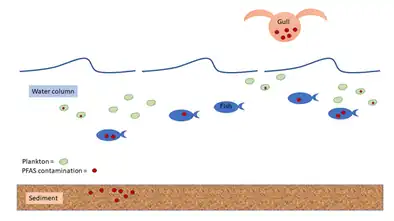
PFAS may interfere with biogeochemical cycling by altering the soil bacterial and fungal community structures.[51][52] However, determining how PFAS directly interacts with the major biogeochemical cycles like carbon, nitrogen, oxygen, phosphorus, and sulfur and minor biogeochemical cycles warrants more studies, especially conducted in the field. There is evidence from controlled lab experiments that in some bacterial and archaeal communities exposed to PFAS, there can be a reduction in the abundance of nitrification genes and denitrification genes, leading to a build up of ammonium and a decrease in nitrite and nitrate content.[51][53][54] Nitrate and sulfate-reducing bacteria have exhibited metabolic inhibition in the presence of PFAS, which has led to an excess of nitrate and sulfate in soils.[55] Any changes in soil pH and microbial and fungal activity leads to shifts in nutrient availability for plants, which can influence the timing and magnitude of carbon and nitrogen export to the hydrosphere.[56]
Pharmaceuticals and personal care products

Pharmaceuticals and personal care products (PPCPs) include a wide suite of antibiotics, analgesics, steroids, antidepressants, antipyretics, stimulants, antimicrobials, disinfectants, fragrances, cosmetics, and many other chemicals that are widely used on a daily basis for various purposes.[57][58] Veterinary medicines are also considered PPCPs, although their concentrations tend to be higher near agricultural activity like animal feeding operations.[59] PPCPs may enter the environment by direct discharge into surface water from manufacturing, hospitals, households, wastewater treatment plants, and agricultural runoff.[58][60][61] Different continents are different point sources of PPCPs.[62] Due to the widespread use of PPCPs in every day life, environmental inputs are mostly continuous rather than intermittent, which results a persistent background of low level contamination.[30][62] Nevertheless, there is the potential for seasonality due to climate and recreational activities.[63]
Some PPCPs are more reactive in the environment than others due to their chemistry (e.g. functional groups, molecular structure, volatility, polarity, and photo-stability).[64] These compounds occur as complex mixtures, which impacts solubility and residence times.[64] Once in the environment, PPCPs are impacted by pH, redox conditions, soil mineralogy, hydrology, temperature, microbial activity, and the presence of organic matter.[64][65][66] The main removal mechanisms of PPCPs are adsorption onto mineral surfaces and organic matter, absorption, photolysis, hydrolysis, volatilization, and microbial degradation.[67] Depending on the redox conditions of the environment, some PPCPs are removed from solution under oxic conditions, while some are only removed under anoxic conditions.[68][69] A study of over 250 rivers in over 100 nations analyzed over 60 active pharmaceutical ingredients and found that the presence of at least one these active ingredients was prevalent in about 26% of the sampling locations in concentrations greater than is deemed safe for aquatic organisms or selection for microbial resistance,[62] which could suggest that some fraction of PPCPs persist in freshwater environments.

The impacts of pharmaceuticals on biogeochemical cycles are observed in the way they alter and disrupt the microbial communities that facilitate these cycles. In the marine environment, increased turbidity, electrical conductivity, pH, and salinity were observed to lead to increases in PPCPs, although a decrease in temperature and dissolved oxygen led to lower concentrations of PPCPs.[66] In addition to the aforementioned variables, the distribution of PPCPs in sediments varies as a function of the sediment composition and sedimentation rates,[70] the latter of which is variable depending on the features of the studied sites (relief, discharge, off-shore wind and wave energy).[71] Sediments may serve as sources or sinks of PPCPs, although there is the possibility of reintroducing PPCPs into the water column when sediment is disrupted.[72] Sediments in Asia and Africa have been recorded to have the highest concentrations of PPCPs.[70] Once in the marine environment, many PPCPs are immobilized by biological uptake of these compounds, which in turn impacts ecosystem productivity and biodiversity due to chronic exposure.[57][73]
There is some evidence that increased antibiotics can lead to decrease in nitrification rates.[74][62] Some PCPs are capable of serving as alternative organic carbon sources for microbial metabolisms, resulting in the potential for nitrification and denitrification to occur.[70][75] There is also some evidence that PPCPs such as sulfadiazine, sulfamethoxazole, amoxicillin, tetracycline, ciprofloxacin, and trimethoprim can all be adsorbed by plastic fragments, suggesting that the biogeochemical cycle of PPCPs may be tied to other anthropogenic contaminants like microplastics.[76]
PBDE
Polybrominated Diphenyl Ethers (PBDEs) are a class of anthropogenic compounds used most commonly as flame retardants.[77] There are many formal classifications of the family and type of PBDEs. Production of PBDEs in the U.S. began in the 1970s and peaked in the late 1990s.[78][79] In the United States, the manufacturing of the PBDEs penta-DBE and octa-BDE were phased out in 2004, and the manufacturing of deca-BDEs was phased out by the end of 2013.[77] In 2009, tetra-BDEs, penta-BDEs, hexa-BDEs, hepta-BDEs, octa-BDEs, and nona-BDEs were listed as POPs under the Stockholm Convention due to their hazards.[80] Notable manufacturers of PBDE in the United States were Albermarle Corporation and the Great Lakes Corporation (later Chemtura).[79] Although the production of these chemicals has stopped, PBDEs persist in the environment.[77]
PBDEs are not chemically bound to the plastics, foam, fabrics, or other products they are used in, making them more likely to leach out of these products.[77][81] PBDE's contamination arises from both industrial sources and more diffuse pathways. Point sources of these include manufacturing facilities, electronic waste recycling plants, and wastewater treatment centers.[82] These facilities often often handle large volumes of PBDE containing materials, making them important locations for documented environmental contamination. Non-point sources include the atmospheric deposition of dust filled with PBDE's, leaching from consumer products such as carpets and diffuse runoff from urban and industrial landscapes.[81][83] PBDE's have also been detected coming from household dust, furniture, electronics, and from carpets/window drapes.[77][83][81] Ultimately, the release of PBDE's introduces these contaminants to soils, sediments, surface water, and groundwater through dust, waste water, atmospheric deposition (wet and dry), photodegradation (photolysis), and runoff from near by landfills and industrial sites.[81][83]
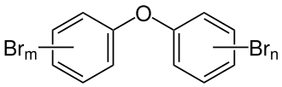
PBDEs are highly brominated, hydrophobic, and thus more resistant to degradation because of their chemical structure. This molecular composition results in accumulation of PBDEs in most environments they are introduced into.[82] PBDE's can also undergo debromination, forming lower bromate congeners that may become more bioavailable and become more toxic to aquatic ecosystems.[83] PBDEs have been removed from the atmosphere via chemical reactions with OH- and NO3- radicals and photolysis with UV light.[84][85] Environmental conditions such as organic matter content, sediment texture, and redox state influence how PBDEs transform between solid and aqueous phase. There is some evidence that low oxygen conditions leads to slower PBDE degradation, while higher oxygen areas may result in faster degradation rates.[82] PBDEs have very low water solubility, and when these substances are released to water, they typically bind to sediment and organic matter,[79] thus soils are considered a major sink for these contaminants. PBDEs may remain in soils and sediments for upwards of a decade or more with minimal chemical transformation.[86][87] In addition to burial depth and bioturbation, there is some evidence the degree of hydrophobicity of PBDEs impacts the extent of remobilization of these contaminants and the distribution between particulate and dissolved phases.[88]
Therefore, it is possible that both soils and coastal environments may serve as sources or sinks of PBDEs from the land to the ocean partially depending on environmental factors and bioturbation.[89] As a consequence of long-range transported pollution, air–sea gas exchange of PBDEs can become a major source of these contaminants in remote marine environments.[90] As of 2016, there were concentrations of PBDEs found in the Arctic Ocean, including in the Arctic Deep Water Layer down to 2500 m depth.[91] It is possible that different ocean basins and different source waters may serve as sources or sinks of PBDEs.
The direct and magnitude of impact on PBDE abundance on microbial and fungal communities remain open research questions,[92] although any alterations to these communities ultimately impacts biogoechemical cycling of PBDEs. It is possible that organohalide respiring bacteria are key to the biogeochemical cycling of PBDE. There is some evidence that the structure and composition of bacterial and archeal communities can be disrupted.[92][93][94] In several different lab experiments altering exposure of soil microbial communities to different types and concentrations of PBDEs, it was found that PBDEs generally stimulated nitrification and denitrification.[94][95] In some incubations of microbial and plant communities in mangrove soils in southern China, there was evidence that PBDEs may decrease nitrification, stimulate denitrification, and inhibit anammox.[93] The effects of PBDEs on microbial transformations that then impact plants are species-specific.[93][96]
Microplastics
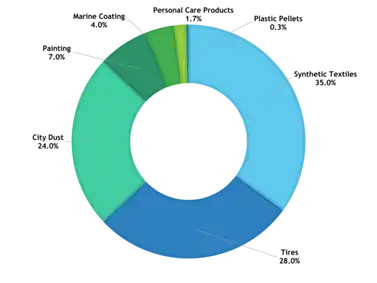
Microplastics have been found in every ecosystem on the planet, from the Antarctic tundra to tropical coral reefs, and have been found in food, beverages, and human and animal tissue.[97][98] These debris are defined as small pieces of plastic less than 5 mm long.[99][97] Microplastics are derived from a wide array of sources due to the economic development of the world and introduced to the environment daily. Roughly 79% of the plastic that is manufactured gets placed in the landfill or environment, the rest is either recovered or consumed.[100] Examples of sources of microplastics include clothing, tires, construction materials, packaging, industrial activity, cosmetics, and manufacturing.[97][101] There are many manufacturers of microplastics around the world, although certain locations may be higher magnitude sources of these contaminants from the land to the ocean.[102][103] Microplastic abundance in the environment is influenced by the vegetation land-use history, climate, coastal environment, and river runoff, including seasonality.[104] Microplastics may be derived from larger plastic waste that may degrade to smaller pieces due to physical weathering, chemical weathering, biological degradation, or UV radiation.[99][97] Microplastic contaminants are generally insoluble in water and thought to be relatively unreactive.[105]

The main sources of microplastics throughout the Earth system are road runoff, waste water treatment plants, dust, atmospheric deposition, and marine activities.[102][103] Terrestrial soils and vegetation are considered the major sinks of microplastics, although depending on environmental factors like pH, soil texture and composition, plant-species, microbial activity, climate, etc., soils and vegetation may also act as sources of microplastics in the environment.[106] In coastal regions with humid climates and low latitudes, plastics or microplastics accumulate more and are susceptible to weathering. However, regional variability still exists within climatic zones.[104] Coastal environments may be sources or sinks of microplastics.
Plant uptake of microplastics depends on the species, land-use practices, and soil chemical and physical properties. There is evidence of the presence of microplastics in soils altering microbial activity, and therefore impacting biogoechemical cycling in the soil.[107] It is also possible that microplastics may adsorb and chelate with phosphorus containing compounds, which may reduce the essential nutrient P availability for plants.[108] Biogeochemical cycling of microplastics may result in the transfer of other pollutants through the environment, or these contaminants may impact biogeochemical cycles of other pollutants, like the degradation pathways for phthalates and bisphenol A (BPA).[109] Microplastics may inhibit the natural cycling of nitrogen and carbon by impairing the enzymes involved in the degradation of terrestrial and marine organic matter.[109][110]
There is evidence from controlled lab experiments that as a result of accumulation of microplastics in ocean waters, organic matter stable and radiogenic isotopic composition can be significantly biased to appear of different composition and age.[111] This in turn impacts understanding of the biogeochemical cycling of carbon in marine environments. Microplastics have the ability to form biofilms that may also impact microbial community structures and both freshwater and ocean carbon cycling.[112] Microplastics may alter the N cycle by altering the expression of N transforming enzymes, ultimately impacting the structure of nitrifiers and denitrifiers.[113][114][115] There is some evidence that microplastics will adsorb onto the surfaces of microbes, which may lead to increased potential rapid sinking of marine particulate matter.[116]

Trace metals may also interact through sorption processes with microplastics, impacting the biogeochemical cycles of trace metals and microplastics; however, the likelihood of sorption/desorption is heavily dependent on the salinity of the environment, presence of organic matter, the nature of the microplastic (e.g. size, charge, functional groups, concentration of trace metals in dissolved versus particulate phases, and the chemical speciation of the metal, among other factors.[117] Differences in the sorption kinetics of metals (e.g. Cu and Zn) and metalloids (e.g. As) to the surfaces of microplastics may also impact ecosystem dynamics and biogeochemical cycles.[117][118]
Dioxins, furans, and PCBs

Dioxins, furans, and some polychlorinated biphenyls (PCBs) are a family of anthropogenic contaminants that have similar chemical structures.[119][120][121][122] Most dioxins and furans are unintentional byproducts of chemical or industrial product manufacturing through combustion processes in the presence of chlorinated compounds.[123][124] Of all of the dioxins and furans, one, 2,3,7,8-tetrachloro-p-dibenzo-dioxin (2,3,7,8 TCDD) is considered the most toxic.[119][121] 1, 4-dioxane is considered a trace contaminant of cosmetic products and ingredients.[125] Primary sources of production include coal burning, metal smelting and refining, incinerating bleaching processes used in pulp and paper mills, and the chemical syntheses of compounds such as trichlorophenoxyacetic acid, hexachlorophene, vinyl chloride, trichlorophenol, and pentachlorophenol.[121][124][126] Stack emissions are considered important in transporting these anthropogenic compounds to the atmosphere.[126] In addition to industrial sources, civilian activity such as burning of waste, burning biomass, oil heating, and using diesel vehicles may be sources of dioxins.[122][127] PCBs were once synthesized for use as heat-exchanger, transformer, and hydraulic fluids, and also used as additives to paints, oils, window caulking, and floor tiles. Production of PCBs peaked in the early 1970s, but it was banned in the United States after 1979.[121][124] Environmental regulations of these anthropogenic contaminants are not universal. The United States Department of Health and Human Services National Toxicology Program found 1,4-dioxane to be a human carcinogen, but studies of trace contaminations of some dioxanes like 1,4-dioxane by the International Cooperation on Cosmetics Regulations and the European Commission Scientific Committee on Consumer Safety have examined the issue and determined trace concentrations of certain dioxin compounds are safe for consumers at trace levels.[125]

Dioxins have two phenyl rings connected by two oxygen atoms. Furans have one or two phenyl rings connected to a furan ring. PCBs have two phenyl rings attached at one point.[119] The formation of dioxins is local, but the environmental distribution is global. Dioxins, furans, and PCBs may undergo photochemical transformations, which may produce toxic chlorinated compounds.[119] The environmental processes that result in the mobilization of dioxins, furans, and PCBs are fairly well known. These compounds are relatively insoluble, thus they are found associated with organic matter and mineral surfaces in soil and sediment.[119] When These compounds are classified as semi-volatile, meaning that changes in temperature, especially warming and decrease in barometric pressure, may result in volatilization of these compounds.[119][128]
There is evidence for long-range transport of these compounds from the land to the ocean.[129][130] The likelihood of most dioxins in leaching from soil is less likely than their voltilization and subsequent atmospheric transport; however, there is evidence of the 1,4-dioxane and dioxin-like PCBs in soils with low organic content leaching into groundwater.[131][127] More research is needed to understand the direct impact of dioxins, furans, and PCBs on the biogeochemical cycles of nitrogen, phosphorus, carbon, sulfur, oxygen, and trace metals.
References
- 1 2 Jones, K.C.; de Voogt, P. (1999). "Persistent organic pollutants (POPs): state of the science". Environmental Pollution. 100 (1–3): 209–221. Bibcode:1999EPoll.100..209J. doi:10.1016/S0269-7491(99)00098-6. PMID 15093119.
- ↑ "Contaminants | U.S. Geological Survey". www.usgs.gov. 2024-08-15. Retrieved 2026-05-04.
- ↑ US EPA, OITA (2014-04-02). "Persistent Organic Pollutants: A Global Issue, A Global Response". www.epa.gov. Retrieved 2026-05-04.
- ↑ US EPA, OW (2015-08-18). "Contaminants of Emerging Concern including Pharmaceuticals and Personal Care Products". www.epa.gov. Retrieved 2026-05-04.
- ↑ Teng, Ying; Xu, Zhihong; Luo, Yongming; Reverchon, Frédérique (2012-01-11). "How do persistent organic pollutants be coupled with biogeochemical cycles of carbon and nutrients in terrestrial ecosystems under global climate change?". Journal of Soils and Sediments. 12 (3): 411–419. Bibcode:2012JSoSe..12..411T. doi:10.1007/s11368-011-0462-0. hdl:10072/46755. ISSN 1439-0108.
- ↑ "Contaminants of Emerging Concern". NCCOS - National Centers for Coastal Ocean Science. Retrieved 2026-05-04.
- ↑ "Point Source and Nonpoint Sources of Pollution". education.nationalgeographic.org. Retrieved 2026-05-04.
- 1 2 US Department of Commerce, National Oceanic and Atmospheric Administration. "Nonpoint Source Pollution, NOS Education Offering". oceanservice.noaa.gov. Retrieved 2026-05-04.
- ↑ Bell, Erin M.; De Guise, Sylvain; McCutcheon, Jeffrey R.; Lei, Yu; Levin, Milton; Li, Baikun; Rusling, James F.; Lawrence, David A.; Cavallari, Jennifer M.; O'Connell, Caitlin; Javidi, Bethany; Wang, Xinyu; Ryu, Heejeong (August 2021). "Exposure, health effects, sensing, and remediation of the emerging PFAS contaminants – Scientific challenges and potential research directions". Science of the Total Environment. 780 146399. Bibcode:2021ScTEn.78046399B. doi:10.1016/j.scitotenv.2021.146399. OSTI 1868815. PMID 33770593.
- ↑ Kivenson, Veronika; Lemkau, Karin L.; Pizarro, Oscar; Yoerger, Dana R.; Kaiser, Carl; Nelson, Robert K.; Carmichael, Catherine; Paul, Blair G.; Reddy, Christopher M.; Valentine, David L. (2019-03-19). "Ocean Dumping of Containerized DDT Waste Was a Sloppy Process". Environmental Science & Technology. 53 (6): 2971–2980. Bibcode:2019EnST...53.2971K. doi:10.1021/acs.est.8b05859. ISSN 0013-936X. PMID 30829032.
- 1 2 3 4 5 Hesterberg, Dean (February 1998). "Biogeochemical cycles and processes leading to changes in mobility of chemicals in soils". Agriculture, Ecosystems & Environment. 67 (2–3): 121–133. Bibcode:1998AgEE...67..121H. doi:10.1016/s0167-8809(97)00110-2. ISSN 0167-8809.
- 1 2 3 Rashid, Bushra; Husnain, Tayyab; Riazuddin, Sheikh (2010), "Herbicides and Pesticides as Potential Pollutants: A Global Problem", Plant Adaptation and Phytoremediation, Dordrecht: Springer Netherlands, pp. 427–447, doi:10.1007/978-90-481-9370-7_19, ISBN 978-90-481-9369-1
- ↑ Zhou, Wei; Li, Mengmeng; Achal, Varenyam (March 2025). "A comprehensive review on environmental and human health impacts of chemical pesticide usage". Emerging Contaminants. 11 (1) 100410. doi:10.1016/j.emcon.2024.100410. ISSN 2405-6650.
- ↑ Kumar, Manish; Yadav, Ajar Nath; Saxena, Raghvendra; Paul, Diby; Tomar, Rajesh Singh (January 2021). "Biodiversity of pesticides degrading microbial communities and their environmental impact". Biocatalysis and Agricultural Biotechnology. 31 101883. doi:10.1016/j.bcab.2020.101883. ISSN 1878-8181.
- 1 2 "Listing of POPs in the Stockholm Convention". www.pops.int. Retrieved 2026-05-04.
- ↑ k, Rohit (2025-06-01). "Top 10 Companies in the United States Pesticide Preparations Industry (2025): Market Leaders Powering Agricultural Growth". Chemical Research Insight. Retrieved 2026-03-04.
- 1 2 3 4 "Pesticides and the Environment | MU Extension". extension.missouri.edu. Retrieved 2026-03-04.
- 1 2 Moeckel, Claudia; Nizzetto, Luca; Guardo, Antonio Di; Steinnes, Eiliv; Freppaz, Michele; Filippa, Gianluca; Camporini, Paolo; Benner, Jessica; Jones, Kevin C (2008-10-22). "Persistent Organic Pollutants in Boreal and Montane Soil Profiles: Distribution, Evidence of Processes and Implications for Global Cycling". Environmental Science & Technology. 42 (22): 8374–8380. Bibcode:2008EnST...42.8374M. doi:10.1021/es801703k. hdl:11383/8693. ISSN 0013-936X. PMID 19068820.
- ↑ Fairbairn, David J.; Karpuzcu, M. Ekrem; Arnold, William A.; Barber, Brian L.; Kaufenberg, Elizabeth F.; Koskinen, William C.; Novak, Paige J.; Rice, Pamela J.; Swackhamer, Deborah L. (May 2016). "Sources and transport of contaminants of emerging concern: A two-year study of occurrence and spatiotemporal variation in a mixed land use watershed". Science of the Total Environment. 551–552: 605–613. Bibcode:2016ScTEn.551..605F. doi:10.1016/j.scitotenv.2016.02.056. ISSN 0048-9697. PMID 26897403.
- 1 2 "Pesticides | Well Water Program | Oregon State University". wellwater.oregonstate.edu. 2020-08-11. Retrieved 2026-05-04.
- ↑ Wegmann, F.; Scheringer, M.; Möller, M.; Hungerbühler, K. (2004-01-23). "Influence of Vegetation on the Environmental Partitioning of DDT in Two Global Multimedia Models". Environmental Science & Technology. 38 (5): 1505–1512. Bibcode:2004EnST...38.1505W. doi:10.1021/es034262n. ISSN 0013-936X. PMID 15046353.
- ↑ Felsot, Allan S.; Unsworth, John B.; Linders, Jan B.H.J.; Roberts, Graham; Rautman, Dirk; Harris, Caroline; Carazo, Elizabeth (2010-12-30). "Agrochemical spray drift; assessment and mitigation—A review*". Journal of Environmental Science and Health, Part B. 46 (1): 1–23. Bibcode:2010JESHB..46....1F. doi:10.1080/03601234.2010.515161. ISSN 0360-1234. PMID 20981606.
- ↑ US Department of Commerce, National Oceanic and Atmospheric Administration. "Nonpoint Source Pollution, NOS Education Offering". oceanservice.noaa.gov. Retrieved 2026-05-04.
- 1 2 Zhang, Xue; Zhang, Xianming; Zhang, Zi-Feng; Yang, Pu-Fei; Li, Yi-Fan; Cai, Minghong; Kallenborn, Roland (June 2022). "Pesticides in the atmosphere and seawater in a transect study from the Western Pacific to the Southern Ocean: The importance of continental discharges and air-seawater exchange". Water Research. 217 118439. Bibcode:2022WatRe.21718439Z. doi:10.1016/j.watres.2022.118439. ISSN 0043-1354. PMID 35452973.
- ↑ US EPA, OW (2016-03-30). "PFAS Explained". www.epa.gov. Retrieved 2026-05-04.
- 1 2 3 4 Gaines, Linda G. T. (2022-05-25). "Historical and current usage of per- and polyfluoroalkyl substances (PFAS): A literature review". American Journal of Industrial Medicine. 66 (5): 353–378. doi:10.1002/ajim.23362. ISSN 0271-3586. PMID 35614869.
- 1 2 EPA. "Per- and Polyfluoroalkyl Substances (PFAS)." EPA, Environmental Protection Agency, 2 Dec. 2025, www.epa.gov/pfas
- ↑ Liu, Xin (2024-12-15). "Researchers have developed a way to break down long-lasting PFAS compounds using light". PBS News. Retrieved 2026-05-30.
- 1 2 3 Guo, Chao; Hu, Shiwen; Cheng, Pengfei; Cheng, Kuan; Yang, Yang; Chen, Guojun; Wang, Qi; Wang, Ying; Liu, Tongxu (December 2024). "Speciation and biogeochemical behavior of perfluoroalkyl acids in soils and their environmental implications: A review". Eco-Environment & Health. 3 (4): 505–515. Bibcode:2024EcoEH...3..505G. doi:10.1016/j.eehl.2024.05.005. ISSN 2772-9850. PMC 11599973. PMID 39605968.
- 1 2 Geissen, Violette; Mol, Hans; Klumpp, Erwin; Umlauf, Günter; Nadal, Marti; Van Der Ploeg, Martine; Van De Zee, Sjoerd E.A.T.M.; Ritsema, Coen J. (2015). "Emerging pollutants in the environment: A challenge for water resource management". International Soil and Water Conservation Research. 3 (1): 57–65. Bibcode:2015ISWCR...3...57G. doi:10.1016/j.iswcr.2015.03.002. hdl:20.500.11797/imarina3664981.
- ↑ Liu, Yunqing; Zhang, Ying; Li, Jiafu; Wu, Nan; Li, Wenpeng; Niu, Zhiguang (March 2019). "Distribution, partitioning behavior and positive matrix factorization-based source analysis of legacy and emerging polyfluorinated alkyl substances in the dissolved phase, surface sediment and suspended particulate matter around coastal areas of Bohai Bay, China". Environmental Pollution. 246: 34–44. Bibcode:2019EPoll.246...34L. doi:10.1016/j.envpol.2018.11.113. ISSN 0269-7491. PMID 30529939.
- ↑ Wang, Siquan; Cai, Yizhi; Ma, Liya; Lin, Xiaoping; Li, Qin; Li, Yongyu; Wang, Xinhong (February 2022). "Perfluoroalkyl substances in water, sediment, and fish from a subtropical river of China: Environmental behaviors and potential risk". Chemosphere. 288 (Pt 1) 132513. Bibcode:2022Chmsp.28832513W. doi:10.1016/j.chemosphere.2021.132513. ISSN 0045-6535. PMID 34634273.
- ↑ Mueller, Robert, and Kate Emma Schlosser. "Naming Conventions for Per- and Polyfluoroalkyl Substances (PFAS) 1." Naming Conventions for Per- and Polyfluoroalkyl Substances (PFAS), Interstate Technology Regulatory Council, Aug. 2020, pfas-1.itrcweb.org/wp-content/uploads/2022/09/NamingConventions_PFAS_Fact-Sheet_083122_508.pdf.
- ↑ "Preparation, Properties, and Technology of Fluorine and Organic Fluoro Compounds. Charles Slesser, Editor, and Stuart R. Schram, Associate Editor. McGraw-Hill Book Co., Inc., New York, 1951. xxiii + 868 pp. Illustrated. 16 × 23.7 cm. Price $10.50". Journal of the American Pharmaceutical Association (Scientific Ed.). 41 (1): 58. January 1952. doi:10.1002/jps.3030410151. ISSN 0095-9553.
- 1 2 US EPA, OW (2021-10-14). "Our Current Understanding of the Human Health and Environmental Risks of PFAS". www.epa.gov. Retrieved 2026-05-05.
- 1 2 US EPA, OCSPP (2016-05-10). "Fact Sheet: 2010/2015 PFOA Stewardship Program". www.epa.gov. Retrieved 2026-05-05.
- 1 2 Denton, Debra L.; Diamond, Jerry; Zheng, Lei (2011). "Test of significant toxicity: A statistical application for assessing whether an effluent or site water is truly toxic". Environmental Toxicology and Chemistry. 30 (5): 1117–1126. Bibcode:2011EnvTC..30.1117D. doi:10.1002/etc.493. PMID 21305584.
- 1 2 3 4 "2.6 PFAS Releases to the Environment – PFAS — Per- and Polyfluoroalkyl Substances". pfas-1.itrcweb.org. Retrieved 2026-05-07.
- ↑ Ahrens, Lutz; Shoeib, Mahiba; Harner, Tom; Lee, Sum Chi; Guo, Rui; Reiner, Eric J. (2011-04-05). "Wastewater Treatment Plant and Landfills as Sources of Polyfluoroalkyl Compounds to the Atmosphere". Environmental Science & Technology. 45 (19): 8098–8105. doi:10.1021/es1036173. ISSN 0013-936X. PMID 21466185.
- ↑ Coffin, Ethan S.; Reeves, Donald M.; Cassidy, Daniel P. (February 2023). "PFAS in municipal solid waste landfills: Sources, leachate composition, chemical transformations, and future challenges". Current Opinion in Environmental Science & Health. 31 100418. Bibcode:2023COESH..3100418C. doi:10.1016/j.coesh.2022.100418. ISSN 2468-5844.
- 1 2 3 "5 Environmental Fate and Transport Processes – PFAS — Per- and Polyfluoroalkyl Substances". pfas-1.itrcweb.org. Retrieved 2026-05-07.
- ↑ Lange, Frank Thomas; Freeling, Finnian; Göckener, Bernd (December 2024). "Persulfate-based total oxidizable precursor (TOP) assay approaches for advanced PFAS assessment in the environment – A review". Trends in Environmental Analytical Chemistry. 44 e00242. Bibcode:2024TEAC...4400242L. doi:10.1016/j.teac.2024.e00242. ISSN 2214-1588.
- ↑ Ackerman Grunfeld, Diana; Gilbert, Daniel; Hou, Jennifer; Jones, Adele M.; Lee, Matthew J.; Kibbey, Tohren C. G.; O'Carroll, Denis M. (2024). "Underestimated burden of per- and polyfluoroalkyl substances in global surface waters and groundwaters". Nature Geoscience. 17 (4): 340–346. Bibcode:2024NatGe..17..340A. doi:10.1038/s41561-024-01402-8. ISSN 1752-0894.
- ↑ Bhattacharya, Ayushman; Fathima, Jesna; Varghese, Sunith; Chatterjee, Pritha; Gadhamshetty, Venkataramana (2025). "Advances in bioremediation strategies for PFAS-contaminated water and soil". Soil & Environmental Health. 3 (1) 100126. doi:10.1016/j.seh.2024.100126. ISSN 2949-9194.
- ↑ Li, Yasong; Oliver, Danielle P.; Kookana, Rai S. (July 2018). "A critical analysis of published data to discern the role of soil and sediment properties in determining sorption of per and polyfluoroalkyl substances (PFASs)". Science of the Total Environment. 628–629: 110–120. Bibcode:2018ScTEn.628..110L. doi:10.1016/j.scitotenv.2018.01.167. ISSN 0048-9697. PMID 29428853.
- ↑ Higgins, Christopher P.; Luthy, Richard G. (2007-04-04). "Modeling Sorption of Anionic Surfactants onto Sediment Materials: An a priori Approach for Perfluoroalkyl Surfactants and Linear Alkylbenzene Sulfonates". Environmental Science & Technology. 41 (9): 3254–3261. Bibcode:2007EnST...41.3254H. doi:10.1021/es062449j. ISSN 0013-936X. PMID 17539534.
- ↑ Venkatesan, Arjun K.; Halden, Rolf U. (May 2013). "National inventory of perfluoroalkyl substances in archived U.S. biosolids from the 2001 EPA National Sewage Sludge Survey". Journal of Hazardous Materials. 252–253: 413–418. Bibcode:2013JHzM..252..413V. doi:10.1016/j.jhazmat.2013.03.016. ISSN 0304-3894. PMC 3776589. PMID 23562984.
- ↑ Ebrahimi, Farshad; Lewis, Asa J.; Sales, Christopher M.; Suri, Rominder; McKenzie, Erica R. (May 2021). "Linking PFAS partitioning behavior in sewage solids to the solid characteristics, solution chemistry, and treatment processes". Chemosphere. 271 129530. Bibcode:2021Chmsp.27129530E. doi:10.1016/j.chemosphere.2020.129530. ISSN 0045-6535. PMID 33482527.
- ↑ Campos-Pereira, Hugo; Kleja, Dan B.; Sjöstedt, Carin; Ahrens, Lutz; Klysubun, Wantana; Gustafsson, Jon Petter (2020-11-27). "The Adsorption of Per- and Polyfluoroalkyl Substances (PFASs) onto Ferrihydrite Is Governed by Surface Charge". Environmental Science & Technology. 54 (24): 15722–15730. Bibcode:2020EnST...5415722C. doi:10.1021/acs.est.0c01646. ISSN 0013-936X. PMC 7745537. PMID 33244971.
- ↑ Gagliano, Erica; Sgroi, Massimiliano; Falciglia, Pietro P.; Vagliasindi, Federico G.A.; Roccaro, Paolo (March 2020). "Removal of poly- and perfluoroalkyl substances (PFAS) from water by adsorption: Role of PFAS chain length, effect of organic matter and challenges in adsorbent regeneration". Water Research. 171 115381. Bibcode:2020WatRe.17115381G. doi:10.1016/j.watres.2019.115381. hdl:11566/297401. ISSN 0043-1354. PMID 31923761.
- 1 2 Jiang, Tao; Zhang, Weilan; Liang, Yanna (September 2022). "Uptake of individual and mixed per- and polyfluoroalkyl substances (PFAS) by soybean and their effects on functional genes related to nitrification, denitrification, and nitrogen fixation". Science of the Total Environment. 838 (Pt 4) 156640. Bibcode:2022ScTEn.83856640J. doi:10.1016/j.scitotenv.2022.156640. ISSN 0048-9697. OSTI 1977631. PMID 35697220.
- ↑ Shittu, Adenike R.; Iwaloye, Opeoluwa F.; Ojewole, Akinloye E.; Rabiu, Akeem G.; Amechi, Miracle O.; Herve, Ouambo F. (2023-09-01). "The effects of per- and polyfluoroalkyl substances on environmental and human microorganisms and their potential for bioremediation". Archives of Industrial Hygiene and Toxicology. 74 (3): 167–178. doi:10.2478/aiht-2023-74-3708. ISSN 1848-6312. PMC 10549896. PMID 37791672.
- ↑ Zhalnina, Kateryna; de Quadros, Patrícia Dörr; Camargo, Flavio A. O.; Triplett, Eric W. (2012). "Drivers of archaeal ammonia-oxidizing communities in soil". Frontiers in Microbiology. 3: 210. doi:10.3389/fmicb.2012.00210. ISSN 1664-302X. PMC 3375578. PMID 22715335.
- ↑ Zhang, Hekai; Chen, Yutao; Liu, Yalan; Bowden, John A.; Tolaymat, Thabet M.; Townsend, Timothy G.; Solo-Gabriele, Helena M. (2023). "Relationships between per- and polyfluoroalkyl substances (PFAS) and physical-chemical parameters in aqueous landfill samples". Chemosphere. 329 138541. Bibcode:2023Chmsp.32938541Z. doi:10.1016/j.chemosphere.2023.138541. PMC 10680781. PMID 36996915.
- ↑ Bao, Yixiang; Li, Bingxin; Xie, Shuguang; Huang, Jun (June 2018). "Vertical profiles of microbial communities in perfluoroalkyl substance-contaminated soils". Annals of Microbiology. 68 (6): 399–408. doi:10.1007/s13213-018-1346-y. ISSN 1590-4261.
- ↑ Galloway, J. N.; Dentener, F. J.; Capone, D. G.; Boyer, E. W.; Howarth, R. W.; Seitzinger, S. P.; Asner, G. P.; Cleveland, C. C.; Green, P. A.; Holland, E. A.; Karl, D. M.; Michaels, A. F.; Porter, J. H.; Townsend, A. R.; Vöosmarty, C. J. (2004). "Nitrogen Cycles: Past, Present, and Future". Biogeochemistry. 70 (2): 153–226. Bibcode:2004Biogc..70..153G. doi:10.1007/s10533-004-0370-0.
- 1 2 US EPA, Office of Research and Development. "Pharmaceuticals and Personal Care Products (PPCPs) | US EPA". www.epa.gov. Archived from the original on 2015-09-24. Retrieved 2026-05-12.
- 1 2 Sui, Qian; Cao, Xuqi; Lu, Shuguang; Zhao, Wentao; Qiu, Zhaofu; Yu, Gang (November 2015). "Occurrence, sources and fate of pharmaceuticals and personal care products in the groundwater: A review". Emerging Contaminants. 1 (1): 14–24. doi:10.1016/j.emcon.2015.07.001. ISSN 2405-6650.
- ↑ Bernot, Melody J.; Smith, Lora; Frey, Jeff (February 2013). "Human and veterinary pharmaceutical abundance and transport in a rural central Indiana stream influenced by confined animal feeding operations (CAFOs)". Science of the Total Environment. 445–446: 219–230. Bibcode:2013ScTEn.445..219B. doi:10.1016/j.scitotenv.2012.12.039. ISSN 0048-9697. PMID 23333518.
- ↑ Wang, Jianlong; Wang, Shizong (November 2016). "Removal of pharmaceuticals and personal care products (PPCPs) from wastewater: A review". Journal of Environmental Management. 182: 620–640. Bibcode:2016JEnvM.182..620W. doi:10.1016/j.jenvman.2016.07.049. ISSN 0301-4797. PMID 27552641.
- ↑ "Overview of Pharmaceuticals and Personal Care Products (PPCPs) and Water Quality". extension.psu.edu. Retrieved 2026-05-12.
- 1 2 3 4 Wilkinson, John (2022). "Pharmaceutical pollution of the world's rivers". Proceedings of the National Academy of Sciences. 119 (8) e2113947119. Bibcode:2022PNAS..11913947W. doi:10.1073/pnas.2113947119. PMC 8872717. PMID 35165193.
- ↑ Liang, Ximei; Chen, Baowei; Nie, Xiangping; Shi, Zhen; Huang, Xiaoping; Li, Xiangdong (September 2013). "The distribution and partitioning of common antibiotics in water and sediment of the Pearl River Estuary, South China". Chemosphere. 92 (11): 1410–1416. Bibcode:2013Chmsp..92.1410L. doi:10.1016/j.chemosphere.2013.03.044. ISSN 0045-6535. PMID 23628172.
- 1 2 3 Fernandes, Joana P.; Almeida, C. Marisa R.; Salgado, Maria A.; Carvalho, Maria F.; Mucha, Ana P. (2021-10-09). "Pharmaceutical Compounds in Aquatic Environments—Occurrence, Fate and Bioremediation Prospective". Toxics. 9 (10): 257. Bibcode:2021Toxic...9..257F. doi:10.3390/toxics9100257. ISSN 2305-6304. PMC 8537644. PMID 34678953.
- ↑ Ziylan, Asu; Ince, Nilsun H. (March 2011). "The occurrence and fate of anti-inflammatory and analgesic pharmaceuticals in sewage and fresh water: Treatability by conventional and non-conventional processes". Journal of Hazardous Materials. 187 (1–3): 24–36. Bibcode:2011JHzM..187...24Z. doi:10.1016/j.jhazmat.2011.01.057. ISSN 0304-3894. PMID 21315511.
- 1 2 Ohoro, Chinemerem Ruth; Adeniji, Abiodun Olagoke; Elsheikh, Elsiddig A. E.; Al-Marzouqi, Amina; Otim, Michael; Okoh, Omobola Oluranti; Okoh, Anthony Ifeanyi (2022-04-07). "Influence of physicochemical parameters on PPCP occurrences in the wetlands". Environmental Monitoring and Assessment. 194 (5) 339. Bibcode:2022EMnAs.194..339O. doi:10.1007/s10661-022-09990-x. ISSN 0167-6369. PMC 8989856. PMID 35389105.
- ↑ Lin, Kunde; Gan, Jay (April 2011). "Sorption and degradation of wastewater-associated non-steroidal anti-inflammatory drugs and antibiotics in soils". Chemosphere. 83 (3): 240–246. Bibcode:2011Chmsp..83..240L. doi:10.1016/j.chemosphere.2010.12.083. ISSN 0045-6535. PMID 21247615.
- ↑ Burke, Victoria; Richter, Doreen; Hass, Ulrike; Duennbier, Uwe; Greskowiak, Janek; Massmann, Gudrun (2013-09-11). "Redox-dependent removal of 27 organic trace pollutants: compilation of results from tank aeration experiments". Environmental Earth Sciences. 71 (8): 3685–3695. doi:10.1007/s12665-013-2762-8. ISSN 1866-6280.
- ↑ Lahti, Marja; Oikari, Aimo (2010-11-17). "Microbial Transformation of Pharmaceuticals Naproxen, Bisoprolol, and Diclofenac in Aerobic and Anaerobic Environments". Archives of Environmental Contamination and Toxicology. 61 (2): 202–210. doi:10.1007/s00244-010-9622-2. ISSN 0090-4341. PMID 21082316.
- 1 2 3 Adeleye, Adeyemi S.; Xue, Jie; Zhao, Yixin; Taylor, Alicia A.; Zenobio, Jenny E.; Sun, Yian; Han, Ziwei; Salawu, Omobayo A.; Zhu, Yurong (February 2022). "Abundance, fate, and effects of pharmaceuticals and personal care products in aquatic environments". Journal of Hazardous Materials. 424 (Pt B) 127284. Bibcode:2022JHzM..42427284A. doi:10.1016/j.jhazmat.2021.127284. ISSN 0304-3894. PMID 34655870.
- ↑ Arpin-Pont, Lauren; Bueno, Maria Jesus Martinez; Gomez, Elena; Fenet, Hélène (2014-09-26). "Occurrence of PPCPs in the marine environment: a review". Environmental Science and Pollution Research. 23 (6): 4978–4991. doi:10.1007/s11356-014-3617-x. ISSN 0944-1344. PMID 25253059.
- ↑ Kim, Sung-Chul; Carlson, Kenneth (2006-12-05). "Temporal and Spatial Trends in the Occurrence of Human and Veterinary Antibiotics in Aqueous and River Sediment Matrices". Environmental Science & Technology. 41 (1): 50–57. doi:10.1021/es060737+. ISSN 0013-936X. PMID 17265926.
- ↑ Ohoro, C.R.; Adeniji, A.O.; Okoh, A.I.; Okoh, O.O. (2019-08-21). "Distribution and Chemical Analysis of Pharmaceuticals and Personal Care Products (PPCPs) in the Environmental Systems: A Review". International Journal of Environmental Research and Public Health. 16 (17): 3026. Bibcode:2019IJERP..16.3026O. doi:10.3390/ijerph16173026. ISSN 1660-4601. PMC 6747491. PMID 31438569.
- ↑ Martinez, Jose Luis (November 2009). "Environmental pollution by antibiotics and by antibiotic resistance determinants". Environmental Pollution. 157 (11): 2893–2902. Bibcode:2009EPoll.157.2893M. doi:10.1016/j.envpol.2009.05.051. ISSN 0269-7491. PMID 19560847.
- ↑ Müller, Elisabeth; Schüssler, Walter; Horn, Harald; Lemmer, Hilde (August 2013). "Aerobic biodegradation of the sulfonamide antibiotic sulfamethoxazole by activated sludge applied as co-substrate and sole carbon and nitrogen source". Chemosphere. 92 (8): 969–978. Bibcode:2013Chmsp..92..969M. doi:10.1016/j.chemosphere.2013.02.070. ISSN 0045-6535. PMID 23611245.
- ↑ Zhou, Ranran; Lu, Guanghua; Yan, Zhenhua; Jiang, Runren; Bao, Xuhui; Lu, Ping (August 2020). "A review of the influences of microplastics on toxicity and transgenerational effects of pharmaceutical and personal care products in aquatic environment". Science of the Total Environment. 732 139222. Bibcode:2020ScTEn.73239222Z. doi:10.1016/j.scitotenv.2020.139222. ISSN 0048-9697. PMID 32438173.
- 1 2 3 4 5 US EPA, OCSPP (2015-09-21). "Polybrominated Diphenyl Ethers (PBDEs)". www.epa.gov. Retrieved 2026-05-12.
- ↑ US Department of Commerce, National Oceanic and Atmospheric Administration. "What are PBDEs?". oceanservice.noaa.gov. Retrieved 2026-05-14.
- 1 2 3 Department of Health and Human Services, Public Health Service. "Toxicological profile for Polybrominated Diphenyl Ether" (PDF). Agency for Toxic Substances and Disease Registry (ATSDR). Archived from the original (PDF) on 2024-08-11. Retrieved 2026-05-14.
- ↑ "Stockholm Convention - Home page". chm.pops.int. Retrieved 2026-05-14.
- 1 2 3 4 "Polybrominated Diphenyl Ethers (PBDEs)". Columbia University Mailman School of Public Health. 2020-01-29. Retrieved 2026-05-12.
- 1 2 3 De Wit, Cynthia A. (2002). "An overview of brominated flame retardants in the environment". Chemosphere. 46 (5): 583–624. Bibcode:2002Chmsp..46..583D. doi:10.1016/s0045-6535(01)00225-9. PMID 11999784.
- 1 2 3 4 Mikula, P.; Svobodová, Z. (2006). "Brominated Flame Retardants in the Environment: Their Sources and Effects (A Review)". Acta Veterinaria Brno. 75 (4): 587–599. doi:10.2754/avb200675040587.
- ↑ Bieniek, Dieter; Bahadir, M歿it; Korte, Friedhelm (1989). "Formation of Heterocyclic Hazardous Compounds by Thermal Degradation of Organic Compounds". Heterocycles. 28 (2): 719. doi:10.3987/com-88-s136. ISSN 0385-5414.
- ↑ Ueno, Daisuke; Darling, Colin; Alaee, Mehran; Pacepavicius, Grazina; Teixeira, Camilla; Campbell, Linda; Letcher, Robert James; Bergman, Åke; Marsh, Göran; Muir, Derek (2008-02-02). "Hydroxylated Polybrominated Diphenyl Ethers (OH-PBDEs) in the Abiotic Environment: Surface Water and Precipitation from Ontario, Canada". Environmental Science & Technology. 42 (5): 1657–1664. Bibcode:2008EnST...42.1657U. doi:10.1021/es7021279. ISSN 0013-936X. PMID 18441817.
- ↑ Liu, Lu; Zhu, Wei; Xiao, Lin; Yang, Liuyan (February 2011). "Effect of decabromodiphenyl ether (BDE 209) and dibromodiphenyl ether (BDE 15) on soil microbial activity and bacterial community composition". Journal of Hazardous Materials. 186 (1): 883–890. Bibcode:2011JHzM..186..883L. doi:10.1016/j.jhazmat.2010.11.079. ISSN 0304-3894. PMID 21146928.
- ↑ Ohoro, Chinemerem Ruth, et al. "Polybrominated Diphenyl Ethers in the Environmental Systems: A Review." Journal of Environmental Health Science & Engineering, U.S. National Library of Medicine, 15 Apr. 2021, pmc.ncbi.nlm.nih.gov/articles/PMC8172818/
- ↑ Josefsson, Sarah; Leonardsson, Kjell; Gunnarsson, Jonas S.; Wiberg, Karin (2010-09-10). "Bioturbation-Driven Release of Buried PCBs and PBDEs from Different Depths in Contaminated Sediments". Environmental Science & Technology. 44 (19): 7456–7464. Bibcode:2010EnST...44.7456J. doi:10.1021/es100615g. ISSN 0013-936X. PMID 20831254.
- ↑ Wang, Teng; He, Zi-Xuan; Yang, Jun; Wu, Liang; Qiu, Xia-Wen; Bao, Lian-Jun; Zeng, Eddy Y. (July 2022). "Riverine transport dynamics of PBDEs and OPFRs within a typical e-waste recycling zone: Implications for sink-source interconversion". Water Research. 220 118677. Bibcode:2022WatRe.22018677W. doi:10.1016/j.watres.2022.118677. ISSN 0043-1354. PMID 35667171.
- ↑ Lammel, Gerhard; Meixner, Franz X.; Vrana, Branislav; Efstathiou, Christos I.; Kohoutek, Jiři; Kukučka, Petr; Mulder, Marie D.; Přibylová, Petra; Prokeš, Roman; Rusina, Tatsiana P.; Song, Guo-Zheng; Tsapakis, Manolis (2016-05-25). "Bidirectional air–sea exchange and accumulation of POPs (PAHs, PCBs, OCPs and PBDEs) in the nocturnal marine boundary layer". Atmospheric Chemistry and Physics. 16 (10): 6381–6393. Bibcode:2016ACP....16.6381L. doi:10.5194/acp-16-6381-2016. ISSN 1680-7324.
- ↑ Salvadó, Joan A.; Sobek, Anna; Carrizo, Daniel; Gustafsson, Örjan (2016-02-18). "Observation-Based Assessment of PBDE Loads in Arctic Ocean Waters". Environmental Science & Technology. 50 (5): 2236–2245. Bibcode:2016EnST...50.2236S. doi:10.1021/acs.est.5b05687. ISSN 0013-936X. PMID 26840066.
- 1 2 Zeng, Qianzhi; Pu, Yunhong; Liu, Qiangwei; Li, Yuxin; Sun, Yanan; Hao, Yiming; Yang, Qing; Yang, Bowen; Wu, Yaxuan; Shi, Shengnan; Gong, Zheng (2025-03-01). "Effects of decabromodiphenyl ethane (DBDPE) exposure on soil microbial community: Nitrogen cycle, microbial defense and repair and antibiotic resistance genes transfer". Journal of Environmental Management. 376 124503. Bibcode:2025JEnvM.37624503Z. doi:10.1016/j.jenvman.2025.124503. ISSN 0301-4797. PMID 39946809.
- 1 2 3 Chen, Juan; Zhou, Hai Chao; Pan, Ying; Shyla, Farzana Shazia; Tam, Nora Fung-Yee (2016-05-15). "Effects of polybrominated diphenyl ethers and plant species on nitrification, denitrification and anammox in mangrove soils". Science of the Total Environment. 553: 60–70. Bibcode:2016ScTEn.553...60C. doi:10.1016/j.scitotenv.2016.02.052. ISSN 0048-9697. PMID 26901803.
- 1 2 Liu, Lu; Zhu, Wei; Xiao, Lin; Yang, Liuyan (2011-02-15). "Effect of decabromodiphenyl ether (BDE 209) and dibromodiphenyl ether (BDE 15) on soil microbial activity and bacterial community composition". Journal of Hazardous Materials. 186 (1): 883–890. Bibcode:2011JHzM..186..883L. doi:10.1016/j.jhazmat.2010.11.079. ISSN 0304-3894. PMID 21146928.
- ↑ Zeng, Qianzhi; Pu, Yunhong; Liu, Qiangwei; Li, Yuxin; Sun, Yanan; Hao, Yiming; Yang, Qing; Yang, Bowen; Wu, Yaxuan; Shi, Shengnan; Gong, Zheng (March 2025). "Effects of decabromodiphenyl ethane (DBDPE) exposure on soil microbial community: Nitrogen cycle, microbial defense and repair and antibiotic resistance genes transfer". Journal of Environmental Management. 376 124503. Bibcode:2025JEnvM.37624503Z. doi:10.1016/j.jenvman.2025.124503. ISSN 0301-4797. PMID 39946809.
- ↑ Chen, Juan; Zhou, Hai Chao; Wang, Chao; Zhu, Chun Quan; Tam, Nora Fung-Yee (December 2015). "Short-term enhancement effect of nitrogen addition on microbial degradation and plant uptake of polybrominated diphenyl ethers (PBDEs) in contaminated mangrove soil". Journal of Hazardous Materials. 300: 84–92. Bibcode:2015JHzM..300...84C. doi:10.1016/j.jhazmat.2015.06.053. ISSN 0304-3894. PMID 26156523.
- 1 2 3 4 US EPA, ORD (2022-04-22). "Microplastics Research". www.epa.gov. Retrieved 2026-05-14.
- ↑ "When plastics slip into the carbon cycle :: Ocean Carbon & Biogeochemistry". Retrieved 2026-05-14.
- 1 2 US Department of Commerce, National Oceanic and Atmospheric Administration. "What are microplastics?". oceanservice.noaa.gov. Retrieved 2026-05-14.
- ↑ Kumar, Rakesh; Verma, Anurag; Shome, Arkajyoti; Sinha, Rama; Sinha, Srishti; Jha, Prakash Kumar; Kumar, Ritesh; Kumar, Pawan; Shubham; Das, Shreyas; Sharma, Prabhakar; Vara Prasad, P. V. (2021-09-06). "Impacts of Plastic Pollution on Ecosystem Services, Sustainable Development Goals, and Need to Focus on Circular Economy and Policy Interventions". Sustainability. 13 (17): 9963. Bibcode:2021Sust...13.9963K. doi:10.3390/su13179963. ISSN 2071-1050.
- ↑ Boucher, Julien; Friot, Damien (2017). Primary microplastics in the oceans. IUCN. doi:10.2305/IUCN.CH.2017.01.en. ISBN 978-2-8317-1827-9.
- 1 2 "Sources of microplastics and their distribution in the environment". www.firstsentier-mufg-sustainability.com. Retrieved 2026-05-14.
- 1 2 Zhao, Xiang; You, Fengqi (2024-05-21). "Microplastic Human Dietary Uptake from 1990 to 2018 Grew across 109 Major Developing and Industrialized Countries but Can Be Halved by Plastic Debris Removal". Environmental Science & Technology. 58 (20): 8709–8723. Bibcode:2024EnST...58.8709Z. doi:10.1021/acs.est.4c00010. ISSN 0013-936X. PMC 11112738. PMID 38656828.
- 1 2 Zhou, Xu; Xiao, Cunde; Li, Xueying; Chen, Tao; Yang, Xiaofan (June 2023). "Microplastics in coastal blue carbon ecosystems: A global Meta-analysis of its distribution, driving mechanisms, and potential risks". Science of the Total Environment. 878 163048. Bibcode:2023ScTEn.87863048Z. doi:10.1016/j.scitotenv.2023.163048. ISSN 0048-9697. PMID 36990230.
- ↑ Boctor, Joseph; Hoyle, Frances C.; Farag, Mohamed A.; Ebaid, Matta; Walsh, Thomas; Whiteley, Andrew S.; Murphy, Daniel V. (2025-05-02). "Microplastics and nanoplastics: fate, transport, and governance from agricultural soil to food webs and humans". Environmental Sciences Europe. 37 (1) 68. Bibcode:2025ESEur..37...68B. doi:10.1186/s12302-025-01104-x. ISSN 2190-4715.
- ↑ Hou, Junhua; Xu, Xiangjian; Yu, Hong; Xi, Beidou; Tan, Wenbing (April 2021). "Comparing the long-term responses of soil microbial structures and diversities to polyethylene microplastics in different aggregate fractions". Environment International. 149 106398. Bibcode:2021EnInt.14906398H. doi:10.1016/j.envint.2021.106398. ISSN 0160-4120. PMID 33503554.
- ↑ Lin, Dunmei; Yang, Guangrong; Dou, Pengpeng; Qian, Shenhua; Zhao, Liang; Yang, Yongchuan; Fanin, Nicolas (2020-09-02). "Microplastics negatively affect soil fauna but stimulate microbial activity: insights from a field-based microplastic addition experiment". Proceedings of the Royal Society B: Biological Sciences. 287 (1934) 20201268. Bibcode:2020PBioS.28701268L. doi:10.1098/rspb.2020.1268. ISSN 0962-8452. PMC 7542786. PMID 32873207.
- ↑ Hoàng Ly, Nguyễn; Gnanasekaran, Lalitha; Aminabhavi, Tejraj M.; Vasseghian, Yasser; Joo, Sang-Woo (June 2025). "Role of micro- and nano-plastics in altering biogeochemical cycles". Current Opinion in Environmental Science & Health. 45 100621. Bibcode:2025COESH..4500621H. doi:10.1016/j.coesh.2025.100621. ISSN 2468-5844.
- 1 2 Hoàng Ly, Nguyễn; Gnanasekaran, Lalitha; Aminabhavi, Tejraj M.; Vasseghian, Yasser; Joo, Sang-Woo (2025-06-01). "Role of micro- and nano-plastics in altering biogeochemical cycles". Current Opinion in Environmental Science & Health. 45 100621. Bibcode:2025COESH..4500621H. doi:10.1016/j.coesh.2025.100621. ISSN 2468-5844.
- ↑ Cau, Alessandro; Moccia, Davide; Dessì, Claudia; Carugati, Laura; Carreras-Colom, Ester; Atzori, Fabrizio; Cadoni, Nicoletta; Pusceddu, Antonio (2024-12-10). "Microplastics impair extracellular enzymatic activities and organic matter cycling in oligotrophic sandy marine sediments". Science of the Total Environment. 955 176795. Bibcode:2024ScTEn.95576795C. doi:10.1016/j.scitotenv.2024.176795. hdl:11584/425777. ISSN 0048-9697. PMID 39395488.
- ↑ Medina Faull, Luis E.; Taylor, Gordon T.; Beaupré, Steven R. (2025-10-13). "Microplastic contaminants potentially distort our understanding of the ocean's carbon cycle". PLOS ONE. 20 (10) e0334546. Bibcode:2025PLoSO..2034546M. doi:10.1371/journal.pone.0334546. ISSN 1932-6203. PMC 12517520. PMID 41082560.
- ↑ Zhang, Tingting; Luo, Xiao-San; Kumar, Amit; Liu, Xin; Tong, Xin; Yao, Xuewen; Fan, Jiayi; Chen, Zhihuai; Chaturvedi, Sadashiv (2024-06-01). "Effects of micro-nano plastics on the environmental biogeochemical cycle of nitrogen: A comprehensive review". Chemosphere. 357 142079. Bibcode:2024Chmsp.35742079Z. doi:10.1016/j.chemosphere.2024.142079. ISSN 0045-6535. PMID 38642771.
- ↑ Zheng, Xiaoying; Han, Zongshuo; Shao, Xiaoyao; Zhao, Zhilin; Zhang, Huijie; Lin, Tao; Yang, Shanshan; Zhou, Chao (December 2022). "Response of aerobic granular sludge under polyethylene microplastics stress: Physicochemical properties, decontamination performance, and microbial community". Journal of Environmental Management. 323 116215. Bibcode:2022JEnvM.32316215Z. doi:10.1016/j.jenvman.2022.116215. ISSN 0301-4797. PMID 36113287.
- ↑ Huang, Danlian; Wang, Xinya; Yin, Lingshi; Chen, Sha; Tao, Jiaxi; Zhou, Wei; Chen, Haojie; Zhang, Gaoxia; Xiao, Ruihao (March 2022). "Research progress of microplastics in soil-plant system: Ecological effects and potential risks". Science of the Total Environment. 812 151487. Bibcode:2022ScTEn.81251487H. doi:10.1016/j.scitotenv.2021.151487. ISSN 0048-9697. PMID 34742990.
- ↑ Seeley, Meredith E.; Song, Bongkeun; Passie, Renia; Hale, Robert C. (2020-05-12). "Microplastics affect sedimentary microbial communities and nitrogen cycling". Nature Communications. 11 (1): 2372. Bibcode:2020NatCo..11.2372S. doi:10.1038/s41467-020-16235-3. ISSN 2041-1723. PMC 7217880. PMID 32398678.
- ↑ Bellingeri, Arianna; Casabianca, Silvia; Capellacci, Samuela; Faleri, Claudia; Paccagnini, Eugenio; Lupetti, Pietro; Koelmans, Albert A.; Penna, Antonella; Corsi, Ilaria (2020-07-01). "Impact of polystyrene nanoparticles on marine diatom Skeletonema marinoi chain assemblages and consequences on their ecological role in marine ecosystems". Environmental Pollution. 262 114268. Bibcode:2020EPoll.26214268B. doi:10.1016/j.envpol.2020.114268. hdl:11576/2680843. ISSN 0269-7491. PMID 32120257.
- 1 2 Adeleye, Aderemi Timothy; Bahar, Md Mezbaul; Megharaj, Mallavarapu; Fang, Cheng; Rahman, Mohammad Mahmudur (2024-03-26). "The Unseen Threat of the Synergistic Effects of Microplastics and Heavy Metals in Aquatic Environments: A Critical Review". Current Pollution Reports. 10 (3): 478–497. Bibcode:2024CPolR..10..478A. doi:10.1007/s40726-024-00298-7. ISSN 2198-6592.
- ↑ Hildebrandt, L.; Nack, F.L.; Zimmermann, T.; Pröfrock, D. (November 2021). "Microplastics as a Trojan horse for trace metals". Journal of Hazardous Materials Letters. 2 100035. Bibcode:2021JHzML...200035H. doi:10.1016/j.hazl.2021.100035. ISSN 2666-9110.
- 1 2 3 4 5 6 Fiedler, Heidelore (2003), Dioxins and Furans (PCDD/PCDF), The Handbook of Environmental Chemistry, vol. 3O, Berlin/Heidelberg: Springer-Verlag, pp. 123–201, doi:10.1007/10751132_6, ISBN 3-540-43728-2
- ↑ Program, Human Foods (2024-09-09). "Dioxins & PCBs". FDA.
- 1 2 3 4 "Dioxins and Furans Defined". corporate.dow.com. Retrieved 2026-05-17.
- 1 2 US EPA, ORD (2014-01-28). "Learn about Dioxin". www.epa.gov. Retrieved 2026-05-17.
- ↑ "Toxicological Profile for Chlorinated Dibenzo-P-Dioxins", ATSDR's Toxicological Profiles, CRC Press, 2002-01-12, doi:10.1201/9781420061888_ch51, ISBN 978-1-4200-6188-8
- 1 2 3 "Dioxins, Furans, PCBs (contain phenyl rings of carbon atoms) | Chemical Classifications | Toxic Substance Portal | ATSDR". wwwn.cdc.gov. Retrieved 2026-05-17.
- 1 2 Commissioner, Office of the (2024-08-22). "1,4-Dioxane in Cosmetics: A Manufacturing Byproduct". FDA.
- 1 2 Supply, Institute of Medicine (US) Committee on the Implications of Dioxin in the Food (2003), "Sources of Dioxins and Dioxin-like Compounds in the Environment", Dioxins and Dioxin-like Compounds in the Food Supply: Strategies to Decrease Exposure, National Academies Press (US), retrieved 2026-05-17
- 1 2 "History of Use and Potential Sources – 14d". 14d-1.itrcweb.org. Retrieved 2026-05-17.
- ↑ Institute of Medicine (US) Committee on the Implications of Dioxin in the Food Supply (2003-11-21). Dioxins and Dioxin-like Compounds in the Food Supply. Washington, D.C.: National Academies Press. doi:10.17226/10763. ISBN 978-0-309-08961-6. PMID 25057668.
- ↑ Scheringer, Martin (2009-04-01). "Long-range transport of organic chemicals in the environment". Environmental Toxicology and Chemistry. 28 (4): 677–690. doi:10.1897/08-324r.1. ISSN 0730-7268. PMID 19391691.
- ↑ Lohmann, Rainer; Jones, Kevin C. (August 1998). "Dioxins and furans in air and deposition: A review of levels, behaviour and processes". Science of the Total Environment. 219 (1): 53–81. Bibcode:1998ScTEn.219...53L. doi:10.1016/s0048-9697(98)00237-x. ISSN 0048-9697. PMID 9770324.
- ↑ "Toxicological Profile for Polychlorinated Biphenyls (PCBs)", ATSDR's Toxicological Profiles, CRC Press, 2002-01-12, doi:10.1201/9781420061888_ch129, ISBN 978-1-4200-6188-8