Ancient Capitals of Asuka and Fujiwara
| UNESCO World Heritage Site | |
|---|---|
 | |
  Location within Japan  Location within Kansai region  Location within Nara Prefecture | |
| Criteria | Cultural: ii, iii |
| Reference | 1757 |
| Inscription | 2026 (48th Session) |
| Area | 137.99 ha (0.5328 sq mi) |
| Buffer zone | 1,127.93 ha (4.3550 sq mi) |
| Coordinates | 34°28′24″N 135°49′16″E / 34.473413°N 135.821125°E |
Ancient Capitals of Asuka and Fujiwara (飛鳥・藤原の宮都, Asuka・Fujiwara no kyū-to) is a cluster of nineteen archaeological sites from in and around the late sixth- to early eighth-century capitals of Asuka and Fujiwara, Nara Prefecture, Japan. In 2026, the serial nomination was inscribed on the UNESCO World Heritage List under criteria ii and iii.[1]
Since 2011, the Cultural Landscape of the Asuka Hinterland has been protected as one of the Cultural Landscapes of Japan.[2] An area of 60 ha is also protected within the Asuka Historical National Government Park.[3] Related artefacts are housed at the Asuka Historical Museum.[4]
Component sites
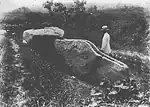
Seventeen of the nineteen component sites have been designated for protection under the Law for the Protection of Cultural Properties as Historic Sites or *Special Historic Sites ("ACA" column below).




Previously-nominated component sites
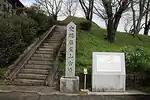
In 2007, twenty-eight sites were submitted jointly for future inscription on the UNESCO World Heritage List as "Asuka-Fujiwara: Archaeological sites of Japan's Ancient Capitals and Related Properties", under criteria ii, iii, iv, v, and vi.[21][22] The number of component sites in the nominated property was subsequently reduced to nineteen.[6][23][24] The following sites formed part of the original submission:[22]


See also
References
- ↑ "Ancient Capitals of Asuka and Fujiwara". UNESCO. Retrieved 26 July 2026.
- ↑ "奥飛鳥の文化的景観" [Cultural Landscape of the Asuka Hinterland]. Agency for Cultural Affairs. Retrieved 12 June 2012.
- ↑ "Asuka Historical National Government Park". Asuka Historical National Government Park. Retrieved 26 July 2026.
- ↑ "Asuka Historical Museum". Nara National Research Institute for Cultural Properties. Retrieved 26 July 2026.
- ↑ "Ancient Capitals of Asuka and Fujiwara : Maps". UNESCO. Retrieved 26 July 2026.
- 1 2 "About Asuka-Fujiwara". Asuka-Fujiwara World Heritage Inscription Promotion Council. Retrieved 11 February 2025.
- ↑ 史跡 名勝 飛鳥京跡苑池 [Historic Site & Place of Scenic Beauty: Asuka Palace Pond] (in Japanese). Kashihara City. Retrieved 12 June 2012.
- ↑ 奈良県山田寺跡出土品 [Excavated Artefacts from Yamadadera] (in Japanese). Agency for Cultural Affairs. Retrieved 12 June 2012.
- ↑ Parent, Mary Neighbour (1984). "Yamadadera: Tragedy and Triumph". Monumenta Nipponica. 39 (3). Sophia University: 307–331. doi:10.2307/2384596. JSTOR 2384596.
- 1 2 3 McCallum, Donald F (2009). The Four Great Temples: Buddhist Archaeology, Architecture, and Icons of Seventh-Century Japan. University of Hawaii Press. ISBN 978-0-8248-3114-1.
- ↑ "Site of Hinokuma-dera". Kashihara City. Retrieved 14 May 2011.
- ↑ Aston, W.G. (1972) [1896]. Nihongi: Chronicles of Japan from the Earliest Times to A.D. 697. Vol. 2. Tuttle. p. 379. ISBN 0-8048-0984-4.
- ↑ "Ishibutai Kofun". Asuka Historical Museum. Archived from the original on 24 April 2011. Retrieved 14 May 2011.
- ↑ "Shobu-ike Kofun". Asuka Historical Museum. Retrieved 14 May 2011.
- ↑ 大和国高市郡牽牛子塚古墳出土品 [Excavated Artefacts from Koshitsukagomon Kofun, Takaichi District, Yamato Province] (in Japanese). Agency for Cultural Affairs. Retrieved 11 February 2025.
- ↑ "Moto Yakushiji". Asuka Historical Museum. Retrieved 14 May 2011.
- 1 2 ""Conservation" of mural paintings of Takamatsuzuka and Kitora Tumuli Japan" (PDF). French Ministry of Culture. Archived from the original (PDF) on 5 November 2012. Retrieved 14 May 2011.
- ↑ キトラ古墳壁画 [Wall Paintings from Kitora Kofun] (in Japanese). Agency for Cultural Affairs. Retrieved 11 February 2025.
- ↑ 高松塚古墳壁画 [Wall Paintings from Takamatsuzuka Kofun] (in Japanese). Agency for Cultural Affairs. Retrieved 12 June 2012.
- ↑ 高松塚古墳出土品 [Excavated Artefacts from the Takamatsuzuka Kofun] (in Japanese). Agency for Cultural Affairs. Retrieved 12 June 2012.
- ↑ "Asuka-Fujiwara: Archaeological sites of Japan's Ancient Capitals and Related Properties". UNESCO. Retrieved 11 February 2025.
- 1 2 "Monuments". Asuka Mura. Retrieved 2 Feb 2013.
- ↑ 飛鳥・藤原の宮都(令和7年1月28日推薦) [Ancient Capitals of Asuka-Fujiwara (Recommended 28 January 2025)] (in Japanese). Agency for Cultural Affairs. Retrieved 11 February 2025.
- ↑ "Japan recommends ancient capitals in Nara Pref. for UNESCO listing". The Mainichi. 28 January 2025. Retrieved 11 February 2025.
- ↑ 定林寺跡 [Jōrinji Site] (in Japanese). Agency for Cultural Affairs. Retrieved 12 June 2012.
- ↑ 岩屋山古墳 [Iwayama Kofun] (in Japanese). Agency for Cultural Affairs. Retrieved 12 June 2012.
- ↑ 伝飛鳥板蓋宮跡 [Site known as the Asuka Itabuki Palace] (in Japanese). Agency for Cultural Affairs. Retrieved 12 June 2012.
- ↑ "飛鳥稲淵宮殿跡" [Asuka Inabuchi Palace Site]. Agency for Cultural Affairs. Retrieved 12 June 2012.
- ↑ マルコ山古墳 [Marukoyama Kofun] (in Japanese). Agency for Cultural Affairs. Retrieved 12 June 2012.
- ↑ 飛鳥池工房遺跡 [Asuka Pond Workshop Site] (in Japanese). Agency for Cultural Affairs. Retrieved 12 June 2012.
- ↑ "Site of Asuka-ike workshop". Kashihara City. Archived from the original on 21 July 2011. Retrieved 14 May 2011.
- ↑ 岡寺跡 [Okadera Site] (in Japanese). Agency for Cultural Affairs. Retrieved 12 June 2012.
- ↑ "Oka-dera". Asuka Historical Museum. Retrieved 14 May 2011.
- ↑ 植山古墳 [Ueyama Kofun] (in Japanese). Agency for Cultural Affairs. Retrieved 12 June 2012.
- ↑ "Burial site unearthed in Nara". The Japan Times. 18 August 2000. Archived from the original on 9 October 2006. Retrieved 15 May 2011.
- ↑ 丸山古墳 [Maruyama Kofun] (in Japanese). Agency for Cultural Affairs. Retrieved 12 June 2012.
- ↑ "Maruyama Kofun". Asuka Historical Museum. Retrieved 14 May 2011.
- ↑ 藤原京跡 朱雀大路跡 [Fujiwara-kyō Suzaku Avenue Site] (in Japanese). Agency for Cultural Affairs. Retrieved 12 June 2012.
- ↑ 大和三山 [Yamato Sanzan] (in Japanese). Agency for Cultural Affairs. Retrieved 12 June 2012.
External links
- UNESCO entry
- (in English) Ancient Capitals of Asuka and Fujiwara
- (in Japanese) Ancient Capitals of Asuka and Fujiwara
