A Fairytale for Everyone
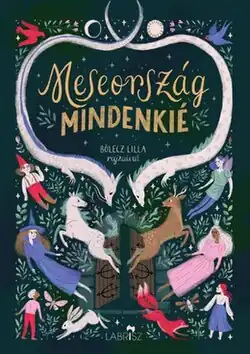 Original cover | |
| Editor | Boldizsár M. Nagy |
|---|---|
| Original title | Meseország mindenkié |
| Illustrator | Lilla Bölecz |
| Language | Hungarian |
| Genre | Fairy tale |
| Publisher | Labrisz Lesbian Association |
| Publication date | 20 September 2020 |
| Publication place | Hungary |
| Pages | 180 |
| ISBN | 9786150089287 |
A Fairytale for Everyone (Hungarian: Meseország mindenkié, lit. 'Fairyland Belongs to Everyone') is a Hungarian anthology of fairy tales published by the Labrisz Lesbian Association in 2020. The volume contains retellings of traditional fairy tales in which the main characters belong to different marginalised groups or minorities.
It was coordinated by Dorottya Rédai, edited by Boldizsár M. Nagy and illustrated by Lilla Bölecz.
Contents
The book contains 17 adaptations of classic fairy tales by Hungarian authors.
| English title | Original title | Author | Based on |
|---|---|---|---|
| The Bird with the Ruby-Red Feathers | Rubinpiros madár | Krisztina Rita Molnár | Myth of Caeneus[1] |
| Autumn Brown | Avarbarna | Eszter Gangl | "Snow White"[2][3] |
| The Witch's Tale | A boszorkány meséje | István Lakatos | "Hansel and Gretel"[4] |
| The Ice King | A Jégkirály | Judit B. Tóth | "The Snow Queen"[3] |
| Iron Imi | Vaslaci | Andrea Tompa | |
| Margaret the Giant Killer | Óriásölő Margaret | Dóra Gimesi | |
| Koni's Antlers | Az őzike agancsa | Edit Szűcs | Bambi, a Life in the Woods[3] |
| The Kidnapped Princess | Az elrabolt királykisasszony | Edit Pengő | |
| Róza Goes to the Ball | Róza a bálban | Judit Ágnes Kiss | |
| Little Lina's Great Adventure | Picur Panna nagy kalandja | Noémi Rebeka Horváth | "Thumbelina"[2] |
| Kitty and Karola | Kincső és Karola | Sára Harka | The Prince and the Pauper[5] |
| Threeodore the Three-Eared Rabbit | Trivadar, a háromfülű nyúl | Kriszta Kasza | |
| The Twirly-Whirly Drinking Straws | A kacskaringós szívószál | Edina Kertész | |
| The Great Alfredo | A nagy Alfredo | Orsolya Ruff | |
| Be Lucky, Batbayan! | Légy szerencsés, Batbaján! | Brigitta Kovács "Efi" | "Cinderella"[1] |
| Thumbelina Gets a Life | Panna élni megy | Petra Finy | "Thumbelina"[3][4] |
| A Princely Wedding | Házasodik a herceg | Zoltán Csehy | |
Background and release

Györgyi Kövesi, a teacher participating in an educational programme organized by the Labrisz Lesbian Association to promote understanding of LGBTQ issues among high school students, conceived the original idea of a fairy tale book aimed at younger children that is capable of shaping perspectives by portraying the lives of people belonging to minorities.[6][4][7] After Kövesi presented the concept to her colleagues at Labrisz, the organization applied for a grant aimed at promoting diversity, which they successfully secured.[8] In the autumn of 2019, the association approached Boldizsár M. Nagy to join the project as an editor.[7] Dorottya Rédai, an academic and long-time activist of the association, joined the preparations as project coordinator.[4]
In November 2019, Labrisz announced a fairy tale writing competition for amateur writers, calling for adaptations of classic tales set in a contemporary setting and featuring characters belonging to stigmatised or minority groups.[9] The association received more than eighty submissions for the competition.[6] The works were evaluated by a panel of four including Nagy, Rédai, psychologist Anna Borgos, as well as educator and bibliotherapist Noémi Lőrincz.[5] Borgos stated that the primary objective in the selection process was "to represent the widest possible range of minority and marginalised characters and life experiences in the book".[6]
Ultimately, eight submissions were selected to be featured in the anthology. Furthermore, nine prominent Hungarian authors were invited to contribute a fairy tale each to the volume.[6]
On 20 September 2020, a book launch event took place at the Massolit bookstore in Budapest.[10] The event was held behind closed doors to prevent demonstrations by anti-LGBTQ groups.[4] The book was officially released by Labrisz on 21 September.[11]
Reception
The book's first edition had a print run of 1500 copies. While the creators had originally expected it to sell out in two to three years,[8] the volume sold out in less than two weeks due to the considerable attention it received.[12] The second printing was published in October 2020 with 15,000 copies,[11] followed by a third printing in November.[10] Within the first three months of the book's release, it sold more than 19,000 copies,[13] and within a year, sales reached 30,000 copies.[14]
Critical reception
Writing for 24.hu, György Balavány called the anthology a "movement pamphlet of fluctuating quality". While acknowledging the noble intentions and sense of social mission behind its publication, he opined that many of the included tales function as moral lessons or outright "ideological propaganda". He argued that these "heavy-handed fables" are too intent on conveying a message, therefore lacking the subtlety that characterises real works of art. On the other hand, he praised the literary and narrative qualities of some stories, writing that they feature "genuine life situations, conflicts, and characters that are accessible and relatable for children" while lacking any sense of deliberate intent.[1]
In a positive review, Olaf Tempelman of de Volkskrant rated the book's Dutch translation four stars out of five, writing that the fairy tales are "funny and at times truly moving".[15]
Controversy over LGBTQ themes

On 23 September 2020, two days after the volume's release, ultraconservative group CitizenGO launched an online petition, headed by the organization's national campaign director Eszter Schittl, in which they called on several bookstores to stop distributing the book, claiming that it "poses a threat to the innocence and safe development of children".[16][17] The petition was signed by over 80,000 people.[18]
On 25 September, far-right political party Our Homeland Movement held a press conference during which Dóra Dúró, the party's deputy president and member of the National Assembly, declared that the party "will not tolerate that children are exposed to homosexual propaganda" in the form of "sneaking the abnormal lifestyle into storybooks". After her speech, Dúró ripped several pages out of the book and inserted them into a paper shredder.[19][20] In a Facebook post, she referred to the volume as "the propaganda book of homosexualism [sic]" and "an attack on children's healthy development and on Hungarian culture".[21]
The actions of Our Homeland Movement sparked widespread criticism. The Hungarian Publishers' and Booksellers' Association (MKKE) issued a statement condemning the event, stating that the "politically driven destruction of books [...] is not merely an expression of opinion, but an alignment with the legacy of Nazi book burners and communist book crushers."[22] HUBBY, the national chapter of the International Board on Books for Young People also issued a statement in which they distanced themselves from the action.[23]

Writer Andrea Tompa, one of the book's authors, commented that the shredding of the book is "no different from book burning" and described book destruction as a form of violence.[24] Krisztina Rita Molnár, another contributor, condemned the petition and the shredding, comparing the events to the plot of the novel Fahrenheit 451.[24] Petra Finy, who also authored a tale in the book, said that the aggressive reactions that the book received reflect "the emotional crisis and regression" of Hungarian society.[25] Several Hungarian celebrities, including rapper Tomi Fluor, singer-songwriter Péter Geszti, and television presenters Lilu and Csilla Tatár, also condemned the book shredding.[26][27] In response to the backlash against the book, English actor Ian McKellen wrote in a Facebook post, "I wish I could have read this book when I was a child."[28]
On 4 October, Hungarian prime minister Viktor Orbán was asked about A Fairytale for Everyone in an interview on Kossuth Rádió's weekly programme Vasárnapi Újság. He described the book's release as a "provocative demonstration" and commented that while "Hungary is a patient, tolerant country as regards homosexuality [...] there is a red line that cannot be crossed, and this is how I would sum up my opinion: leave our children alone."[29][30] Four days later, Gergely Gulyás, Minister of the Prime Minister's Office, stated that any kindergarten that implements the book "must be investigated to determine whether it involves the crime of child endangerment. If confirmed, legal action must be taken against the [kindergarten's] operator."[31]
When asked about the controversy in an interview with conservative newspaper Magyar Nemzet on 8 October, prominent psychologist Emőke Bagdy stated that early sensitization on gender identity among preschool-aged children can pose a risk because social influences may alter the activity of regulatory genes, disrupting the harmony between biological sex and social gender. She also claimed that fairy tales can serve as a medium for "deliver[ing] messages that a child accepts without critique".[32] Two days later, a joint declaration was issued by psychologists who asserted that Bagdy's earlier statement "contain[s] unprofessional claims contrary to the current state of scientific knowledge" and that "the book addresses important social issues and incorporates them into the world of tales, which poses no danger to either children or other members of society."[33] Within days, more than 1200 psychologists signed the declaration in protest.[34]
Awards and honours
In 2021, Dorottya Rédai was included on Time magazine's Time 100 list of the year's most influential people for his role in the book's publication. In her recognition, German MEP Terry Reintke called her "a symbol of the courage needed" in Hungary's hostile political climate.[35][14]
At the 2021 Festive Book Week, A Fairytale for Everyone received the Student Jury Prize for the Most Innovative Book of the Year at the Children's Book of the Year Awards organized by HUBBY.[36]
Translations
As of 2023, the anthology was translated into eleven languages.[37]
The first edition of the Dutch translation sold out within a few weeks, prompting the release of a second printing.[36] In December 2021, English PEN announced that the English edition, translated by Anna Bentley, would be supported by a PEN Translates award.[38]
References
- 1 2 3 Balavány, György (7 November 2020). "Meseország Mindenkié: hullámzó színvonalú mozgalmi röpirat". 24.hu (in Hungarian). Retrieved 20 August 2025.
- 1 2 Szőke, Dávid (3 October 2022). "Mesemondás és empátia: Egy roma kislány hőstörténete a Meseország mindenkié című válogatásban". Mesecentrum (in Hungarian). Retrieved 20 August 2025.
- 1 2 3 4 Bentley, Anna (2021). "The Fortunes of Hungarian Children's Literature at Home and in the English-Speaking World" (PDF). Hungarian Cultural Studies. 14. American Hungarian Educators Association: 145–163. doi:10.5195/ahea.2021.433. Retrieved 21 August 2025.
- 1 2 3 4 5 Bodnár, Judit Lola (26 September 2020). "A háromfülű nyuszi, a gyászoló gonosz mostoha, és Hüvelyk Panna, akinek a válás lett a happy end". 24.hu (in Hungarian). Retrieved 19 August 2025.
- 1 2 Győri, Enikő (6 October 2020). "Borgos Anna: Azt képzeltük, küzdenünk kell majd, hogy ismertté váljon. Hát, nem kellett…". Litera (in Hungarian). Retrieved 20 August 2025.
- 1 2 3 4 Karafiáth, Orsolya (8 November 2020). ""Mert ezek valóban mesék": Borgos Anna pszichológus és Kövesi Györgyi pedagógus". Magyar Narancs (in Hungarian). Retrieved 20 August 2025.
- 1 2 Kitzinger, Szonja (30 September 2020). "Homoszexuális propaganda vagy a sokszínűség dicsérete?". Index.hu (in Hungarian). Retrieved 20 August 2025.
- 1 2 Kanicsár, Ádám András (9 October 2020). "Meseország mindenkié lett". Jelen (in Hungarian). Retrieved 20 August 2025.
- ↑ "Meseország mindenkié – meseíró pályázatot hirdet a Labrisz Egyesület". Litera (in Hungarian). 5 November 2019. Retrieved 20 August 2025.
- 1 2 "A short history of Fairyland". A Fairytale for Everyone. Labrisz Lesbian Association. Retrieved 19 August 2025.
- 1 2 Haynes, Suyin (7 October 2020). "Why a Children's Book Is Becoming a Symbol of Resistance in Hungary's Fight Over LGBT Rights". Time. Retrieved 20 August 2025.
- ↑ Bodnár, Judit Lola (29 September 2020). "Dúró Dóra a sikerlista élére darálta a Meseország mindenkié kötetet, el is fogyott". 24.hu (in Hungarian). Retrieved 20 August 2025.
- ↑ Biczó, Henriett (24 November 2023). "Két középkorú nő szerelméről készített filmet a Labrisz". Jelen (in Hungarian). Retrieved 20 August 2025.
- 1 2 "A világ 100 legbefolyásosabb embere közé sorolta a Time a Meseország mindenkié projektkoordinátorát". HVG (in Hungarian). 15 September 2021. Retrieved 21 August 2025.
- ↑ Tempelman, Olaf (14 October 2021). "Er was eens een land waar de premier niets van lhbti'ers moest hebben". de Volkskrant (in Dutch). Retrieved 21 August 2025.
- ↑ Kocsis, G. János (24 September 2020). "A sokszínűségről szóló mesekönyv ellen petíciózik a CitizenGo". Humen (in Hungarian). Retrieved 19 August 2025.
- ↑ Horn, Gabriella (26 January 2023). "Bíróság: Egy mesekönyv nem minősíthető a gyermekekre károsnak LMBTQ-tartalma miatt". Szabad Európa (in Hungarian). Retrieved 19 August 2025.
- ↑ Rédai, Dorottya (2024). "Lesbian resistance through fairytales. The story of a children's book clashing with an authoritarian anti-gender regime in Hungary". Journal of Lesbian Studies. 28 (3): 443–459. doi:10.1080/10894160.2023.2255044. PMID 37726919.
- ↑ Kocsis, G. János (25 September 2020). "Meseország nem az aberráltaké – Dúró Dóra ledarált egy mesekönyvet". Humen (in Hungarian). Retrieved 19 August 2025.
- ↑ Czeglédi, Fanni (1 October 2020). "Mitől olyan veszélyes egy mesekönyv, hogy valaki ledarálja?". HVG (in Hungarian). Retrieved 19 August 2025.
- ↑ "Dúró Dóra ledarált egy mesekönyvet, mert szerinte meseország nem az aberráltaké". Magyar Narancs (in Hungarian). 25 September 2020. Retrieved 19 August 2025.
- ↑ "A Könyvkiadók és Könyvterjesztők Egyesülése Dúró Dórának: El a kezekkel a könyvektől!". 24.hu (in Hungarian). 28 September 2020. Retrieved 20 August 2025.
- ↑ "A MKKE és a HUBBY közleményben tiltakozik". Litera (in Hungarian). 30 September 2020. Retrieved 20 August 2025.
- 1 2 3 "A gyerekeknek nem a mese káros, hanem az erőszak". Könyves Magazin (in Hungarian). 28 September 2020. Retrieved 20 August 2025.
- 1 2 Szántó, Eszter; Bodnár, Judit Lola; Jankovics, Márton (2 October 2024). "Nem befolyásolják a mesék a szexuális orientációt, viszont segíthetnek megérteni". 24.hu (in Hungarian). Retrieved 20 August 2025.
- ↑ Mészáros, Júlia (28 September 2020). "Fluor: Tele az ország frusztrációval, gyűlölettel, legalább az a kibaszott meseország hadd legyen mindenkié". 24.hu (in Hungarian). Retrieved 20 August 2025.
- ↑ Csáka, Eszter (2 October 2020). "Geszti Péter a könyvdarálásról: Egyetértek azzal, amiért Fluor Tomi is kiállt". 24.hu (in Hungarian). Retrieved 20 August 2025.
- ↑ Kovács, Dávid (30 November 2020). "Ian McKellen szívesen olvasta volna a ledarált magyar mesekönyvet". Telex.hu (in Hungarian). Retrieved 20 August 2025.
- ↑ "At this time, we must stand together; this is the moment when we must achieve a breakthrough improvement in physicians' pay". Kormany.hu. Government of Hungary. 5 October 2020. Archived from the original on 13 October 2020. Retrieved 20 August 2025.
- ↑ Bordás, Gábor (6 October 2020). "Orbán Viktor türelmes". 24.hu (in Hungarian). Retrieved 20 August 2025.
- ↑ Presinszky, Judit (8 October 2020). "Gulyás: Felmerülhet kiskorú veszélyeztetése az óvodákban, ahol bevezetik a Meseország mindenkié című könyvet". Telex.hu (in Hungarian). Retrieved 20 August 2025.
- ↑ Elek, Nikoletta (8 October 2020). "Veszélyt jelentenek a kicsikre a gendermesék". Magyar Nemzet (in Hungarian). Retrieved 20 August 2025.
- ↑ "Pszichológusok a Meseországról: Nem létezik olyan, hogy túl korai érzékenyítés". Könyves Magazin (in Hungarian). 12 October 2020. Retrieved 20 August 2025.
- ↑ Cseke, Balázs (16 October 2020). "Bagdy Emőke bármely könyv ledarálásától elhatárolódik". Telex.hu (in Hungarian). Retrieved 20 August 2025.
- ↑ Reintke, Terry (15 September 2021). "The 100 Most Influential People of 2021: Dorottya Redai". Time. Retrieved 20 August 2025.
- 1 2 Balázs, Barbara (13 June 2022). "Ideológiai feszültség kellős közepébe csöppentek a Meseország mindenkié európai kiadásai". RTL (in Hungarian). Retrieved 20 August 2025.
- ↑ "Meseország mindenkié – megjelent fordítások" (in Hungarian). Labrisz Lesbian Association. Retrieved 20 August 2025.
- ↑ "PEN Translates awards announced". English PEN. 21 December 2021. Retrieved 20 August 2025.
External links
- Official website

- Meseország mindenkié at Labrisz Lesbian Association (in Hungarian)