1788–89 United States presidential election in Georgia
 | |||||||||||||||||||||||||||||||||||||||||
January 7, 1789
| |||||||||||||||||||||||||||||||||||||||||
| |||||||||||||||||||||||||||||||||||||||||
| |||||||||||||||||||||||||||||||||||||||||


| Elections in Georgia |
|---|
 |
A presidential election was held in Georgia on January 7, 1789, as part of the 1788–89 United States presidential election. The Georgia House of Assembly chose five electors, who voted for George Washington.[1]
Washington was widely expected to be the first choice of the Electoral College in the first elections held under the Constitution of the United States. Some uncertainty persisted concerning the choice of the first vice president, however, due partly to the electoral system established by Article II of the Constitution. Under this system, each elector voted for two candidates; the candidate with the largest majority was elected president, and the runner-up vice president. With Washington likely to become president, many observers expected John Adams, the U.S. ambassador to the United Kingdom, to receive the other vote of most of the electors. Some, such as Alexander Hamilton, feared Adams's popularity would be so great as to result in a tied vote, throwing the election to the United States House of Representatives. Hamilton believed this event would be deeply embarrassing to the new government and personally intervened with the electors to urge them not to vote for Adams.[2]
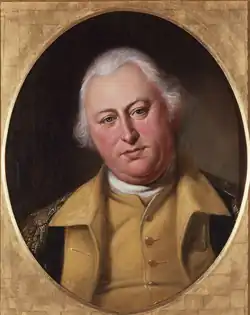
George Handley, George Walton, Henry Osborne, John King, and John Milton were elected when the legislature met on January 7. All five subsequently voted for Washington at the meeting of the Electoral College in Atlanta on February 4. Although at least one observer believed Adams to be the second choice of most Georgians, he received no electoral votes from the state; instead, the electors split their second votes between four other candidates, including three Georgians—Milton, James Armstrong, and Edward Telfair—and General Benjamin Lincoln.[1]
General election
Electors
The House of Assembly chose five electors by ballot. The number of votes for the successful candidates was not recorded.[3]
| Party | Candidate | Votes | |
|---|---|---|---|
| Federalists | George Handley | ** | |
| Federalists | John King | ** | |
| Federalists | Henry Osborne | ** | |
| Federalists | John Milton | ** | |
| Federalists | George Walton | ** | |
Total votes |
** | ||
Electoral College
| Presidential candidate | Party | Home state | Electoral vote[a] |
|---|---|---|---|
| George Washington | Independent | Virginia | 5 |
| John Milton | Federalists | Georgia | 2 |
| James Armstrong | Federalists | Georgia | 1 |
| Benjamin Lincoln | Federalists | Massachusetts | 1 |
| Edward Telfair | Federalists | Georgia | 1 |
| Total votes | 5 | ||
Source: A New Nation Votes: American Election Results, 1787–1825. American Antiquarian Society.[4]
See also
Notes
- ↑ Each elector voted for two candidates.
References
- 1 2 DenBoer, Brown & Hagermann 1986, pp. 440–41.
- ↑ Cunliffe 2002, pp. 7, 12–13.
- ↑ DenBoer, Brown & Hagermann 1986, p. 440.
- ↑ Lampi 2012.
Bibliography
- Cunliffe, Marcus (2002). "Elections of 1789 and 1792". In Schlesinger, Arthur M. Jr.; Israel, Fred L. (eds.). History of American Presidential Elections, 1789–2001. Vol. 1. Philadelphia: Chelsea House Publishers. pp. 1–56.
- DenBoer, Gordon; Brown, Lucy Trumbull; Hagermann, Charles D., eds. (1986). The Documentary History of the First Federal Elections, 1788–1790. Vol. 2. Madison: University of Wisconsin Press.
- Lampi, Philip J. (2012). "1789 President of the United States, Electoral College". A New Nation Votes. American Antiquarian Society. Retrieved April 18, 2026.
State and district results of the 1788–89 United States presidential election | ||
|---|---|---|
 | ||