10th Illinois Infantry Regiment
| 10th Illinois Infantry Regiment | |
|---|---|
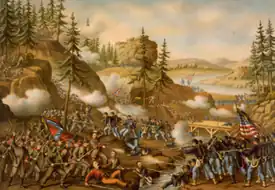 Battle of Chattanooga | |
| Active | April 20, 1861–July 11, 1865 |
| Disbanded | July 11, 1865 |
| Country |  United States |
| Allegiance | Union |
| Branch | Infantry |
| Size | Regiment |
| Nickname | The Twins[note 1] |
| Engagements | American Civil War |
| Commanders | |
| Colonel | James D. Morgan |
| Colonel | John Tillson |
The 10th Illinois Infantry Regiment was an infantry regiment that served in the Union Army between April 20, 1861, and July 11, 1865, during the American Civil War.[2][3][4][5]
Service
Initial 3 month service
The Tenth Illinois Volunteer Infantry was one of the six Regiments called for by the Governor Yates's order of Tuesday, April 16, 1861. The infantry regiment was organized at Springfield, Illinois, from the first four companies reporting on April 20, 1861.[6] They were ordered to Cairo, Illinois, on April 22 where it became fully organized by an additional three companies, three artillery companies and mustered in for a three-month service by Captain John Pope, United States Army, on April 29, 1861. Armed with a mix of imported Enfield and various Springfield Model 1855 and Model 1861 rifle-muskets,[7] it went into service clad in militia gray with gray broad-rimmed hats.[8] The governor appointed Benjamin Mayberry Prentiss as Colonel, James D. Morgan, as Lieutenant Colonel, and Charles H. Adams as Major. The early promotion of Prentiss to a Brigadier General made Morgan Colonel, Adams Lieutenant Colonel and John Tillson Major. Thus organized, it remained at Cairo, doing garrison duty, during its three months' service; twice making movements of reconnaissance, one toward Columbus, KY, and again to Benton, MO. They were attached to Prentiss' Brigade on garrison duty at Cairo, Illinois until being mustered out on July 29, 1861.[4]
3 year service enlistment and Pope's operations
It enlisted and was mustered into the three years' service, July 29, 1861, by Captain T. G. Pitcher at Cairo; thence was soon removed to Mound City, IL, where it remained through the winter, taking part in January 1862, in the movement of Grant's forces toward Columbus and Paducah. In February it was stationed at Bird's Point, MO, and while there, March 1, had brisk engagement with Rebel cavalry, near Sikeston, MO, taking several prisoners and two field pieces.[9]
In March, the 10th Illinois was attached to General Pope's Army of the Mississippi (AoM),[10][note 2] in a brigade composed of the 10th, 16th (its "Twin",[1] under Colonel Smith), and a battalion (under Lt. Col. Williams) of 64th Illinois Infantry regiments. As the senior colonel, Morgan took command of the brigade with command of the regiment passing to Tillson. It became the 1st Brigade in Paine's 4th Division.
Island Number Ten, a small island at the (Tennessee) base of a tight double turn in the Mississippi river, was taken by the Rebels early in the war providing a major impediment to any U. S. efforts to regain control of the Confederacy by river, as ships had to approach the island bows on and then slow to make the turns.[11] Its innate weakness was a single road for supplies and reinforcements.[12] If U.S. forces cut that road, the garrison would be isolated and eventually be forced to surrender.
Pope began his siege in March 1862, shortly after the Confederate Army abandoned their position at Columbus, Kentucky.[13] He made the first probes, coming overland through Missouri and occupying the town of Point Pleasant, Missouri, almost directly west of the island and south of New Madrid. Pope's army then moved north and soon brought siege guns to bear on New Madrid on Wednesday, March 12.
In a night movement, that night, the 10th Illinois in the 1st Brigade advanced on New Madrid, driving in the enemy's pickets, establishing earthworks and planting four field pieces commanding the rebel forts, without raising alarm until daylight, when Pope's artiullery opened fire. Throughout Thursday, the regiment held position under fire of the Rebels' two forts and five gunboats. During the day, it made sorties in which lost one Captain (Carr of Co. H,) and two men killed.[9] The Confederate commander, Brig. Gen. John P. McCown, decided to evacuate the town after only one day of heavy bombardment, moving most of his troops to Island No. 10, abandoning his heavy artillery and most of his supplies.
Following the loss of New Madrid, some of the units at the bend were withdrawn to Fort Pillow, not quite 70 mi (110 km) as the crow flies to the south, but almost twice that by the river.[14] The U.S. Navy's The gunboats under Flag Officer Andrew H. Foote gunboats and mortars arrived on March 15.[note 3] The 10th Illinois and the AoM, in New Madrid, and the naval forces, upstream of the bend, were kept apart by Island No. 10. Pope wanted immediate action against the island while Foote hoped to subdue the island by the slow process of bombardment. As early as March 17, Pope was asking that two or three gunboats run past the Confederate batteries, to enable him to cross the river and trap the entire garrison.[15][note 4] Foote demurred, arguing that his boats were not invincible, that a chance disabling shot would deliver a boat into Confederate hands, and that gunboat could then threaten all the Northern cities along the Mississippi and its tributaries.[16][note 5]
For the next two weeks, fighting consisted of bombardment of the island at rather long range, mostly conducted by the mortars, and occasionally replied to by the Confederate batteries. After Foote had flatly rejected Pope's request that gunboats run past Island No. 10, someone on Pope's staff suggested that perhaps a canal could be cut to enable Union vessels to bypass the batteries. Completed in two weeks, while not deep enough to provide passage for the gunboats, it was deep enough for transports and supply vessels, so that Pope did not have to depend on land communications. When Halleck told Foote, to, "Give him (Pope) all the assistance in your power,"[18] Foote gathered his officers on March 29, and the USS Carondelet was prepared for the run and waited for a sufficiently dark night to make her run.[19]
To reduce the danger as much as possible, a raid by sailors and soldiers overran Battery No. 1 and spiked its guns on Tuesday night, April 1. On Wednesday, the flotilla, including both mortars and gunboats, concentrated its fire on the Rebel's floating battery New Orleans, knocking her out of action sending her drifting downstream out of the war.[20] On Friday night. April 4, conditions for the run were satisfactory with a moonless night and a thunderstorm. Carondelet took off and was not discovered until she was abreast of the Confederate Battery No. 2 which opened up to no effect, and Carondelet completed the run unscathed. Pope asked Foote for another gunboat, and on Sunday night, April 6,USS Pittsburg made a similar run.[21][note 6]
Now able to cross the river without interference from Confederate gunboats, Pope could also suppress enemy fire that may have opposed their landing. On Monday, he made his move, and sent the gunboats to destroy the batteries at Watson's Landing, his landing site, and once this was accomplished, the transports carried the troops across, and the landings proceeded without opposition.[22] The 10th Illinois landed in the first wave.[9]
A few hours elapsed until Mackall, the Rebel commander, realized that his position was hopeless, he put the men on the mainland in motion in the direction of Tiptonville.[23] The motion was detected, and Pope then diverted his soldiers to Tiptonville. The 10th Illinois and its comrades found themselves in a footrace rather than the expected battle. The U.S. Navy's gunboats delayed the Rebels long enough for thwe 10th Illinois and its brigade to intercept their retreat, bringing to surrender at Tiptonville Mackall with 2,500 men. While this was taking place, the demoralized garrison of Island No. 10 surrendered separately to Flag Officer Foote and his gunboats. In total, 6,000 men and a large amount of field artillery and small arms were captured and the Mississippi was open as far as Fort Pillow.[24]
On Sunday, April 13, the 10th Illinois embarked on a steamer for Forts Wright and Pillow; returned up Mississippi on Friday, and landed at Hamburg on the Tennessee, Thursday, April 24.[9]
Siege of Corinth
Following the victories at Island Number Ten and Shiloh, Halleck united the three U.S. armies —the Army of the Tennessee (AoT), the Army of the Ohio (AoO), and the AoM — to advance on the vital rail center of Corinth, Mississippi. Cautious due to staggering losses at Shiloh, his advance wad a slow campaign of offensive entrenchment, fortifying after each advance. Hallack organized his force into two wings, a center, and a reserve. The right wing was commanded by Grant in his capacity of District of West Tennessee commander with the AoT providing the Right Wing (five divisions under Thomas) and Halleck's reserves (two divisions under McClernand). The center was buell's AoO (with four divisions). The AoM, under Pope,made up the left wing. Pope further organized his troops into two further wings (of two and three divisions) keeping his cavalry division, Reserve Brigade, Artillery Brigade, a Regular Cavalry regiment, a Regular Infantry regiment, and a regiment of Missouri Engineers as direct reports.[25]
On April 24, the 10th Illinois' brigade was assigned to the new 2nd Brigade of Paine's new 1st Division in the two-division Right Wing commanded initially by Pope who then assigned it to [[William S. Rosecrans}Rosecrans]].[note 7] Col. Morgan assumed command of the brigade until May 1, when Brig. Gen. Daniel Tyler took command.[26] The brigae now had six volunteer infantry regiments, four Illinois and two Michigan. Joining the 10th and its twin, the 16th Illinois were the 60th Illinois (under Col. Toler), Yates’ Sharpshooters, and the 10th and 14th Michigan.[26]
Of Halleck's wing commanders Pope proved to be the most aggressive during the campaign. Pope led the army's Left Wing and was furthest away from Halleck's headquarters.[27] On May 3,[28] Pope moved forward. He had Paine leave his camp about 10:00 a.m. and take the road to Farmington. After advancing 3 miles (4.8 km), Paine sent a detachment towards Nichols' ford, and the 10th Illinois and the balance of the division descended into Four Mile Swamp on either side of the direct road to Farmington with Yates' sharpshooters being deployed as skirmishers. The skirmishers soon made contact and, reinforced by the 10th Illinois and the rest of its brigade, succeeded in forcing passage through the swamp, driving the Rebels across Seven-Mile Creek. In this action, the regiment lost two men killed and five wounded, capturing 15 Rebels, and killing an equal number.


After this advance, instead of moving the center wing under Buell forward, Halleck ordered Pope to withdraw and realign with Buell. Almost a week later, on Friday, May 9, Beauregard ordered Van Dorn and Bragg to attack Pope,[29][30] as the 10th Illinois successfully withdrew as part of Pope's realignment with Buell. Pope's 12,000 men were barely engaged by Van Dorn's corps, who barely engaged, had 9 casualties while Bragg's Corp, which bore the brunt of the fighting, suffered casualties of 8 dead, 89 wounded and two missing or captured. Halleck's total losses were 16 killed, 148 wounded and 14 missing or captured.[31][32]
Over the next two weeks, Halleck's wings continued to advance on and around Corinth. By Sunday, May 25, after moving 5 miles (8.0 km) in three weeks, Halleck was in position to lay siege to the town. On Tuesday, Halleck sent Sherman to drive the Confederates from Double Log House along the Corinth Road[33] and Buell to clear the Rebels off the Surratt Hill.[34] The nnext day, May 27, Buell had sent a force who seize a Confederate-held crossing of Bridge Creek, a small tributary of the Tuscumbia River, forcing the Rebels to abandon the bridge completely.k[35]
Beauregard's army had low morale, faced twice their number, and were racked by typhoid and dysentery. At a council of war, the Confederate officers concluded that they could not hold the railroad crossover. Sickness had claimed the lives of as many men as the Confederacy had lost at Shiloh.[36] Beuregard decided to retreat and save his army by faking preparations for an assault while during Friday night, May 29, his army evacuated,[note 8] withdrawing to Tupelo, Mississippi. When the 10th Illinois entered Corinth on Saturday morning, the men and their brethren in the U.S. armies realized enemy had gone.[note 9] The 10th and its brigade spent the next week and a half pursuing the enemy as far as Booneville, returning toward Corinth and encamping at Big Springs on Thursday, June 12.[9]
Post-Corinth and Nashville garrison duty
The 10th Illinois remained in camp outside Corinth for the next five and a half weeks at Big Springs during the month of June, and until Monday, July 21. On that day, the 10th Illinois marched to Tuscumbia. Changes in the regiment's command structure were afoot] on Thursday, July 17, Col. Morgan was promoted to brigadier general. As a result Lt. Col. Tillotson was promoted to colonel and fleeted up to command the 10th Illinois. The next week Company A's Capt McLean Wood was promoted two ranks to assume the lieutenant colonelcy. Company E's commander Capt.Charles Cowan was promoted to Major.[38] The 10th Illinois saw the resignation of its chaplain, Rev. William Collins of Jacksonville, IL, on Saturday, June 21 while encamped at Big Springs.[39]
Successful U.S. Army operations in the Western campaigns had made progress largely driving organized Rebels from Kentucky and large parts of Tennessee. The Tennessee and Cumberland Rivers were opened to the U.S. Navy. Corinth's evacuation caused most of West Tennessee to fall into federal control. Admiral David Farragut had taken New Orleans, the Confederacy's largest city, leaving Vicksburg, Mississippi in WAashington's sights with western Confederacy were "narrowed down all to the single line of [rail]road running east from Vicksburg."[40] To shift attention away from Vicksburg and from Chattanooga, Tennessee, the Rebels invaded Kentucky with Bragg leading its army.[note 10] With Kentucky, being a slave state, the "brother against brother" scenario was prevalent. Unable to gain an electoral majority, Southern sympathizers seceded [41] and joined the Confederacy,[42] nominally controlling more than half the state early in the war, but they had been unable to establish their legitimacy after early 1862. Despite Kentucky's declared neutrality at the beginning of the war, the Confederacy confidently seized Columbus in 1861, a political blunder that pushed the legislature to petition the U.S. forces for assistance overriding the Kentucky governor's veto. After early 1862 Kentucky was largely under Union control, despite having a star on the Confederacy's flags and seats in its congress.[note 12] While 35,000 Kentuckians served as Confederate soldiers, an estimated 125,000 Kentuckians served as Union soldiers.[43] Nearly sixty infantry regiments served in the Union armies, versus just nine in the Confederate. As a result, Bragg, like Lee in his Maryland Campaign, expected to rally supporters and recruits and draw U. S. forces under Buell back beyond the Ohio River. Bragg moved his army to Chattanooga to challenge Buell's advance on the city.
On Thursday, August 28, the 10th Illinois and its brigade received orders to go to Nashville to join the garrison there to counter the Rebel move north. On Saturday morning the 10th Illinois and its comrades moved out marching via Florence, Athens and Columbia, to Nashville; had five men killed by guerrillas on the march. The force reached Nashville, Friday, September 12, remaining there most of time until July 1863, with occasional movements in the neighborhood. At this time the brigade became 2nd Brigade, 13th Division, Army of the Ohio (AoO).[4][44]
On October 4, Bragg participated in the inauguration of Richard Hawes as the provisional Confederate governor of Kentucky. The wing of Bragg's army under Polk met Buell's army at Perryville on Wednesday, October 8, and won a tactical victory against him. Despite entreaties from his subordinates to continue with his ivasion, Bragg displayed "a perplexity and vacillation which had now become simply appalling to Smith, to Hardee, and to Polk."[45] In the end, fearing the growing numbers moving on him, Bragg withdrew through Cumberland Gap, claiming his invasion was a successful giant raid. Disheartening news had arrived from North Mississippi that Earl Van Dorn and Sterling Price had failed at Corinth, just as Lee had failed in his Maryland.[46]
Despite, Bragg's withdrawal, regular and irregular Rebel cavalry remained active in Kentucky and Tennessee. Morgan's regular cavalry was particularly active, launching multiple raids and strikes on Rosecrans' supply lines feeding the AoC Nashville. On Monday, October 24, William Rosecrans relieved Buell as commander of the AoO and also appointed to the command of the Department of the Cumberland and subsequently renamed his forces the Army of the Cumberland (AoC). Rosecrans was promoted to the rank of major general (of volunteers, as opposed to his brigadier rank in the regular army). and began re-organizing his army.[note 13] Despite Buell's halting and lackluster pursuit of Bragg causing his relief, Rosecrans displayed similar caution, remaining in Nashville while he reprovisioned his army and improved the training of his cavalry forces. In November, the 10th was assigned to the 1st Brigade, 4th Division, Centre (under Thomas XIV Corps, AoC. On Wednesday, November 5, the 10th Illinois suffered two men killed in the rebuff Morgan's attack on the Edgefield Railroad Bridge.[48] By early December 1862, Halleck had lost his patience and wrote to Rosecrans, "If you remain one more week in Nashville, I cannot prevent your removal." Rosecrans replied, "I need no other stimulus to make me do my duty than the knowledge of what it is. To threats of removal or the like I must be permitted to say that I am insensible."[49]
In late December, Rosecrans began his march against Bragg, encamped outside Murfreesboro, Tennessee leaving the 4th and 5th Divisions and most of the 3rd behind to securte Nashville. The 10th Illinois, therefore, missed the Battle of Stones River, the bloodiest battle of the war in terms of percentages of casualties.[50]
The new year, Tullahoma, and Chattanooga
After the battle, Rosecrans reorganized the AoC again. The former Center wing became XIV Corps, the Right wing became XX Corps, and the Left wing became XXI Corps. Rosecrans retained the 4th and 5th Divisions to keep his lines of communications open.[4]
Following Stones River, Bragg had withdrawn along the Duck River behind the ridge known as the Highland Rim, which encircles the Nashville Basin.[51] Bragg, concerned that Rosecrans would seize Chattanooga, a vital rail junction and the gateway to northern Georgia, spread his cavalry over a wide front to guard against a turning movement. Bragg assumed any attack would be made on his left flank through the easy-to-cross Guy's Gap towards Shelbyville, so he placed the larger of his two infantry corps commanded by Polk there. Hardee's corps was 8 miles (13 km) to Polk's right, in Wartrace, protecting the main Chattanooga road and positioned to reinforce the other three passes —(from west to east) Bell Buckle Gap, Liberty Gap, and Hoover's Gap. Hoover's Gap was almost undefended; it was a 4 miles (6.4 km) long pass between the 1,100 feet (340 m) ridges separating the Stones and Duck Rivers. The narrow pass had been fortified with strong entrenchments but only manned by a single cavalry regiment.[52]
Rosecrans remained building, supplying, and training the AoC in Murfreesboro for almost six months, building a logistical base (Fortress Rosecrans). In the face of numerous entreaties from Washington to resume campaigning against Bragg, Rosecrans rebuffed them through the winter and spring because he was reluctant to advance on the muddy winter roads.[52] The fear that the Rebels might move units from Bragg's army to relieve the pressure that Grant was applying to Vicksburg, Mississippi.[53] Frustration with Rosecrans's excuses led Halleck to threaten to relieve him if he did not move, but in the end he merely protested "against the expense to which [Rosecrans] put the government for telegrams."[54]
During the winter and spring, both sides occupied themselves with their favorite—and generally profitless—practice of sending cavalry on raids.[54] Almost a third of Bragg's army consisted of cavalry—16,000 effectives versus about 9,000 Union.[55] A number of minor battles - the Battle of Dover,[56] the Battle of Thompson's Station,[57] the Battle of Brentwood,[58] the cavalry fights north of Spring Hill, and Streight's Raid - served to keep the 10th Illinois and the 4th Division in Nashville.[59] These efforts while tying down AoC assets cost Bragg 4,000 irreplaceable cavalrymen during this period and 3,300 U.S. soldiers.[54] At this time, the 4th Division of XIV Corps was transferred to the AoC's Reserve Corps as its 2nd Division mid-June, putting the 10th IllinoisA 1st Brigade, 2nd Division of the Reserve Corps until October.[4]
With the threat of losing troops to support Grant, Rosecrans, after consulting his subordinates, planned his offensive to launch at the end of June.[60][note 14] On June 16, Halleck wired a blunt message: "Is it your intention to make an immediate movement forward? A definite answer, yes or no, is required." Rosecrans responded to this ultimatum: "If immediate means tonight or tomorrow, no. If it means as soon as all things are ready, say five days, yes." Seven days later, early in the morning of June 24, Rosecrans reported that the Army of the Cumberland had begun to move against Bragg.[62]
The campaign was marked by the AoC's first large-scale use of mounted infantry armed with repeating rifles. The speed of the mounted infantry let Rosecran's army take Hoover's Gap and flank Bragg much sooner than he expected. As a result, Bragg evacuated his forces from Middle Tennessee and withdrew to the city of Chattanooga, Tennessee. Rosecrans followed and, through skillful manouver and misdirection,.[63][note 15] captured that city on Tuesday, September 8, 1863 when Bragg realized the bulk of the AoC had gotten beyond his left flank and withdrew south along the LaFayette Road toward LaFayette, Georgia.[64] The AoC occupied Chattanooga on Wednesday, and Rosecrans telegraphed Halleck, "Chattanooga is ours without a struggle and East Tennessee is free."[65] Maneuvering then continued in the Chickamauga Campaign. Rosecrans was frustrated that the victory at Hoover's Gap and the Tullahoma Campaign were overshadowed by two other Union victories in the summer of 1863, the Siege of Vicksburg and Battle of Gettysburg.[66]
All the while the 4th Division remained guarding the AoC's lines of supply and communication with the 10th Illinois spending most of its tenure posted at the aforementioned Edgefield Railroad Bridge.[4] Finally, on Monday, July 20, the 10th Illinois' 4h Division marched to the AoC supply base at Murfreesboro. The next day, the men received word that their first commander, Col. Morgan had been promoted to Brigadier General.[39] It remained there five weeks until Monday, August 24,[4] when it marched south to Bridgeport, AL, where a key bridge across the Tennesse River fed the Memphis and Charleston (M&C) to meet the Nashville and Chattanooga (N&C), the East Tennessee and Georgia (ET&G), and the East Tennessee and Virginia (ET&V) at the rail hub of Chattanooga. The regiment arrived there, the Saturday after Chattanooga's fall, September 12, meeting its twin and brigade mates there.[4]
Chickamauga campaign
After his successful Tullahoma Campaign, Rosecrans now held Chattanooga, the vital rail hub and important manufacturing center, severing the rail link between the northwestern ans northgeastern Confederacy which he immediately turned into a logistical depot.[67] Rosecrans was convinced that Bragg was demoralized and fleeing to either Dalton, Rome, or Atlanta, Georgia. Instead, the Army of Tennessee had stopped its retreat at LaFayette, 20 miles (32 km) south of Chattanooga. Confederate soldiers who posed as deserters deliberately added to this impression.[68]
Rosecrans knew that he would have difficulty receiving supplies in his pursuit of Bragg and began accumulating supplies and transport wagons in Chattanooga. Pushing further south meant long distances without a reliable line of communications. Since the AoC had no permanent bridges across the river to supply it reliably, a bridge was constructed at Bridgeport by Sheridan's division, spanning 2,700 feet (820 m) in three days. The 10th Illinois' brigade's arrival September 12, freed the remainder of the army to begin its pursuitthrough the rugged, mountainous terrain and road networks that were just as treacherous as the ones they had already traversed.[69][70]
Thomas firmly cautioned Rosecrans that a pursuit of Bragg was unwise because the AoC was too widely dispersed due to separation from the mountains between the gaps, and its vulnerable supply lines. Rosecrans discounted Thomas's advice, ordering McCook to swing across Lookout Mountain at Winston's Gap and use his cavalry to break Bragg's railroad supply line at Resaca, Georgia, Crittenden was to move south from Chattanooga in pursuit of Bragg, and Thomas to continue his advance toward LaFayette.[71] His subordinate generals were generally supportive of thte advance but counseled delay.[72]
Bragg was aware of Rosecrans's dispositions and planned to defeat him by attacking his isolated corps individually.[73] The corps were spread out over 40 miles (64 km), too far apart to support each other.[74] Meanwhile, the Confederate government decided to attempt a strategic reversal in the West by sending Bragg reinforcements from Virginia—Lt. Gen. James Longstreet with two divisions from his First Corps, Army of Northern Virginia[75]—in addition to the reinforcements from Mississippi. Chickamauga was the first large scale Confederate movement of troops from one theater to another with the aim of achieving a period of numerical superiority and gaining decisive results. Bragg was now more satisfied with the resources provided, and looked to strike the Union Army as soon as he achieved the strength he needed.[76]
While the 10th Illinois remained at Bridgeport, the Rebels moved north.[note 16] Contact occurred at Davis's Cross Roads. On September 17, Bragg headed north, intending to attack the isolated XXI Corps, and, the next day, made contact with U.S. cavalry and mounted infantry, which were armed with repeating rifles and carbinest at Alexander's and Reed's Bridges across West Chickamauga Creek.[70] Heavy combat took place Saturday, September 19, but the Rebels could not break the U.S. line.[78] On Sunday, Bragg resumed his assault, and through misinformation, Rosecrans erred creating a gap directly in the path of an eight-brigade assault on a narrow front by Longstreet's eastern veterans resulting in a rout that drove one-third of the AoC, including Rosecrans himself, from the field.[79] U.S. Army units spontaneously rallied in a defensive line on Horseshoe Ridge ("Snodgrass Hill"), under Thomas, who assumed overall command of remaining forces, rebuffing numerous costly and determined Confederate assaults until twilight. AoC forces then retired to Chattanooga while the Confederates occupied the surrounding heights, besieging the city.[80][note 17]
The Chattanooga campaign
After pausing on the battlefield for a day, Bragg took his larger army north, entrenching to the east, south, and west of Chattanooga, thereby commanding the river and besieging the AoC. Bragg sent Wheeler's cavalry roaming north of the Tennessee River interrupting the AoC's resupply convoys. The Rebels' positions on Lookout and Raccoon mountains west of Chattanooga, made the railroad, the river, and the wagon roads between Chattanooga and the 10th Illinois' position at the Bridgeport railhead, a distance of 26 miles (42 km) by rail, unusable.[81] Due to this situation, all supplies for Chattanooga had to be hauled by the Anderson road, a circuitous route, north of the river, over mountainous country, increasing the distance to over 60 miles (97 km). The region along the road became so exhausted of food for the cattle that by the time they reached Chattanooga they were in as bad condition as the animals already there. Nothing could be transported but food, and the army were without sufficient shoes or clothing for the coming winter. The unpaved road was significantly worsened by heavy autumn rains that began in late September.[82]
Siege
Due to Rosecrans' preparations and stocking of supplies in Chattanooga prior to Chickamauga, the AoC did not really feel the effect of short rations, but many of its horses and mules died due to lack of forage. On Thursday, October 1, the AoC scouts and local Unionists reported Wheeler's cavalry nearing the Anderson road in the Sequatchie Valley. The 10th , 16th, and 60th Illinois went across the river at 3:00 p.m., to head north to protect a ten-mile long wagon train with the 10th and 14th Michigan following tyhem at 8:00 p.m.[83] The next day, Friday, before they could arrive, Wheeler made a devastating attack on it ay Anderson's Crossroads, 25 miles (40 km) up the valley from the river just before the supply route crossed over Walden Ridge.[84] The 10th Illinois and its brigade mates skirmished with Wheeler's troops. As dusk neared Wheeler broke contact carrying away many mules and wagons as the left the road.[85] This loss in wagons, with the roads becoming almost impassable by reason of the heavy rains and the growing weakness of the animals, lessened daily the amount of supplies brought into the town, so that suddenly, the long term survival of the horses and mules was in serious doubt,[77] which was what Bragg was quietly waiting for. Despite successfully recovering over 800 mules as well as wagons and stores on Sunday, Wheeler had dealt a blow to the AoC's horses, mules, and fodder situation.[86]
To supply an army some forty thousand strong, by wagon transportation over rough mountain roads a distance of sixty miles, Bragg thought was an impossibility, and that unless other lines were opened up, the city would be his at minimum cost.[87] The 10th Illinois spent the next seventeen days femding off Rebel cavalry in the Sequatchie, returning to Bridgeport, Saturday, October 17.[88][4] After resupply, the regiment's brigade recrossed the river and returned to Anderson's Crossroads where it remained until the next Saturday, October 24.[89]
As the siege set in, Rosecrans reorganized his army to counter the losses from Chickamauga moving the 10th Illinois and its brigade (its "twin 16th Illinois, 60th Illinois, and 10th and 14th Michigan), now under Morgan, to the 3rd Brigade of Davis' 2nd Division of Thomas' XIV Corps.[90]
Reinforcement and relief
The United States high command began immediate preparations to relieve the city. Only hours after the defeat at Chickamauga, Secretary of War Edwin M. Stanton ordered Maj. Gen. Joseph Hooker to Chattanooga. On September 24, Joseph Hooker had been detached from the Army of the Potomac (AoP) with the 2nd and 3rd divisions (Steinwehr's and Schurz's) of XI Corps and XII Corps. Hooker and his troops traveled, within twelve days, from the AoP on the Rappahannock via the U.S. railroads to the Tennessee River at Bridgeport, without an accident or detention.[91][note 18]} Upon arrival, members of Hooker's command were stunned to see how hungry these units that made it out of Chattanooga were.[92]
Even before the Union defeat, Maj. Gen. Ulysses S. Grant had been ordered to send his available force to assist Rosecrans, and it departed under his chief subordinate, Maj. Gen. William T. Sherman, from Vicksburg, Mississippi. On September 29, Stanton ordered Grant to go to Chattanooga himself[93] via Louisville where he met Stanton and received command of the newly created Military Division of the Mississippi, bringing territory from the Appalachian Mountains to the Mississippi River under a unified command. On October 18 en route, Grant replaced Rosecrans with Thomas to command of the AoC, arriving in Chattanooga on October 23.[94] Rosecrans had begun planning to reopen his supply lines with his chief engineer, "Baldy" Smith and Thomas. Grant met with Rosecrans at Stevenson rail junction after dark on October 21, learning of these plans, but wondered why Rosecrans had not implemented his own suggestions.[95][note 19]
When Grant arrived at Bridgeport, the 10th Illinois was still at Anderson's Crossroads. After his arrival in Chattanooga, Thomas and Smith had continued the planning they started under Rosecrans,[92] and briefed him and received his go ahead. The plan, a three pronged attack converging on Brown's Ferry from the east landing of the ferry, down the river landing on the west landing, and up the railroad in Lookout Valley from Bridgeport.[96] As part of the movement of forces to screen the preparations, the 10th Illinois' brigade was sent 20 miles (32 km) east to Igo's Ferry, Saturday, October 24, to secure and screen the left flank.[4]
The Brown's Ferry operation occurred over Monday night into Tuesday morning. After gaining the ferry, U.S. forces defeated the Rebels at Wauhatchie reopening supply lines to Bridgeport. News spread quickly as the AoC was now receiving reinforcements and supplies.[97] U.S. forces now had its link to the outside and could receive supplies, weapons, ammunition, and reinforcements via the Cracker Line. Grant could now amass forces to take back the initiative from Bragg. The AoC would soon be one of three U.S. field armies in the city.[98] Relieving troops claimed to see "half-famished" soldiers of the trapped army, but the men of the 10th Illinois and the rest of the AoC had been able to compensate for their dwindling rations by vigorous foraging.[99] An added bonus was that in addition to opening an overland supply line of from Bridgeport to Chattanooga, the Fedralsk the siege also opened the Tennessee River to logistic support from Bridgeport to Kelly's Ferry. Federals now controlled their line of communication.[100]
1864
In this capacity the Army fought at the Battle of Island Number Ten. The regiment saw service at the Battle of Island Number Ten, the Battle of Resaca, the Battle of Kennesaw Mountain, the March to the Sea and the Carolinas campaign. The regiment was mustered out on July 4, 1865, and discharged at Chicago, Illinois, on July 11, 1865.
Affiliations, battle honors, detailed service, and casualties
Organizational affiliation
The 10th Illinois Volunteer Infantry Regiment formed at Springfield, Ill., April 20, 1861, and served with the following organizations:[4][44]
- Prentiss' Brigade, April until mustered out on July 29, 1861.
- Re-organized as three year at Cairo July 29, 1861, attached to District of Cairo, Ill., to October, 1861.
- 1st Brigade, District of Cairo, to February, 1862.
- 4th Brigade, 1st Division, District of Cairo, February, 1862.
- 1st Brigade, 4th Division, AoM, to April, 1862.
- 2nd Brigade, 1st Division, AoM, to September, 1862.
- 2nd Brigade, 13th Division, AoO, to November, 1862.
- 1st Brigade, 4th Division, Centre XIV Corps, Army of the Cumberland (AoC), to January, 1863.
- 1st Brigade, 4th Division, XIV Corps, AoC, to June, 1863.
- 1st Brigade, 2nd Division, Reserve Corps, AoC, to October, 1863.
- 1st Brigade, 2nd Division, XIV Corps, AoC, to August, 1864.
- 3rd Brigade, 4th Division, XVI Corps, AoT, , to September, 1864.
- 3rd Brigade, 1st Division, XVII Corps, AoT, to July, 1865.
List of battles
The official list of battles in which the regiment bore a part:[4]
Detailed service
1861
- Regiment formed from first four Companies reporting at Springfield, IL, April 20.
- Ordered to Cairo, IL., April 22.
- Regiment fully organized and mustered in for three months' service, April 29.
- Re-organized as three-year regiment, at Cairo, July 29.
- Moved to Mound City, IL, and duty there until January, 1862.
1862
- Mound City, until January 16.
- Expedition into Kentucky January 16-21.
- At Bird's Point, Mo., until March.
- Skirmish at Sykestown, Mo., March 1 (Detachment).
- Operations against New Madrid and Island No. 10 March 3-April 8.
- Actions at New Madrid March 12-14.
- Capture of New Madrid March 14.
- Island No. 10 April 6.
- Action and capture at Tiptonville April 8.
- Expedition to Fort Pillow, Tenn., April 13-17.
- Moved to Hamburg Landing, Tenn., April 17-24.
- Advance on and siege of Corinth, MS
- April 29-May 30.
- Engagement at Farmington May 3.
- Pursuit to Booneville May 30-June 12.
- Tuscumbia Creek May 31-June 1.
- Reconnaissance toward Baldwyn June 3.
- At Clear Creek until July 21.
- Ordered to Tuscumbia, Ala., July 21, thence march to Nashville, Tenn., via Florence, Athens and Columbia August 28-September 15.
- Siege of Nashville September 15-November 6.
- Repulse of Morgan's attack on Edgefield November 5.
- Duty at Nashville and Edgefield until July, 1863.
1863
- Moved to Murfreesboro July 20, thence to Bridgeport, AL, August 24-September 12, and duty there until October.
- Pursuit of Wheeler up the Sequatchie Valley October 1-17.
- Action at Anderson's Cross Roads October 2.
- At Anderson's Cross Roads until October 24.
- Moved to Igo's Ferry October 24.
- Chattanooga-Ringgold Campaign November 23-27.
- Tunnel Hill November 24-25.
- Missionary Ridge November 25.
- Chickamauga Station November 26.
- March to relief of Knoxville November 28-December 8.
- March to Columbus, thence to Chattanooga and to Rossville, GA.
- Regiment Veteranize December 27.
- Veterans on furlough January 11 to February 22, 1864
1864
- At Rossville until May 2.
- Atlanta Campaign May 2-September 8.
- Demonstrations on Dalton May 5-13.
- Tunnel Hill May 6-7.
- Rocky Faced Ridge May 8-11.
- Buzzard's Roost Gap May 8-9.
- Battle of Resaca May 14-15.
- Rome, Ga., May 17-18.
- Operations on line of Pumpkin Vine Creek and battles about Dallas, New Hope Church and Allatoona Hills May 25-June 5.
- Operations about Marietta and against Kenesaw Mountain June 10-July 2.
- Pine Hill June 11-14.
- Lost Mountain June 15-17.
- Assault on Kenesaw June 27.
- Ruff's Station, Smyrna Camp Ground, July 4.
- Chattahoochie River July 5-17.
- Peach Tree Creek July 19-20.
- Siege of Atlanta July 22-August 25.
- Utoy Creek August 5-7.
- Flank movement on Jonesboro August 25-30.
- Battle of Jonesboro August 31-September 1.
- Lovejoy Station September 2-6.
- Pursuit of Hood into Alabama October 1-26.
- Action at Resaca, GA, October 12-13.
- March to the sea November 15-December 10.
- Monteith Swamp December 9.
- Siege of Savannah December 10-21.
1865
- Campaign of the Carolinas January to April.
- Moved to Beaufort, S.C., January 3, thence to Pocotaligo.
- Reconnaissance to Salkehatchie River January 20.
- Salkehatchie Swamp February 2-5.
- Rivers' and Broxton's Bridges February 2.
- Rivers' Bridge February 3.
- Binnaker's Bridge, South Edisto River, February 9.
- Orangeburg, North Edisto River, February 11-12.
- Columbia February 15-17.
- Fayetteville, N. C., March 11.
- Cape Fear March 18.
- Cox's Bridge, Neuse River, March 19-20.
- Battle of Bentonville March 20-21.
- Occupation of Goldsboro March 24.
- Advance on Raleigh April 10-14.
- Occupation of Raleigh April 14.
- Bennett's House April 26.
- Surrender of Johnston and his army.
- March to Washington, DC, via Richmond, April 29-May 19.
- Grand Review May 24.
- Moved to Louisville, KY, June 4.
- Mustered out July 4, 1865, and discharged at Chicago, IL, July 11, 1865.
Total strength and casualties
The regiment suffered 2 officers and 48 enlisted men killed in action or mortally wounded and 136 enlisted men who died of disease, for a total of 186 fatalities.[4]
Armament
The 10th Illinois was initially issued a mix of imported British Pattern 1853 rifles ("3-band")T[note 20] and state stocks of Model 1855 and 1861 Springfield Rifles.[102] Through its service more imported Enfields and refurbished Springfields were issued. Up to its mustering out the Enfield remained its standard long arm.[103]
Regimental ordance surveys
Survey for Fourth Quarter, 31 December 1862[104]
- A — 62 British Pattern 1853 rifles, (.58 and .577 Cal)
- B — 54 Springfield Rifled Muskets, model 1855, 1861, NA and contract, (.58 Cal.)
- C — 114 British Pattern 1853 rifles, (.58 and .577 Cal)
- D — 116 British Pattern 1853 rifles, (.58 and .577 Cal)
- E — 60 British Pattern 1853 rifles, (.58 and .577 Cal)
- F — 58 British Pattern 1853 rifles, (.58 and .577 Cal)
- G — 42 British Pattern 1853 rifles, (.58 and .577 Cal)
- H — 52 British Pattern 1853 rifles, (.58 and .577 Cal)
- I — 51 British Pattern 1853 rifles, (.58 and .577 Cal)
- K — 45 British Pattern 1853 rifles, (.58 and .577 Cal)
Survey for Second Quarter, 30 June 1863[105]
- A — 60 British Pattern 1853 rifles, (.58 and .577 Cal)
- B — 47 Springfield Rifled Muskets, model 1855, 1861, NA and contract, (.58 Cal.)
- C — 44 British Pattern 1853 rifles, (.58 and .577 Cal)
- D — 40 British Pattern 1853 rifles, (.58 and .577 Cal)
- E — 62 British Pattern 1853 rifles, (.58 and .577 Cal)
- F — 55 British Pattern 1853 rifles, (.58 and .577 Cal)
- G — 44 British Pattern 1853 rifles, (.58 and .577 Cal)
- H — 48 British Pattern 1853 rifles, (.58 and .577 Cal)
- I — 47 British Pattern 1853 rifles, (.58 and .577 Cal)
- K — 50 British Pattern 1853 rifles, (.58 and .577 Cal)
Survey for First Quarter, 31 March 1864[106]
- A — 59 British Pattern 1853 rifles, (.58 and .577 Cal)
- B — 47 Springfield Rifled Muskets, model 1855, 1861, NA and contract, (.58 Cal.)
- C — 38 British Pattern 1853 rifles, (.58 and .577 Cal)
- D — 34 British Pattern 1853 rifles, (.58 and .577 Cal)
- E — 55 British Pattern 1853 rifles, (.58 and .577 Cal)
- F — 36 British Pattern 1853 rifles, (.58 and .577 Cal)
- G — 39 British Pattern 1853 rifles, (.58 and .577 Cal)
- H — 41 British Pattern 1853 rifles, (.58 and .577 Cal)
- I — 43 British Pattern 1853 rifles, (.58 and .577 Cal)
- K — 50 British Pattern 1853 rifles, (.58 and .577 Cal)
Survey for First Quarter, 31 March 1865[107]
- A — 40 British Pattern 1853 rifles, (.58 and .577 Cal)
- B — 1 Springfield Rifled Muskets, model 1855, 1861, NA and contract, (.58 Cal.); 45 British Pattern 1853 rifles, (.58 and .577 Cal)
- C — 32 British Pattern 1853 rifles, (.58 and .577 Cal)
- D — 30 British Pattern 1853 rifles, (.58 and .577 Cal)
- E — 44 British Pattern 1853 rifles, (.58 and .577 Cal)
- F — 22 British Pattern 1853 rifles, (.58 and .577 Cal)
- G — 39 British Pattern 1853 rifles, (.58 and .577 Cal)
- H — 32 British Pattern 1853 rifles, (.58 and .577 Cal)
- I — 25 British Pattern 1853 rifles, (.58 and .577 Cal)
- K — 40 British Pattern 1853 rifles, (.58 and .577 Cal
Shoulder Arms Gallery
- Issued weapons
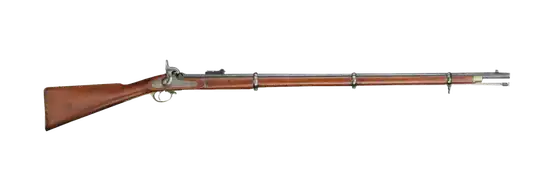 1853 Enfield rifle-musket
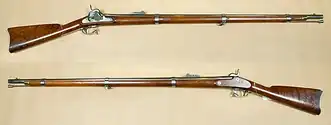 Springfield Model 1855
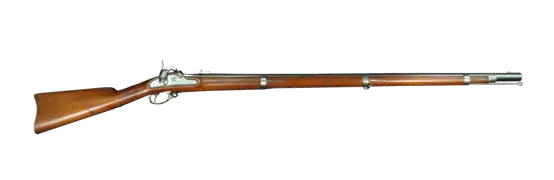 Springfield Model 1861
Uniform
The men of the regiment were issued their initial uniforms as they became available during training in Springfield. The members wore militia gray jackets and trousers from state stocks and were issued gray broad-rimmed hats with one side fo;ded up similar to the Hardee hat. At some time between the new year and jopining Pope's AoM, they were issued the standard federal uniform of dark blue sack coats, sky blue trousers, blue forage caps, and the sky blue winter overcoat.[8]
Commanders
- Colonel James D. Morgan - promoted to brigadier general on July 17, 1862
- Colonel John Tillson - discharged with the regiment[39]
See also
References
Footnotes
- ↑ "The Twins" nickname is in association with the 16th Regiment due to campaigning together.[1]
- ↑ This army, the first to carry this name, stood up on Sunday, February 23, with Pope in command. Initially only having two divisions of infantry, on Pope's advance toward New Madrid, it expanded with units from neighboring military districts to five divisions commanded respectively by David S. Stanley, Schuyler Hamilton, John M. Palmer, Eleazar A. Paine and Joseph B. Plummer. Gordon Granger commanded the Cavalry Division of two regiments and Napoleon B. Buford commanded the "Flotilla Brigade"
- ↑ These vessels were not ready to cooperate with the AoM earlier, as the damages they had received at Fort Donelson were still being repaired. They were finally sent down from Cairo on March 14, with Foote yet believing that they were not ready for combat. The Union fleet was augmented by the addition of 14 mortar rafts, vessels that each mounted a single 13 in (330 mm) mortar.
- ↑ At this time, Pope's army did not have the transports that would be needed to cross.
- ↑ Foote's thinking may also have been affected by the wound he had received at Fort Donelson, which was not healing properly and kept him in pain and on crutches.[17]
- ↑ This was also the first day of the far bloodier Battle of Shiloh
- ↑ The Left wing, with the 3rd, 4th, and 5th Divisions was commanded by Hamilton
- ↑ He used the Mobile and Ohio Railroad to carry the sick and wounded, the heavy artillery, and tons of supplies. When a train arrived, the troops cheered as though reinforcements were arriving. They set up dummy Quaker guns along the defensive earthworks. Camp fires were kept burning, and buglers and drummers played.[27]
- ↑ The Union forces took control and made it the base for their operations to seize control of the Mississippi River valley, and especially the Confederate stronghold of Vicksburg, Mississippi.[37]
- ↑ Kentucky, the most southern of the southern border states, produced cotton (in west Kentucky) and tobacco on large scale plantations similar to Virginia and North Carolina in the central and western portions of the state with slave labor, and was the primary supplier of hemp for rope used in the cotton industry. The state was also a major slave trade center especially out of Louisville.
- ↑ Jefferson Davis was born in Kentucky and grew up in Mississippi.
- ↑ In addition, many Confederate leaders, including John C. Breckinridge, were from Kentucky.[note 11] Abraham Lincoln was also born in Kentucky, living there until age seven and growing up in Illinois. Most of Mary Todd Lincoln's relatives from the Lexington, Kentucky area were Confederate officers.
- ↑ The promotion was applied retroactive to March 21, 1862, so that he would outrank fellow Maj. Gen. Thomas; Thomas had earlier been offered Buell's command, but turned down the opportunity out of a sense of personal loyalty. Grant was not unhappy that Rosecrans was leaving his command.[47]
- ↑ Meanwhile, Brig. Gen. John Hunt Morgan's Confederate cavalry brigade had been detached from Bragg's army, and was, at this time, moving north in preparation of the imminent launch of his famous Great Raid into Kentucky, Indiana and Ohio - an operation that cavalry historian Stephen Z. Starr called "militarily insane",[61] and that would ultimately end in Morgan's capture.
- ↑ While crossing the Tennesse River with the bulk of his army downstream and westsouthwest of the city, Rosecrans had sent a small force of infantry, mounted infantry, cavalry, and artillery (including Wilder's Lighhtning Brigade) across the Cumberland Plateau to make demonstrations of an assault directly on the city to hold Bragg there.
- ↑ Morgan had fleeted up to commanding the 22nd Division of the AoC's Reserve Corps at Bridgeport.[77]
- ↑ The battle was damaging to both sides in proportions roughly equal to the size of the armies: Union losses were 16,170 (1,657 killed, 9,756 wounded, and 4,757 captured or missing), Confederate 18,454 (2,312 killed, 14,674 wounded, and 1,468 captured or missing).
They were the highest losses of any battle in the Western Theater during the war and, after Gettysburg, the second-highest of the war overall. Although the Confederates were technically the victors, Bragg failed to destroy Rosecrans or restore Confederate control of East Tennessee. Eicher and the McPhersons call it a "stunning tactical and strategic victory", but most historians see it as incomplete with the caveats of failed goals and in light of the steady stream of the Army of Tennessee's ensuing defeats. - ↑ The efficiency of the United States' railroads over the Confederacy's effectively canceled the normal advantage of interior lines of communications that the Rebels possessed. While traveling 400 miles (640 km) further with slightly more than twice the number, the troops had taken the same time as Longstreet's troops who had arrived two weeks earlier still lacking arms and supplies.
To avoid placing an even greater logistic burden on the Army of the Cumberland, Hooker's force was kept at Bridgeport where they could be easily supplied from Nashville by railroad. Grant wrote, "Hooker had brought with him from the east a full supply of land transportation. His animals had not been subjected to hard work on bad roads without forage, but were in good condition." - ↑ Kimmerly suggests that by this point he suffered from extreme sleep deficiency. Rosecrans's insomnia became chronic at Corinth, Stones River, Chickamauga, and during the siege.
- ↑ hese were the standard rifle for the British army having performed well in the Crimean War. The Enfield was a .577 calibre Minié-type muzzle-loading rifled musket. It was used by both armies and was the second most widely used infantry weapon in the Union forces.[101]
Citations
- 1 2 CWA, 10th Illinois Infantry.
- ↑ Illinois & Vance (1886), pp. 502–504.
- ↑ Reece & Elliott (1900), pp. 478–511.
- 1 2 3 4 5 6 7 8 9 10 11 12 13 Dyer (1908), p. 1048.
- ↑ Federal Publishing Company, Vol.III (1908), p. 249.
- ↑ Hicken (1991), p. 15.
- ↑ Baumann (1989), pp. 75–76.
- 1 2 Field & Smith (2001), p. 122.
- 1 2 3 4 5 Reece & Elliott (1900), p. 509.
- ↑ U.S. War Dept., Official Records, Vol. 8, p. 605 – Correspondence between Abraham Lincoln and Maj. Gen. Halleck, U. S. Army, March 11, 1862, p.605
- ↑ Daniel & Bock (1996), p. 4.
- ↑ Daniel & Bock (1996), p. 6.
- ↑ U.S. War Dept., Official Records, Vol. 7, pp. 896–900 – Correspondence between Gen. P. G. T. Beauregard and Gen. A. S. Johnston, C. S. Army, February 12, 1862, pp.896-900
- ↑ Daniel & Bock (1996), p. 114.
- ↑ U.S. War Dept., Official Records, Vol. 8, p. 619 – Correspondence between Pope and Foote, March 17, 1862, p.619
- ↑ Daniel & Bock (1996), p. 70.
- ↑ Daniel & Bock (1996), p. 71.
- ↑ U.S. War Dept., Official Records, Vol. 8, p. 646 – Correspondence between Halleck and Foote, March 29, 1862, p.6469
- ↑ Walke (1887), p. 442.
- ↑ Daniel & Bock (1996), pp. 120, 122.
- ↑ Walke (1887), pp. 443–445.
- ↑ Daniel & Bock (1996), p. 130.
- ↑ Daniel & Bock (1996), pp. 133–134.
- ↑ Daniel & Bock (1996), pp. 134–137.
- ↑ U.S. War Dept., Official Records, Vol. 10/2, p. 147 – Organization of the Army of the Mississippi, Maj. Gen. John Pope commanding, April 30, 1862,p.147
- 1 2 Dyer (1908), p. 477.
- 1 2 HistoryNet, Siege Of Corinth (2006).
- ↑ Federal Publishing Company, Vol.V (1908), p. 392.
- ↑ Farmington MS.
- ↑ McDonald, Wartime Ordeal of Capt. De Witt Clinton Fort.
- ↑ U.S. War Dept., Official Records, Vol. 10/1, p. 811 – Return of casualties in the United States troops in the engagement at Farmington, Miss., May 9, 1862, p.805
- ↑ Andrews & Flandrau (1890), p. 260.
- ↑ Sherman (1886), pp. 279–280.
- ↑ Sherman (1886), p. 280.
- ↑ Federal Publishing Company, Vol.V (1908), p. 165.
- ↑ AHEC, The First Battle of Corinth, May 30, 1862.
- ↑ Smith (2012), pp. 276–287.
- ↑ Reece & Elliott (1900), pp. 478, 479, 491.
- 1 2 3 Reece & Elliott (1900), p. 478.
- ↑ Foote, Vol. II (1958), p. 25.
- ↑ Wikisource, Kentucky Ordinance of Secession (2008).
- ↑ FHS, Kentucky Confederate Provisional Government Journal,1861-1862 (2016).
- ↑ Quisenberry (1920), pp. 13–18.
- 1 2 Federal Publishing Company, Vol.III (1908), pp. 249–250.
- ↑ Foote, Vol. II (1958), p. 740.
- ↑ Foote, Vol. II (1958), p. 739.
- ↑ Lamers (1961), pp. 171–182; Gordon (2001), pp. 119–22.
- ↑ IGW, History of 16th Illinois Infantry (1997).
- ↑ Lamers (1961), pp. 195–196.
- ↑ Lamers (1961), pp. 202–234.
- ↑ Connelly (2001), p. 113.
- 1 2 Connelly (2001), pp. 116–118; Hallock (1991), p. 13; Korn (1985), pp. 22–23; Lamers (1961), p. 277; Woodworth (1998), p. 15.
- ↑ Korn (1985), p. 18; Woodworth (1998), p. 15.
- 1 2 3 Esposito (1959), p. 108.
- ↑ Connelly (2001), pp. 122–123; Korn (1985), p. 21.
- ↑ Starr (1965), pp. 224–225.
- ↑ Starr (1965), pp. 228–230.
- ↑ Starr (1965), pp. 232.
- ↑ Connelly (2001), pp. 122–125.
- ↑ Lamers (1961), pp. 269–271; Woodworth (1998), p. 17.
- ↑ Starr (1965), pp. 226.
- ↑ Korn (1985), p. 21; Woodworth (1998), p. 18.
- ↑ Robertson (2018), p. 303–304; Woodworth (2010), p. 50–51.
- ↑ Robertson, Blue & Gray, Jan 2006, The Fall of Chattanooga.
- ↑ Korn (1985), p. 35.
- ↑ Kennedy (1998), p. 226.
- ↑ Cozzens (1992), pp. 21–23; Eicher, McPherson & McPherson (2001), p. 577; Kennedy (1998), p. 226; Korn (1985), p. 32; Lamers (1961), p. 293; Woodworth (1998), pp. 12–13.
- ↑ Lamers (1961), p. 293; Woodworth (1998), p. 47.
- ↑ Cozzens (1992), pp. 23–27; Eicher, McPherson & McPherson (2001), pp. 577–578; Esposito (1959), p. 110.
- 1 2 Robertson, Blue & Gray, Dec 2006, The Armies Collide.
- ↑ Cozzens (1992), p. 23; Eicher, McPherson & McPherson (2001), p. 578; Esposito (1959), p. 110; Korn (1985), pp. 35–37; Woodworth (2010), pp. 50–67.
- ↑ Lamers (1961), p. 294; Woodworth (1998), p. 48.
- ↑ Robertson, Blue & Gray, Jun 2006, McLemore's Cove - Bragg's Lost Opportunity.
- ↑ Cozzens (1992), p. 173; Eicher, McPherson & McPherson (2001), p. 578; Esposito (1959), p. 110; Hallock (1991), p. 54; Woodworth (1998), pp. 60, 66.
- ↑ Robertson (2010), pp. 116–139.
- ↑ Knudsen (2007), pp. 63–69.
- 1 2 U.S. War Dept., Official Records, Vol. 30/4, p. 208 – Correspondence between QM General M C Meigs, Chattanooga, and Col. Hodges, Nashville, October 9, 1863, p.208
- ↑ Robertson, Blue & Gray, Jun 2007, The Battle of Chickamauga, Day 1.
- ↑ Robertson, Blue & Gray, Oct 2007, The Battle of Chickamauga, Day 2.
- ↑ Eicher, McPherson & McPherson (2001), p. 592.
- ↑ Grant (1887), pp. 686–688.
- ↑ McDonough (1984), p. 41-48, 68–70.
- ↑ U.S. War Dept., Official Records, Vol. 30/4, p. 42 – Report of Col. R. F. Smith, Commander, Bridgeport, October 2, 1863, p.42
- ↑ TCWPA, Anderson's Cross Roads (2024).
- ↑ Reece & Elliott (1900), p. 510.
- ↑ U.S. War Dept., Official Records, Vol. 30/4, pp. 42, 85 – Reports of Col. R. F. Smith, Commander, Bridgeport, October 2, p.42 and October 4, 1863, p.85
- ↑ Kimmerly (2018), p. 16-17; Reynolds & Kele (1975), p. 238.
- ↑ U.S. War Dept., Official Records, Vol. 30/4, p. 85 – Report of Col. Tillson, Anderson's Crossroads, October 4, 1863, p.85
- ↑ U.S. War Dept., Official Records, Vol. 30/4, p. 156 – Correspondence between Brig Gen. Morgan, Commanding 2nd Division Reserve Corps and Maj Fullerton, AoC, Asst. Adjt-Gen, October 7, 1863, pp.156-157
- ↑ U.S. War Dept., Official Records, Vol. 30/4, p. 212 – Special Field Orders, No. 269, Hdqrs Dept of the Cumberland, October 3, 1863, pp.209-213
- ↑ Gabel (1997), pp. 5–7; Grant (1887), pp. 686–688.
- 1 2 Kimmerly (2018), p. 25.
- ↑ Cozzens (1992), p. 2-3.
- ↑ Cozzens (1992), p. 18, 2–6; Eicher, McPherson & McPherson (2001), p. 595; Esposito (1959), p. 115; Korn (1985), p. 83–89; Lamers (1961), p. 393; McDonough (1984), p. 49–54; Woodworth (1998), p. 151.
- ↑ Kimmerly (2018), p. 22-24.
- ↑ McDonough (1984), p. 57.
- ↑ Cozzens (1994), p. 88.
- ↑ Cozzens (1994), p. 98-100; Korn (1985), p. 92; McDonough (1984), p. 90-94; Woodworth (1998), p. 167.
- ↑ Kimmerly (2018), p. 25-27.
- ↑ Kimmerly (2018), pp. 25–27; La Duc (1887), pp. 676–678.
- ↑ Coates & Dean (1996), p. 15; Flatnes (2013), p. 32.
- ↑ Hicken (1991), pp. 14–15.
- ↑ Baumann (1989), pp. 76–77.
- ↑ Research Arsenal, Summary Statement of Ordnance, 31 December 1862.
- ↑ Research Arsenal, Summary Statement of Ordnance, 30 June 1863.
- ↑ Research Arsenal, Summary Statement of Ordnance, 31 March 1864.
- ↑ Research Arsenal, Summary Statement of Ordnance, 31 March 1865.
Sources
- U.S. Army Heritage and Education Center (2016). "The First Battle of Corinth, May 30, 1862". U.S. Army Heritage and Education Center. Archived from the original on August 27, 2017. Retrieved July 12, 2016.
- Andrews, Christopher Columbus; Flandrau, Charles E., eds. (1890). Minnesota in the Civil and Indian Wars 1861-1865 (pdf). Vol. 1 (1st ed.). St. Paul, MN: The Minnesota Board of Commissioners. p. 260. LCCN 02014556. OCLC 3561607. OL 7088819M.
 This article incorporates text from this source, which is in the public domain.
- Baumann, Ken (1989). Arming the Suckers, 1861-1865: A Compilation of Illinois Civil War Weapons. Dayton, OH: Morningside House. p. 237. ISBN 978-0-89029-529-8. OCLC 20662029.
- "10th Illinois Infantry". The Civil War Archive 1998-2009. January 17, 2009. Retrieved 30 May 2014.
- Coates, Earl J.; Dean, Thomas S. (1996). An Introduction to Civil War Small Arms (1st ed.). Gettysburg, PA: Thomas Publications. p. 96. ISBN 978-0-939631-25-4. OCLC 755158350. Retrieved 2020-03-28.
- Connelly, Thomas Lawrence (2001). Autumn of glory : the Army of Tennessee, 1862-1865. Baton Rouge, LA: Louisiana State University Press. ISBN 0-8071-2738-8. OCLC 47948904.
- Cozzens, Peter (1994). The Shipwreck of Their Hopes: The Battles for Chattanooga (PDF) (1st ed.). Urbana IL: University of Illinois Press. p. 550. ISBN 9780252019227. OCLC 29877161. Retrieved November 11, 2022.
- Cozzens, Peter (1992). This Terrible Sound: The Battle of Chickamauga (PDF) (1st ed.). Champaign, IL: University of Illinois Press. ISBN 978-0-252-06594-1. OCLC 1147753151.
- Daniel, Larry J.; Bock, Lynn N. (1996). Island No. 10: Struggle for the Mississippi Valley. University of Alabama Press. ISBN 978-0-8173-0816-2. JSTOR jj.30346801. LCCN 95031876. OCLC 44955793. Retrieved June 25, 2026.
- Dyer, Frederick Henry (1908). A Compendium of the War of the Rebellion (PDF). Des Moines, IA: Dyer Pub. Co. p. 1048. ASIN B01BUFJ76Q. hdl:2027/mdp.39015026937642. LCCN 09005239. OCLC 8697590. Retrieved October 20, 2024. This article incorporates text from this source, which is in the public domain.
- Eicher, David J.; McPherson, James M.; McPherson, James Alan (2001). The Longest Night: A Military History of the Civil War. New York City: Simon & Schuster. ISBN 0-7432-1846-9. OCLC 892938160.
- Esposito, Vincent J. (1959). West Point Atlas of American Wars. New York, NY: Frederick A. Praeger Publishers. ISBN 978-0-8050-3391-5. OCLC 60298522.
{{cite book}}: ISBN / Date incompatibility (help) This article incorporates text from this source, which is in the public domain. - "Farmington MS". Archived from the original on October 31, 2014. Retrieved February 26, 2013.
- Federal Publishing Company (1908). Military Affairs and Regimental Histories of New Jersey, Indiana, Illinois and Michigan (PDF). The Union Army: A History of Military Affairs in the Loyal States, 1861–65 – Records of the Regiments in the Union army – Cyclopedia of battles – Memoirs of Commanders and Soldiers. Vol. III. Madison, WI: Federal Publishing Company. pp. 249–250. OCLC 694018100. This article incorporates text from this source, which is in the public domain.
- Federal Publishing Company (1908). Cyclopedia of Battles — A to Helena (PDF). The Union Army: A History of Military Affairs in the Loyal States, 1861–65 – Records of the Regiments in the Union army – Cyclopedia of battles – Memoirs of Commanders and Soldiers. Vol. V. Madison, WI: Federal Publishing Company. p. 392. OCLC 694018100. This article incorporates text from this source, which is in the public domain.
- Field, Ron; Smith, Robin (2001). Uniforms of the American Civil War: An Illustrated Guide for Historians, Collectors, and Reenactors (pdf) (1st ed.). Guildford, CT: Lyons Press. p. 122. ISBN 1-58574-422-0. LCCN 2004061528. OCLC 778393400. Retrieved June 24, 2026.
- Gabel, Christopher R. (1997). Railroad Generalship: Foundations of Civil War Strategy (PDF). Combat Studies Institute. Fort Leavenworth, KS: United States Army Command and General Staff College. p. 32. OCLC 831940850. Retrieved March 28, 2022. This article incorporates text from this source, which is in the public domain.
- Grant, Ulysses S. (1887). "Chattanooga". In Johnson, Robert Underwood; Buel, Clarence Clough (eds.). The Tide Shifts. Battles and Leaders of the Civil War: Being for the Most Part Contributions by Union and Confederate officers: Based upon "The Century War Series". Vol. III. New York City: The Century Company. pp. 430–452. OCLC 48764702. This article incorporates text from this source, which is in the public domain.
- "Kentucky Confederate Provisional Government Journal,1861-1862". The Filson Historical Society. 2016. Archived from the original on August 30, 2017. Retrieved June 30, 2017.
- Flatnes, Oyvind (2013). From Musket to Metallic Cartridge: A Practical History of Black Powder Firearms. Marlborough, UK: Crowood Press. ISBN 978-1847975935. OCLC 953455972. Retrieved March 28, 2020.
- Foote, Shelby (1958). Fredericksburg to Meridian (pdf). The Civil War: A Narrative. Vol. II (1st ed.). New York, NY: Random House. p. 988. ISBN 978-0-307-74468-5. LCCN 58009882. OCLC 300064. Retrieved June 14, 2026.
{{cite book}}: ISBN / Date incompatibility (help) - Gordon, Leslie J. (2001). ""I Could Not Make Him Do As I Wished," The Failed Relationship of William S. Rosecrans and Grant" (pdf). In Woodworth, Steven E. (ed.). Grant's Lieutenants: From Cairo to Vicksburg (1st ed.). Lawrence, KS: University Press of Kansas. pp. 109–128. ISBN 0-7006-1127-4. LCCN 2001001685. OCLC 1358666411. Retrieved July 16, 2026.
- Hallock, Judith Lee (1991). Braxton Bragg and Confederate Defeat, Volume II (PDF). Tuscaloosa, AL: University of Alabama Press. ISBN 9780585138978. OCLC 1013879782. Retrieved May 1, 2020.
- Hicken, Victor (1991). Illinois in the Civil War (pdf) (2nd ed.). Urbana, IL: University of Illinois Press. pp. 247–251. ISBN 978-0-252-06165-3. LCCN 90041288. OCLC 1285646428. Retrieved October 20, 2024.
- "Siege Of Corinth By Henry Halleck in 1862". HistoryNet. June 12, 2006. Retrieved July 12, 2026.
- "History of 16th Illinois Infantry". The Illinois USGenWeb Project. 1997. Retrieved July 20, 2026.
- Kennedy, Frances H., ed. (1998). The Civil War Battlefield Guide (Kindle) (2nd ed.). Boston, MA: Houghton Mifflin Co. ISBN 0-395-74012-6. Retrieved June 24, 2020.
- Kimmerly, Phillip (2018). "Dead Animals, Starving Men, and Treacherous Anderson Road: 1863 Siege of Chattanooga". Tennessee Historical Quarterly. 77 (1). Tennessee Historical Society: 2–35. ISSN 0040-3261. JSTOR 27069292. Retrieved 2022-11-13.
- Knudsen, Harold M. (2007). General James Longstreet: The Confederacy's Most Modern General. USA Pub. Services. ISBN 978-0-9826592-0-5. OCLC 743227511. Retrieved July 21, 2026.
- Korn, Jerry (1985). The Fight for Chattanooga: Chickamauga to Missionary Ridge. Alexandria, VA: Time-Life Books. ISBN 9780809448166. OCLC 34581283. Retrieved April 9, 2020.
- La Duc, William G. (1887). "The Little Steamboat that opened the 'Cracker Line'". In Johnson, Robert Underwood; Buel, Clarence Clough (eds.). The Tide Shifts. Battles and Leaders of the Civil War: Being for the Most Part Contributions by Union and Confederate officers: Based upon "The Century War Series". Vol. III. New York City: The Century Company. pp. 676–678. OCLC 48764702. This article incorporates text from this source, which is in the public domain.
- Lamers, William M. (1961). The Edge of Glory: A Biography of General William S. Rosecrans, U.S.A.. New York, NY: Harcourt, Brace & World. ISBN 9780807123966. OCLC 906813341. Retrieved April 9, 2020.
{{cite book}}: ISBN / Date incompatibility (help) - McDonald, Laurier B. 14 Letters to a Friend, the Story of the Wartime Ordeal of Capt. De Witt Clinton Fort, C.S.A. Laurier B. McDonald. ISBN 978-1-60530-979-8. Retrieved 11 August 2012.
- McDonough, James Lee (1984). Chattanooga—A Death Grip on the Confederacy (PDF) (1st ed.). Knoxville, TN: University of Tennessee Press. p. 298. ISBN 9780870494253. OCLC 10207960. Retrieved August 14, 2022.
- Quisenberry, A. C. (1920). "Kentucky Union Troops in the Civil War". Register of Kentucky State Historical Society. 18 (54). Kentucky Historical Society: 13–18. ISSN 2328-8183. JSTOR 23369562. Retrieved July 14, 2026.
- Reece, Jasper N.; Elliott, Isaac H. (1900). Report of the Adjutant General of the State of Illinois, Containing reports for the years 1861-66 (pdf). Vol. I (1st ed.). Springfield, IL: H.W. Rokker, state printer and binder. pp. 478–511. LCCN 03000488. OCLC 2905276. Retrieved October 20, 2024.
{{cite book}}: CS1 maint: ref duplicates default (link) - "Research Arsenal". Research Arsenal. Retrieved September 12, 2023.
- "Research Arsenal". Research Arsenal. Retrieved September 12, 2023.
- "Research Arsenal". Research Arsenal. Retrieved September 12, 2023.
- "Research Arsenal". Research Arsenal. Retrieved September 12, 2023.
- Reynolds, Donald E; Kele, Max H. (1975). "With The Army Of The Cumberland In The Chickamauga Campaign: The Diary of James W. Chapin, Thirty-Ninth Indiana Volunteers". The Georgia Historical Quarterly. 59 (2). Georgia Historical Society: 223–242. ISSN 0016-8297. JSTOR 40580166. Retrieved November 11, 2020.
- Robertson, William Glenn (2010). "Bull of the Woods? James Longstreet at Chickamauga". In Woodworth, Steven E. (ed.). The Chickamauga Campaign (Kindle). Civil War Campaigns in the West (2011 Kindle ed.). Carbondale, IL: Southern Illinois University Press. pp. 116–139. ISBN 978-0-8093-8556-0. OCLC 649913237. Retrieved April 6, 2020.
- Robertson, William Glenn (January 2006). "The Chickamauga Campaign: The Fall of Chattanooga". Blue & Gray Magazine. XXIII (136). Columbus, OH: Blue & Gray Enterprises. ISSN 0741-2207.
- Robertson, William Glenn (June 2006). "The Chickamauga Campaign: McLemore's Cove - Bragg's Lost Opportunity". Blue & Gray Magazine. XXIII (138). Columbus, OH: Blue & Gray Enterprises. ISSN 0741-2207.
- Robertson, William Glenn (December 2006). "The Chickamauga Campaign: The Armies Collide". Blue & Gray Magazine. XXIV (141). Columbus, OH: Blue & Gray Enterprises. ISSN 0741-2207.
- Robertson, William Glenn (June 2007). "The Chickamauga Campaign: The Battle of Chickamauga, Day 1". Blue & Gray Magazine. XXIV (144). Columbus, OH: Blue & Gray Enterprises. ISSN 0741-2207.
- Robertson, William Glenn (October 2007). "The Chickamauga Campaign: The Battle of Chickamauga, Day 2". Blue & Gray Magazine. XXV (146). Columbus, OH: Blue & Gray Enterprises. ISSN 0741-2207.
- Robertson, William Glenn (2018). River of Death—The Chickamauga Campaign: Volume 1: The Fall of Chattanooga (PDF) (1st ed.). Chapel Hill, NC: The University of North Carolina Press. p. 696. ISBN 9781469643120. OCLC 1056096910. Retrieved May 14, 2021.
- Sherman, William Tecumseh (1886) [1875]. Memoirs of General William T. Sherman (pdf). Vol. I (2nd ed.). New York, NY: D. Appleton. p. 455. LCCN 04017068. OCLC 3827633. Retrieved July 12, 2026. This article incorporates text from this source, which is in the public domain.
- Smith, Timothy B. (2012). Corinth 1862: Siege, Battle, Occupation. Lawrence, KS: University Press of Kansas. JSTOR j.ctt1g69zsh. Retrieved July 12, 2026.
- Starr, Stephen Z. (June 1965). Allen, Howard (ed.). "Cold Steel: The Saber and the Union Cavalry" (PDF). Civil War History. 11 (2). Kent, OH: The Kent State University Press: 142–159. ISSN 0009-8078. Retrieved 11 September 2021.
- "Anderson's Cross Roads". Tennessee Civil War Preservation Association. February 20, 2024. Retrieved July 25, 2026.
- U.S. War Department (1882). Operations in Kentucky, Tennessee, N. Alabama, and W. Virginia. Nov. 19, 1861-Mar 4, 1862. The War of the Rebellion: A Compilation of the Official Records of the Union and Confederate Armies. Vol. VII–XVII. Washington, DC: U.S. Government Printing Office. pp. 896–900. OCLC 900475952. Retrieved March 13, 2022. This article incorporates text from this source, which is in the public domain.
- U.S. War Department (1883). Operations in Missouri, Arkansas, Kansas, and Indian Territory. Nov. 19, 1861-Apr 10, 1862. The War of the Rebellion: A Compilation of the Official Records of the Union and Confederate Armies. Vol. VIII–XVIII. Washington, DC: U.S. Government Printing Office. pp. 605, 619, 645. OCLC 900475952. Retrieved March 13, 2022. This article incorporates text from this source, which is in the public domain.
- U.S. War Department (1884). Operations in Kentucky, Tennessee, North Mississippi, North Alabama, and Southwest Virginia. Mar 4-Jun 10, 1862. Part I -- Reports. The War of the Rebellion: A Compilation of the Official Records of the Union and Confederate Armies. Vol. X-XXII-I. Washington, DC: U.S. Government Printing Office. pp. 805, 811. OCLC 900475952. Retrieved March 13, 2022. This article incorporates text from this source, which is in the public domain.
- U.S. War Department (1884). Operations in Kentucky, Tennessee, North Mississippi, North Alabama, and Southwest Virginia. Mar 4-Jun 10, 1862. Part II -- Correspondence, etc. The War of the Rebellion: A Compilation of the Official Records of the Union and Confederate Armies. Vol. X-XXII-II. Washington, DC: U.S. Government Printing Office. pp. 805, 811. OCLC 900475952. Retrieved March 13, 2022. This article incorporates text from this source, which is in the public domain.
- U.S. War Department (1890). Operations in Kentucky, Southwest Virginia, Tennessee, Mississippi, North Alabama, and North Georgia. August 11-October 19, 1863. – Part IV Union and Confederate Correspondence, etc. The War of the Rebellion: A Compilation of the Official Records of the Union and Confederate Armies. Vol. XXX-XLII-IV. Washington, DC: U.S. Government Printing Office. pp. 42, 85, , 156, 212, 444, 462. hdl:2027/coo.31924077699860. OCLC 857196196. This article incorporates text from this source, which is in the public domain.
- Illinois; Vance, Joseph W. (1886). Report of the Adjutant General of the State of Illinois ... Containing reports for the years 1861-66 (pdf). Vol. I (1st ed.). Springfield, IL: H.W. Rokker, state printer and binder. pp. 502–504. hdl:2027/nyp.33433006977767. LCCN 01020874. OCLC 01914342. Retrieved October 20, 2024.
{{cite book}}: CS1 maint: ref duplicates default (link) - Walke, Henry (1887). "The Western Flotilla at Fort Donelson, Island Number Ten, Fort Pillow, and Memphis". In Johnson, Robert Underwood; Buel, Clarence Clough (eds.). From Sumter to Shiloh. Battles and Leaders of the Civil War: Being for the Most Part Contributions by Union and Confederate officers: Based upon "The Century War Series". Vol. I. New York City: The Century Company. pp. 430–452. OCLC 48764702. This article incorporates text from this source, which is in the public domain.
- "Kentucky Ordinance of Secession". Wikisource. September 1, 2008. Retrieved July 14, 2026.
- Woodworth, Steven E., ed. (2010). The Chickamauga Campaign (PDF). Civil War Campaigns in the West (2011 Kindle ed.). Carbondale, IL: Southern Illinois University Press. pp. 50–67. ISBN 978-0-8093-8556-0. OCLC 649913237. Retrieved April 6, 2020.
- Woodworth, Steven E. (1998). Six Armies in Tennessee: The Chickamauga and Chattanooga Campaigns. Lincoln, NE: University of Nebraska Press. ISBN 9780803247789. OCLC 50844494. Retrieved January 10, 2016.